Truck Tire Blowouts in 2026: Warning Signs, Control, and Roadside Response
Learn how CDL drivers can prevent tire failures, recognize a blowout, keep control without abrupt braking, stop safely, and handle the roadside response.
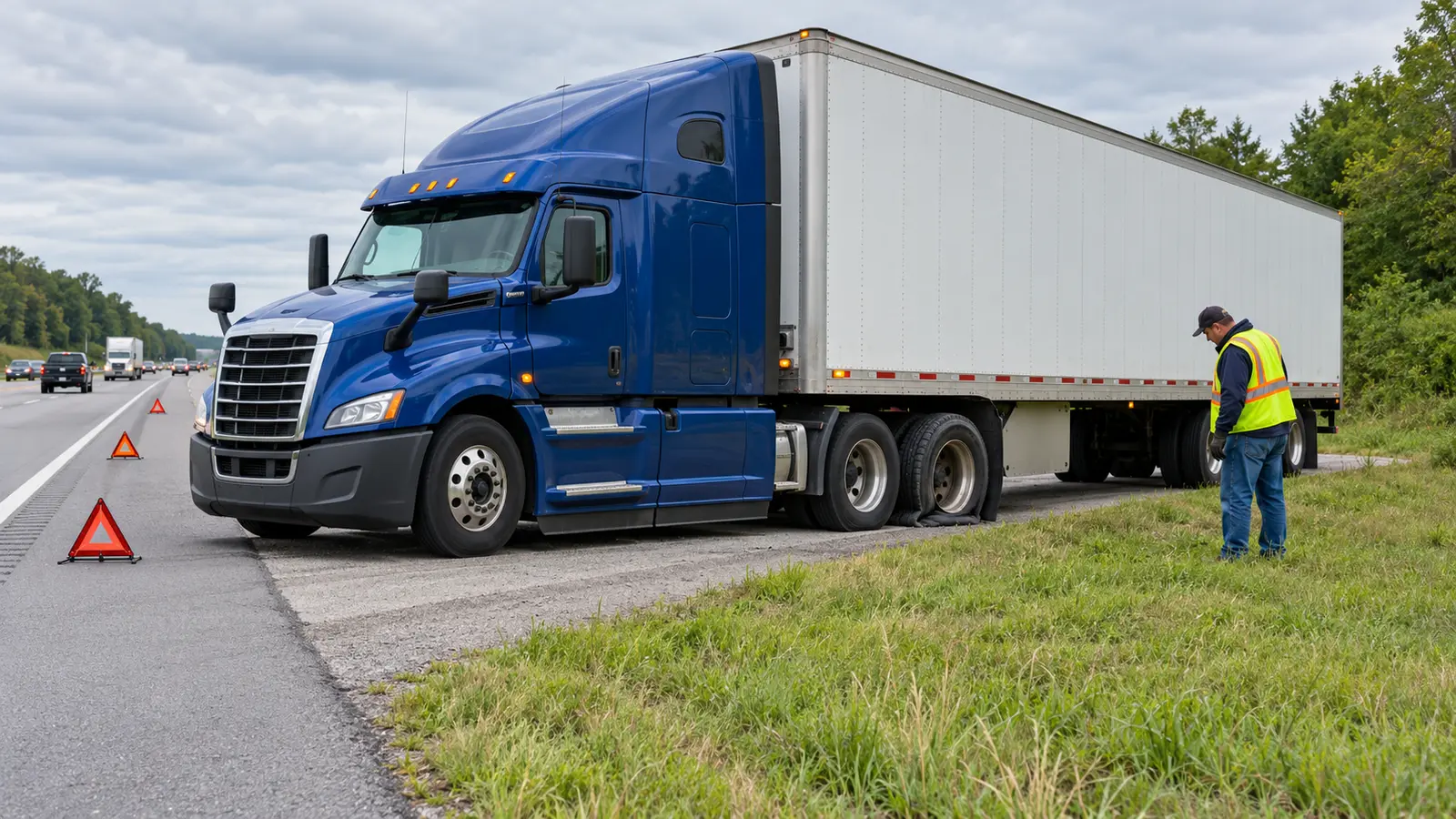
A commercial-truck tire failure can begin with a loud bang, a heavy vibration, a change in steering effort, or a rear-end movement that feels like fishtailing. The first seconds matter. A driver who reacts with an abrupt brake application or sharp steering input can turn a tire problem into a loss-of-control crash.
The safer response is built before the failure: inspect the tires, understand the warning signs, keep both hands ready to control the wheel, and know how to slow and stop without adding instability. This guide combines the federal tire rules with practical CDL-manual guidance. It does not replace the tire manufacturer's instructions, a carrier's emergency procedure, or hands-on training in the vehicle you operate.
Know the federal tire baseline
Under 49 CFR §392.7, a commercial motor vehicle may not be driven unless the driver is satisfied that the tires, wheels, rims, steering, brakes, lights, coupling devices, and other listed safety equipment are in good working order. That makes a tire check an operating responsibility, not merely a maintenance-department task.
Section 393.75 prohibits operating on a tire with exposed body-ply or belt material, tread or sidewall separation, a flat condition or audible leak, or a cut that exposes ply or belt material. It also requires at least 4/32 inch of tread depth in a major groove on front tires and at least 2/32 inch on other tires. Tire loads and any speed restriction marked on the tire must also be respected.
Inspect with a gauge, your eyes, and a repeatable route
Check cold inflation pressure against the vehicle, tire, and fleet specifications with a reliable gauge. A kick, thump, or quick glance cannot establish pressure. Inspect every accessible tread and sidewall for cuts, bulges, cracking, embedded objects, exposed material, irregular wear, or separation. Confirm that valve stems are intact, caps are present, and dual tires do not touch each other or another vehicle part.
Look beyond the rubber. A loose fastener, damaged rim, leaking hub, shifted suspension component, or debris between duals can contribute to failure. Compare paired duals for visibly mismatched diameter and inflation. During the trip, use safe stops to recheck tires, wheels, and rims, especially after a hard impact, unusual vibration, warning from a tire-pressure system, or noticeable change in handling.
Treat pressure, heat, load, and speed as one system
Underinflation allows excessive flexing, which builds heat and can damage the tire structure. Overinflation can reduce the useful contact area and increase vulnerability to impact damage. Overloading a tire, driving beyond its rated speed, or continuing on a deteriorating casing adds still more stress. Correct pressure therefore depends on the approved load-and-inflation information for the actual tire and axle—not a number copied from another truck.
Hot weather, high road temperature, long operating periods, and heavy loads deserve extra attention. The Oregon CDL Manual advises checking tire mounting and pressure during hot-weather operation and not bleeding air from a hot tire merely because its pressure has risen. If a tire is unusually hot, stop safely and follow the carrier's maintenance procedure rather than trying to cool, touch, or service a potentially damaged assembly.
Recognize the failure before you choose a response
A blowout may produce a bang, but sound alone does not identify the axle. Heavy thumping or vibration can indicate a flat rear tire. A failed steer tire may make the steering feel heavy or pull the vehicle. A rear failure may cause lateral movement, while a failed tire in a dual set can be surprisingly subtle.
Assume a suspicious bang, vibration, pull, or tire-pressure warning deserves action. Keep scanning the road and mirrors, note the vehicle's response, and avoid looking down at the dashboard for too long. The immediate goal is to keep the vehicle in its lane and reduce speed under control—not to diagnose the exact tire while the truck is still moving.
Hold the wheel firmly and avoid abrupt braking
The official CDL guidance is direct: hold the steering wheel firmly with both hands. A front-tire failure can twist the wheel, and a relaxed one-handed grip may not provide enough control. Keep the truck pointed along a stable path and make only the steering corrections needed to remain in the lane.
Unless a collision is otherwise imminent, stay off the brake while the vehicle begins slowing. A hard brake application can increase the pull or instability created by the failed tire. Let speed decrease, keep the unit straight, and then apply the brakes gently when the vehicle is stable enough to leave the travel lane. Do not combine a panic stop with a sudden shoulder movement.
Use the available road before moving onto the shoulder
Check mirrors and the shoulder before changing position. A narrow shoulder, soft edge, bridge, work zone, guardrail, disabled vehicle, or person may make an immediate pull-off more dangerous than continuing briefly at a controlled, decreasing speed. Signal and activate hazard flashers when doing so will help other traffic understand the problem.
Move gradually toward the safest available stopping area and allow room for the entire combination. Avoid stopping with the tractor on firm pavement and the trailer angled into a live lane. If the shoulder is unstable or visibility is poor, advise dispatch or emergency services of the exact location and follow their instructions. Protecting life takes priority over preserving the damaged tire or reaching a preferred repair shop.
Secure the vehicle before inspecting the damage
After stopping, set the parking brakes, place the transmission as required, shut down when appropriate, and evaluate traffic before exiting. Wear high-visibility clothing if available and exit on the protected side when possible. Deploy warning devices according to the applicable rule and conditions; do not stand in a live lane to inspect debris or retrieve pieces of tread.
Approach a damaged tire cautiously. Heat, internal pressure, a separated casing, bent wheel components, or a stressed dual assembly can create hazards even after the truck stops. Do not crawl beneath the vehicle, strike the tire, loosen components, or attempt a roadside repair unless you are trained, equipped, authorized, and positioned in a safe work area. Report the axle, visible condition, cargo status, location, and any secondary damage to the carrier or service provider.
Do not assume the remaining dual makes the vehicle safe
A companion tire in a dual set may temporarily support part of the load, but it can be overloaded or damaged by heat, debris, rubbing, or the original failure. Federal guidance permits removal of a defective dual tire only when the load on every remaining tire stays within the limits of §393.75. That is a weight-and-equipment determination, not a general permission to continue the trip.
A qualified person should inspect the remaining tire, wheel, hub, brake, suspension, mudflap, air lines, bodywork, and cargo area before the vehicle returns to service. If tread or debris struck another vehicle, damaged the trailer, or created a roadway hazard, follow the carrier's crash, incident, and notification procedures.
Build prevention into every stop
Review recurring pressure loss, uneven wear, repeated overheating, vibration, or pull with maintenance instead of normalizing it. Document defects clearly and confirm that required repairs were completed. When a tire has been changed, follow the fleet's wheel-fastener recheck procedure. A fresh tire does not correct a damaged rim, overloaded axle, alignment problem, or failing suspension component.
Before accepting a dispatch, consider axle weights, route, weather, operating speed, and tire condition together. During the day, look, listen, smell, and feel for changes. Early reporting may cause a delay, but continuing on a questionable tire can lead to a more dangerous stop, roadside inspection violation, cargo damage, or crash.
Connect CDL theory to real emergency control
Class A and Class B ELDT theory includes vehicle inspections, tire and wheel hazards, speed and space management, extreme driving conditions, and emergency maneuvers. Those lessons should lead to supervised practice in maintaining lane position, scanning for an escape path, communicating a problem, and bringing a disabled commercial vehicle to a controlled stop.
CDL Compass offers online Class A and Class B ELDT theory for drivers preparing for their first license. Complete the course that matches your goal, then practice inspection and emergency procedures with a qualified behind-the-wheel provider. The useful sequence is simple: prevent what you can, recognize the warning quickly, hold the wheel, avoid abrupt braking, slow under control, stop in the safest available place, and keep yourself out of moving traffic.