CDL Vehicle Inspection Test in 2026: How to Prepare and What Examiners Expect
Learn what the CDL vehicle inspection test covers, how it fits into the three-part skills test, and how to build a reliable study routine for test day.
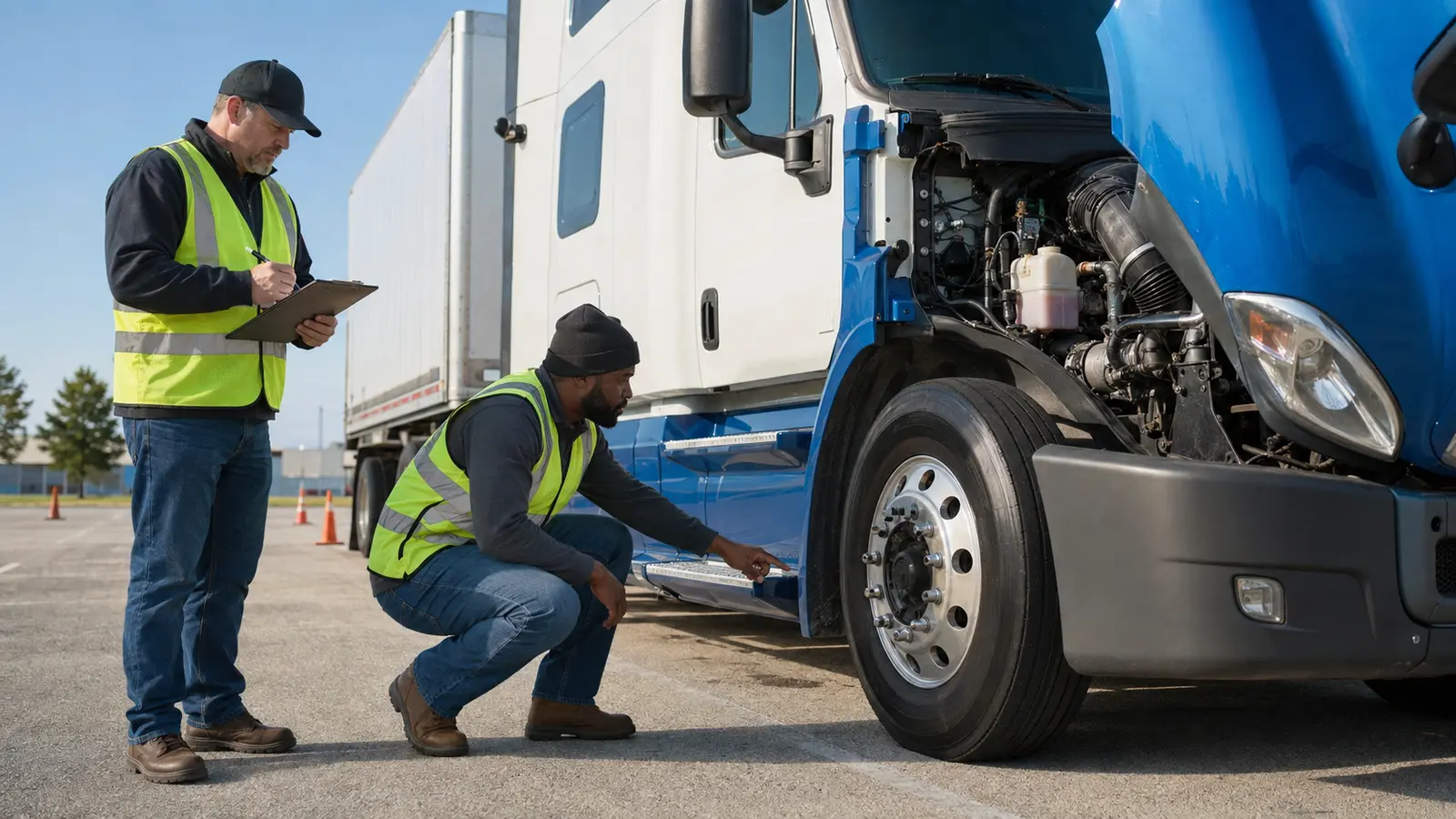
The vehicle inspection test is the first of three parts of the CDL skills test, followed by basic vehicle control and on-road driving. It is sometimes called the pre-trip inspection test, but the goal is broader than memorizing the names of truck parts. You must identify safety-related components and explain what you would inspect to decide whether the vehicle is safe to operate.
Federal standards establish the required skill areas, while each State Driver Licensing Agency administers and scores the test under its approved procedures. That means your state CDL manual is the final study guide for the sequence, terminology, test forms, permitted training aids, and retest rules that apply where you will test.
What the federal vehicle inspection standard covers
Under 49 CFR 383.113, applicants must demonstrate vehicle-inspection skills for the class of vehicle they operate or expect to operate. The federal categories for all test vehicles include the engine compartment; cab and engine start; steering; suspension; brakes; wheels; sides and rear of the vehicle; and special features of a tractor-trailer, school bus, coach, or transit bus when that vehicle is used for the test.
An air-brake-equipped test vehicle adds air-brake inspection and operational skills. The applicant must be able to identify controls and monitoring devices, check the condition and connections of the system, verify the low-pressure warning, evaluate air supply and pressure buildup, and perform the required operational brake checks.
These categories are a baseline, not a word-for-word testing script. States use FMCSA-approved testing standards and their own manuals. Study the current manual published by your licensing agency rather than relying only on a generic checklist or an old video.
Know the three-part skills test sequence
FMCSA explains that an applicant must pass the Vehicle Inspection Test, Basic Controls Test, and Road Test. Completing ELDT does not replace any of these state-administered test segments. ELDT establishes required training for covered applicants; the skills test measures whether you can demonstrate the required abilities in an appropriate vehicle.
Confirm the appointment instructions before test day. States may differ on whether a failed segment ends the appointment, which portions must be repeated, how long you must wait, and what documents or fees are required for a retest. Do not assume a policy described by a school or driver in another state applies to you.
Use a repeatable inspection route
A dependable routine reduces skipped items. Begin at the same location every time and move around the vehicle in the same order. Many students use a flow such as engine compartment, front axle, driver-side controls and cab checks, coupling area, trailer side, rear, and the remaining side. The exact route matters less than using it consistently and matching the sections in your state manual.
For each component, practice a simple pattern: identify it, explain what condition you are checking, and state why the condition matters. A useful inspection statement describes observable problems such as damage, looseness, missing hardware, leaks, improper mounting, excessive wear, contamination, or an unsafe connection. Avoid repeating a memorized phrase that does not fit the component.
Touch or point clearly when the examiner needs to know which part you mean. Do not rush from one item to the next before completing the explanation. If two nearby components have different safety functions, identify them separately instead of using a vague statement about the entire area.
Practice air-brake checks exactly as your state teaches them
Air-brake procedures combine inspection, vehicle controls, warning devices, and pressure behavior. The order and conditions of a check can matter. Practice with a qualified instructor in the same type of equipment you expect to use for testing, follow the current state manual, and learn which readings or warning points you must observe and communicate.
Do not memorize pressure numbers from an unrelated vehicle or outdated study sheet. Vehicle configuration and state testing language can affect how the procedure is presented. During training, understand what each step confirms: the system can build and maintain air, warnings work, brakes apply, and connections are secure.
Train on the vehicle you will test in
A strong inspection routine is vehicle-specific. Learn where the reservoirs, warning devices, steering components, suspension parts, brake components, coupling hardware, emergency equipment, and lighting controls are located on the actual test vehicle. Practice opening the hood, entering and exiting with three points of contact, and operating controls safely.
The test vehicle can also affect license restrictions. FMCSA advises applicants to test in the same type of vehicle they expect to operate because testing without critical equipment can place restrictions on the CDL. Before scheduling, confirm the class, transmission, air-brake system, fifth-wheel or pintle-hook configuration, and passenger or school-bus features required for your goal.
Common preparation mistakes
The first mistake is studying only a script. A script can organize practice, but it becomes a liability when the examiner points to a different component or the vehicle layout changes. Learn the part, the defect, and the safety reason behind the statement.
The second mistake is practicing silently. The vehicle inspection test requires you to communicate what you are inspecting. Rehearse aloud at a calm, test-day pace while an instructor follows the same checklist used for your vehicle.
Other avoidable errors include skipping small transitions between vehicle sections, using unclear language, forgetting in-cab safety equipment, mixing tractor and trailer components, and waiting until the final week to practice a complete inspection. Short daily repetitions usually build more reliable recall than one long session immediately before the appointment.
A seven-day preparation plan
Day one: read the current state manual and mark every inspection section for your vehicle. Day two: learn the engine compartment and front axle. Day three: add cab, engine-start, and air-brake procedures. Day four: practice coupling and tractor-trailer components or the special features of your Class B, passenger, or school-bus vehicle.
Day five: complete the exterior walkaround without notes, then review every missed item. Day six: perform two timed mock inspections with a qualified instructor scoring only what you actually identify and explain. Day seven: complete one calm final run, organize documents, confirm the vehicle and appointment, and rest instead of trying to rewrite your routine.
Ask your instructor to vary follow-up questions and the starting context. You should be able to recognize the system even when the practice session is not identical to your memorized route.
Limited exemptions do not create a general shortcut
FMCSA currently lists limited exemptions affecting the under-the-hood portion for certain eligible school-bus or public-transit applicants. These exemptions apply only under specific terms, may depend on state participation, and can result in restrictions on the CDL. They are not a general waiver for ordinary Class A or Class B truck applicants.
If you are pursuing passenger or school-bus work, ask your State Driver Licensing Agency which testing model it uses and what restriction would appear on the credential. Do not skip engine-compartment preparation based on a social-media post or an exemption that does not cover your vehicle and intended operation.
ELDT comes before the covered skills test
First-time Class A and Class B applicants and drivers upgrading from Class B to Class A generally must complete applicable ELDT theory and behind-the-wheel training with providers listed in the Training Provider Registry before the state skills test. The provider reports completion electronically, and the state verifies the record.
Online theory can make the knowledge stage easier to fit around work or family commitments. CDL Compass offers online Class A and Class B ELDT theory courses, plus HazMat ELDT for drivers adding their first H endorsement. Theory should support practical training, not replace hands-on inspection practice with the actual vehicle and a qualified behind-the-wheel provider.
Prepare for the entire path: choose the correct CDL class, earn the CLP, complete required ELDT, practice the inspection until it is repeatable, and verify your state’s current test instructions. The best test-day confidence comes from understanding what makes the vehicle safe—not from trying to recite the longest possible checklist.