Does Class A ELDT Count for a Class B CDL in 2026? Theory, BTW, and Testing
Learn when completed Class A ELDT can satisfy Class B training requirements, what records the state checks, and how to choose the right CDL test path.
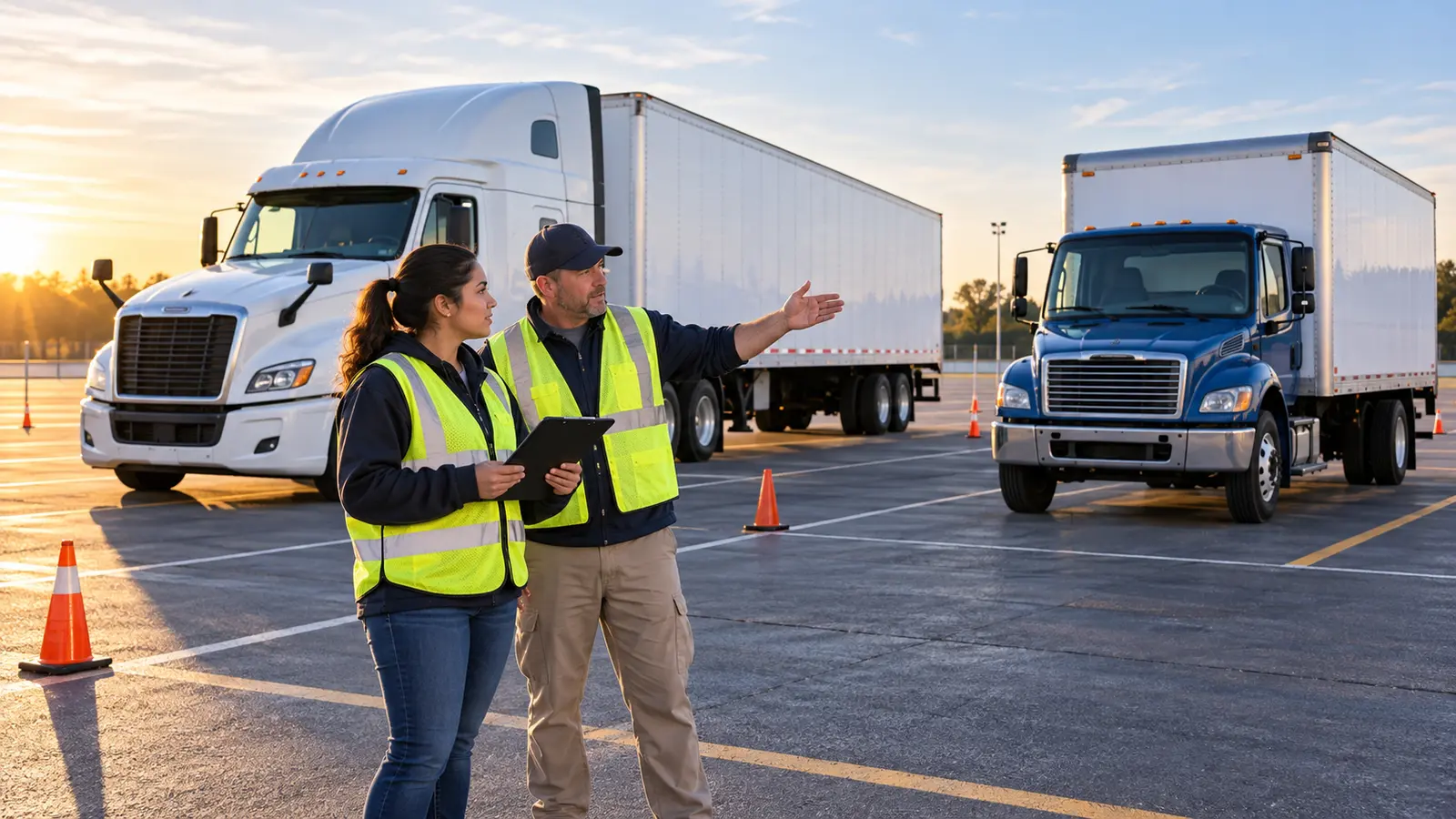
A student may begin Class A Entry-Level Driver Training and later decide that a Class B job, test vehicle, or schedule is the better immediate fit. That change raises an expensive question: must the student buy and complete a separate Class B ELDT program before taking the Class B skills test?
FMCSA's Training Provider Registry gives a direct federal answer. An individual who successfully completes the ELDT required for a Class A CDL is eligible to take the skills test for either a Class A or Class B CDL. The important words are successfully completes. Class A enrollment, theory alone, or a partially finished behind-the-wheel program is not the same as completing the required Class A pathway.
The federal rule is one-way
Completed Class A ELDT can satisfy the federal ELDT requirement for a Class B skills test because Class A is the higher combination-vehicle class and its curriculum includes the applicable foundational knowledge and skills. FMCSA confirmed this interpretation in its TPR training-requirements FAQ, last updated January 11, 2022 and current when checked on October 15, 2026.
The reverse is not true. A person who completes Class B ELDT does not automatically qualify for the Class A skills test. Moving from Class B to Class A is a covered CDL upgrade under 49 CFR §380.609, so the driver must complete the applicable Class A upgrade curriculum through registered providers before the state may administer the Class A skills test.
Full Class A ELDT means theory and behind-the-wheel training
For a first Class A CDL, federal ELDT has separate theory and behind-the-wheel components. Theory covers the topics in Appendix A to Part 380 and requires an overall written or electronic assessment score of at least 80 percent. Behind-the-wheel training has range and public-road portions, and a qualified instructor must determine that the student is proficient in every required element.
A Class A theory certificate by itself does not authorize a Class B skills test when the applicant is otherwise subject to ELDT. The state must be able to verify the required theory and BTW completions in the Training Provider Registry. Online theory can be completed with one registered provider while range and public-road instruction come from another, but each provider must submit the component it actually delivered.
Class A and Class B remain different licenses
ELDT eligibility does not decide which CDL the state issues. The skills-test vehicle and the application control the tested class. A Class B test in a qualifying heavy straight truck can result in Class B privileges even when the applicant completed Class A ELDT. It does not award Class A authority for tractor-trailer combinations.
Under 49 CFR §383.91, Class A generally covers qualifying combinations in which the combination meets the 26,001-pound threshold and the towed unit exceeds 10,000 pounds. Class B generally covers a qualifying single vehicle at 26,001 pounds or more, including a limited trailer within the federal definition. Verify ratings from the vehicle labels and the state agency rather than relying on body style alone.
The test vehicle can still place restrictions on the CDL
Choosing a Class B test does more than determine the license class. An automatic-transmission vehicle can produce an E restriction against manual-transmission CMVs. A vehicle without air brakes can produce an L restriction, while air-over-hydraulic equipment can produce a Z restriction against full-air-brake vehicles. Passenger applicants can face additional vehicle-class limitations.
Before reserving a truck, tell the school or examiner which jobs and equipment you want to operate. Ask for the vehicle's CDL class, gross vehicle weight rating, brake system, transmission, registration, inspection status, and insurance requirements. Passing in the easiest available truck may create a credential that does not fit the employer you are targeting.
Your CLP, application, and appointment still matter
A Class A ELDT record does not replace a valid commercial learner's permit or state licensing steps. Confirm with the State Driver Licensing Agency whether your existing CLP and application support the Class B test, whether the appointment type must change, which knowledge tests remain valid, and whether new fees or documents are required.
Federal rules generally require a first-time applicant to hold the CLP for at least 14 days before the CDL skills test, but states manage permit issuance, appointment systems, renewals, and additional requirements. Do not switch test classes based only on a school's available truck. Get the agency's instructions first so the training record, permit, application, and scheduled exam all describe a compatible path.
Check the TPR record before test day
Registered providers submit completion data electronically to FMCSA. The record includes identifying information, training type, provider details, and completion date. A state must verify applicable ELDT before administering the covered skills test. A paper course certificate can be useful for your files, but it does not substitute for the electronic TPR match.
Use FMCSA's Check My Record service after each provider reports completion. Compare your legal name, date of birth, driver's-license or permit number, licensing state, and training type with the current credential. If Class A theory or BTW is missing or attached to incorrect information, contact the reporting provider promptly. Do not wait until the examiner searches the system at the appointment.
States and schools may require more than the federal minimum
ELDT establishes a national floor. FMCSA explains that states may impose additional training requirements, such as minimum BTW hours, instructor or school qualifications, or state-specific licensing steps. A training provider can also set prerequisites for safety, equipment access, or course completion, as long as it complies with applicable rules.
Ask the licensing agency whether completed Class A ELDT is accepted for the planned Class B transaction and whether any state training rule remains. Ask the Class A provider how it documents completion if you leave with a Class B goal. If the student has not demonstrated proficiency in the Class A BTW curriculum, a provider cannot simply report full completion to make the Class B test possible.
When choosing Class B first can make sense
A Class B test may be practical when the confirmed job uses a straight truck, large bus, dump truck, refuse truck, concrete mixer, or another qualifying single vehicle and the employer does not need Class A. It may also fit an applicant who has completed Class A training but lacks a suitable tractor-trailer test vehicle or wants to begin a Class B career sooner.
Compare the decision with future plans. Class A generally offers broader combination-vehicle authority, while Class B may align better with local vocational work. Review actual job postings, required endorsements, prohibited restrictions, schedule, physical duties, and employer experience standards. The lower class is not automatically an easier career; it is a different operating category with its own equipment and responsibilities.
If you plan to test for Class A later
Keep copies of provider communications and verify that every completed Class A component remains visible in the TPR. FMCSA's FAQ says successful completion of Class A ELDT makes the individual eligible for either Class A or Class B testing. A later Class A test can still require a valid permit, the waiting period, a representative combination vehicle, current medical status, and the state's application process.
If you completed only Class B ELDT—or only enough training for the provider to certify Class B—expect to complete the applicable Class A upgrade requirements before a later Class A test. Give the state and any new provider a precise history: training type, completion dates, current CDL or CLP class, restrictions, and intended test vehicle. That prevents assumptions from becoming duplicate tuition or a rejected appointment.
Build the least-wasteful training plan
Start with the vehicle and work you actually want. If tractor-trailer flexibility is the goal and you can complete the full pathway, Class A ELDT keeps both Class A and Class B testing options open under FMCSA's guidance. If the goal is clearly Class B, buying a larger program only for theoretical flexibility may add cost and complexity without improving the immediate job fit.
CDL Compass offers registered online theory courses for both Class A and Class B applicants. Online theory covers the required knowledge curriculum, while hands-on range and public-road training must be completed with an appropriate registered BTW provider. Choose the exact course deliberately, confirm the provider's TPR listing, coordinate the state permit and test vehicle, and verify the electronic record before test day.