Class A vs. Class B CDL Training: Which Path Fits You?
Compare the vehicles, career options, and ELDT training paths associated with Class A and Class B commercial licenses.
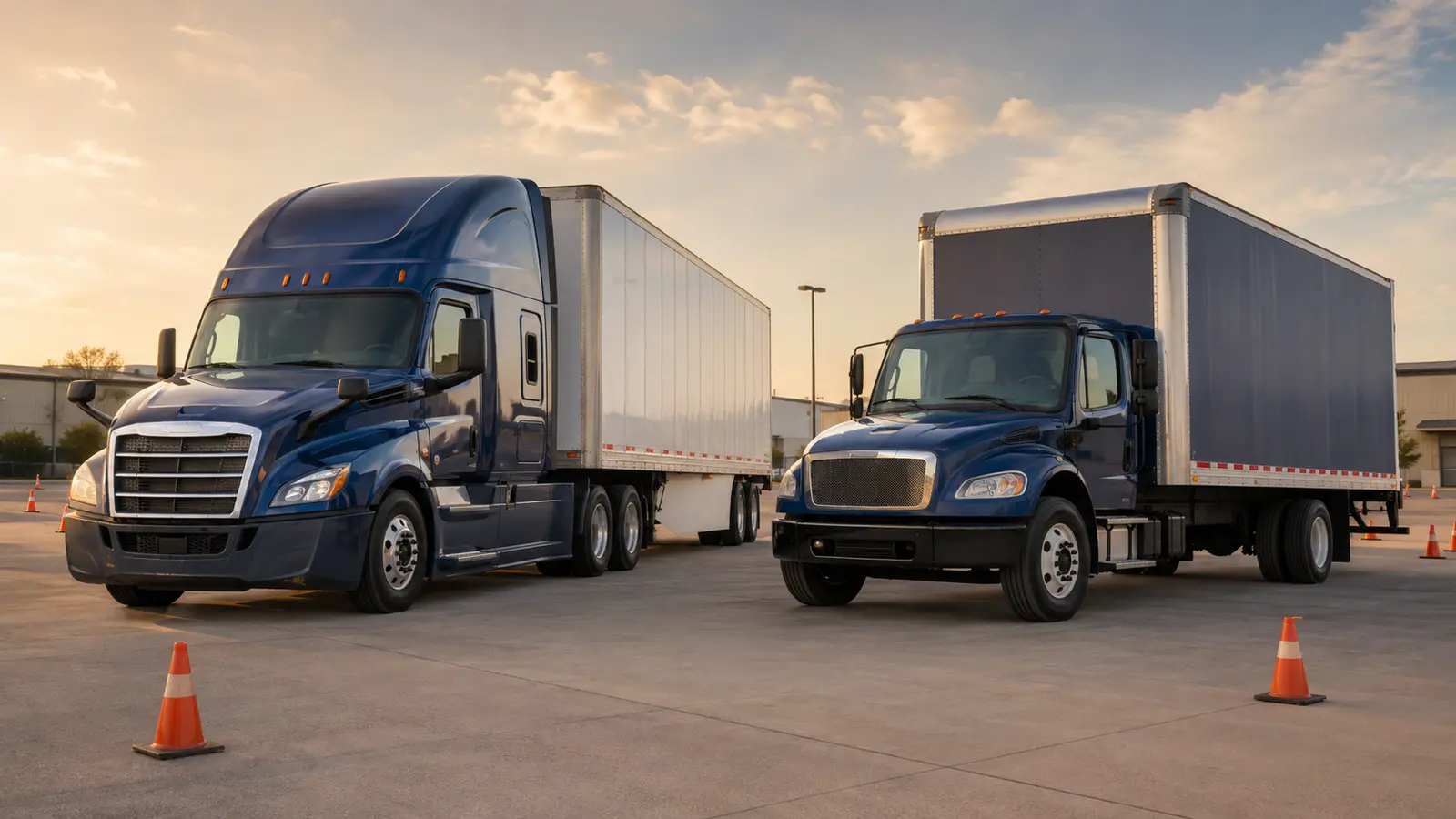
Choosing between a Class A and Class B CDL starts with the type of vehicle you want to operate and the work you want to pursue. Both licenses can lead to strong careers, but they cover different vehicle combinations and job opportunities.
Class A opportunities
A Class A CDL is commonly associated with tractor-trailers and other combination vehicles. It can support long-haul, regional, dedicated, tanker, flatbed, and specialized transportation careers. Because it covers a broader category of vehicles, it often provides the greatest flexibility.
Class B opportunities
A Class B CDL is used for heavy straight vehicles. Common roles include local delivery, dump truck, concrete mixer, utility vehicle, refuse truck, and certain bus-driving positions. Many Class B jobs offer local routes and predictable schedules.
Make the decision around your goal
Think beyond the test itself. Consider the schedule you want, the equipment you prefer, and the employers hiring in your area. Once you choose a path, complete the correct ELDT theory course and follow your state’s permit and skills-testing process.