Can You Get a CDL at 18 in 2026? ELDT, Intrastate Limits, and the Age-21 Rule
Learn when an 18-year-old can earn a CLP or CDL, how ELDT fits into the process, why most interstate driving still requires age 21, and what to verify before enrolling.
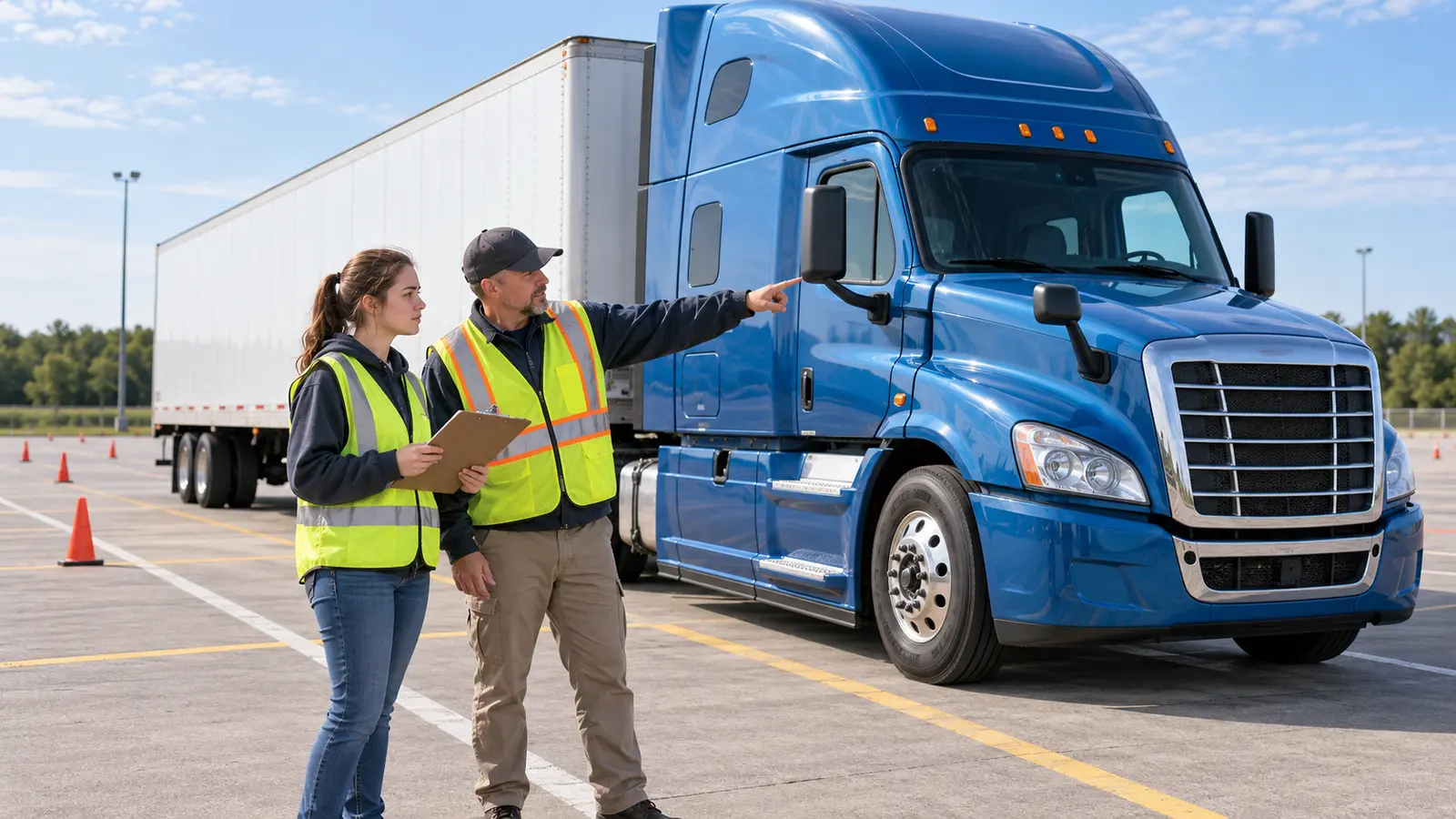
Yes—federal CDL rules allow a person who is at least 18 to apply for a commercial learner's permit, and many states issue intrastate CDLs to qualified drivers ages 18 through 20. The important limitation is where and how that driver may work. A CDL earned at 18 does not normally authorize unrestricted interstate commercial driving.
The age question should be answered before paying tuition or accepting a job promise. Entry-Level Driver Training establishes the required training pathway, but it does not override state licensing rules, federal driver-qualification standards, employer policies, insurance requirements, or endorsement restrictions. An applicant needs a plan that connects the license, training, vehicle, freight, route, and intended job.
The federal CLP minimum age is 18
49 CFR §383.71 states that a person must be 18 or older and provide proof of age before obtaining a CLP. The applicant must also meet the state licensing agency's document requirements, pass the required knowledge tests, provide the appropriate self-certification, and satisfy medical requirements when applicable. Because states issue CLPs and CDLs, the current state CDL manual remains the practical application guide.
A CLP authorizes supervised practice on public roads in the class and endorsement configuration shown on the permit. It is not a license to work alone. The accompanying driver must hold the proper CDL and meet the applicable supervision rules. The learner must also follow any restrictions printed on the permit and any state limitations placed on an under-21 applicant.
Why age 21 changes the operating authority
Under 49 CFR §391.11, a driver subject to the federal interstate qualification rules generally must be at least 21 years old. That is why an 18-, 19-, or 20-year-old may hold a state-issued CDL yet remain limited to intrastate operation. The license proves that the driver passed the applicable tests; it does not erase the age requirement for the work being performed.
Interstate commerce is not determined only by whether the truck physically crosses a state line. A local leg may still be part of an interstate movement when the shipment's fixed and persistent intent carries goods between states or countries. A young driver should not decide the classification from mileage or route appearance. Ask the carrier's safety or compliance department whether the specific operation is intrastate and permitted under state law.
What an intrastate CDL can allow
A state may authorize an under-21 CDL holder to operate qualifying commercial vehicles only within that state. That can open paths in construction, landscaping, local delivery, utility work, municipal service, agriculture, towing, waste collection, or other in-state operations, depending on the class, endorsements, vehicle, cargo, and state rules.
Intrastate does not mean lightly regulated. The driver still needs the correct CDL class, endorsements, medical status, and training; must obey hours-of-service and safety rules that apply; and cannot operate outside license restrictions. Some employers, customers, insurers, or public contracts set a minimum hiring age above the legal floor. Confirm those conditions before choosing a program around one promised position.
ELDT applies by credential—not by a separate age rule
The federal ELDT requirements apply to first-time Class A and Class B applicants, Class B holders upgrading to Class A, and first-time applicants for passenger, school bus, or hazardous materials endorsements, subject to listed exceptions. Required training must come from a provider listed on FMCSA's Training Provider Registry before the applicable skills or knowledge test.
ELDT does not create a separate federal rule saying every student must be 21. An eligible 18-year-old pursuing an intrastate Class A or Class B CDL may still be subject to ELDT. Conversely, completing ELDT at 18 does not grant interstate operating authority. Training completion and authority to perform a job are different checkpoints.
Theory, CLP, and behind-the-wheel timing
FMCSA states that federal rules do not require the theory portion of ELDT to be completed before applying for a CLP. A student can take theory first or obtain the permit first, as allowed by the training provider and state. Before beginning the behind-the-wheel portion, however, the student must hold the appropriate CLP or CDL under the ELDT rules.
For a first Class A or Class B CDL, the student must complete the required theory and behind-the-wheel training and have the results electronically submitted to the Training Provider Registry before the state can allow the CDL skills test. FMCSA also requires the CLP to be held for at least 14 days before the skills test. State scheduling, school admissions, and program-hour rules can add more time.
Choose Class A or Class B around the real job
Class A generally covers combination vehicles with a qualifying gross combination weight rating when the towed vehicle exceeds 10,000 pounds. Class B generally covers a qualifying single vehicle and certain combinations with a lighter towed unit. The age rule does not change those class definitions, but the local job market should influence the choice.
An under-21 applicant considering Class A should verify that nearby employers actually use tractor-trailers in intrastate service and hire at that age. A Class B path may align with local straight trucks, certain buses, construction vehicles, or municipal equipment, but passenger and school-bus work carries additional endorsement, testing, background, and state qualification requirements. Train for a lawful opportunity, not merely the largest license.
Endorsements can add separate limits
A first-time passenger, school bus, or HazMat applicant subject to ELDT must complete the corresponding curriculum before the applicable state test. That training requirement does not guarantee that an under-21 applicant qualifies for the endorsement or for a particular job. States may impose age, background, experience, or school-transportation standards beyond the federal training rule.
HazMat work also involves TSA security-threat assessment requirements and routing or operating rules. An applicant under 21 should verify eligibility directly with the state licensing agency before purchasing HazMat training or arranging fingerprinting. For any endorsement, separate the questions: Can the state place it on the license, can the driver legally perform the planned operation, and will the employer or insurer accept that driver?
The under-21 interstate pilot has ended
FMCSA's Safe Driver Apprenticeship Pilot once allowed approved drivers ages 18 through 20 with intrastate CDLs to operate in interstate commerce under tightly controlled conditions. FMCSA's current program page states that the pilot officially concluded on November 7, 2025, and that the last application deadline was August 31, 2025.
Do not rely on an old recruiting page, video, or article that presents SDAP as an open route in 2026. Unless another specific lawful exception applies, the normal age-21 interstate qualification remains the planning baseline. A school or employer claiming otherwise should identify the exact current authority before the student pays money or drives across state lines.
A practical checklist for applicants ages 18–20
First, read the current CDL manual and age rules published by your state licensing agency. Second, identify the exact Class A or Class B vehicle and in-state job you want. Third, ask prospective employers—in writing if possible—about minimum age, intrastate routes, insurance, experience, endorsements, and hiring after graduation. Fourth, confirm medical and document requirements before scheduling the CLP tests.
Then select a Training Provider Registry-listed provider for every ELDT component you need. Complete theory, obtain the proper CLP, and coordinate qualified behind-the-wheel instruction. Verify that the provider has submitted completion records before booking the skills test. Keep copies of school records, but remember that the state's electronic TPR verification—not a decorative paper certificate—is what supports test eligibility.
Turning 21 does not automatically update everything
A driver who reaches 21 should contact the state licensing agency before beginning interstate work. The driver may need to change the CDL self-certification category, satisfy interstate medical-certification requirements, and remove an intrastate-only restriction or status from the driving record. The carrier should verify the updated license and motor vehicle record before dispatching the driver in interstate commerce.
The same caution applies to endorsements and job assignments. Becoming 21 does not replace a required knowledge test, TSA assessment, ELDT record, medical qualification, or employer onboarding. Treat the birthday as the point to complete the remaining administrative steps—not as automatic permission to accept any load.
Start with the license path you can legally use
A CDL at 18 can be a real start to a commercial-driving career when state law and local work support it. The strongest plan combines registered ELDT, supervised behind-the-wheel training, a compliant intrastate position, and a clear transition strategy for age 21. It also leaves room for experience-building without overstating what the credential permits.
CDL Compass offers online Class A and Class B ELDT theory for eligible students. Before enrolling, confirm the licensing and employment rules in your state, then arrange the required behind-the-wheel training with a qualified provider. Good training begins with an honest answer about the work you can perform today and the qualifications you will need next.