Do Yard Jockeys Need a CDL in 2026? Private Property, Public Roads, and Career Path
Learn when a yard jockey, hostler, or spotter may need a CDL, how public-road movements change the answer, and what to check before accepting a yard-driving job.
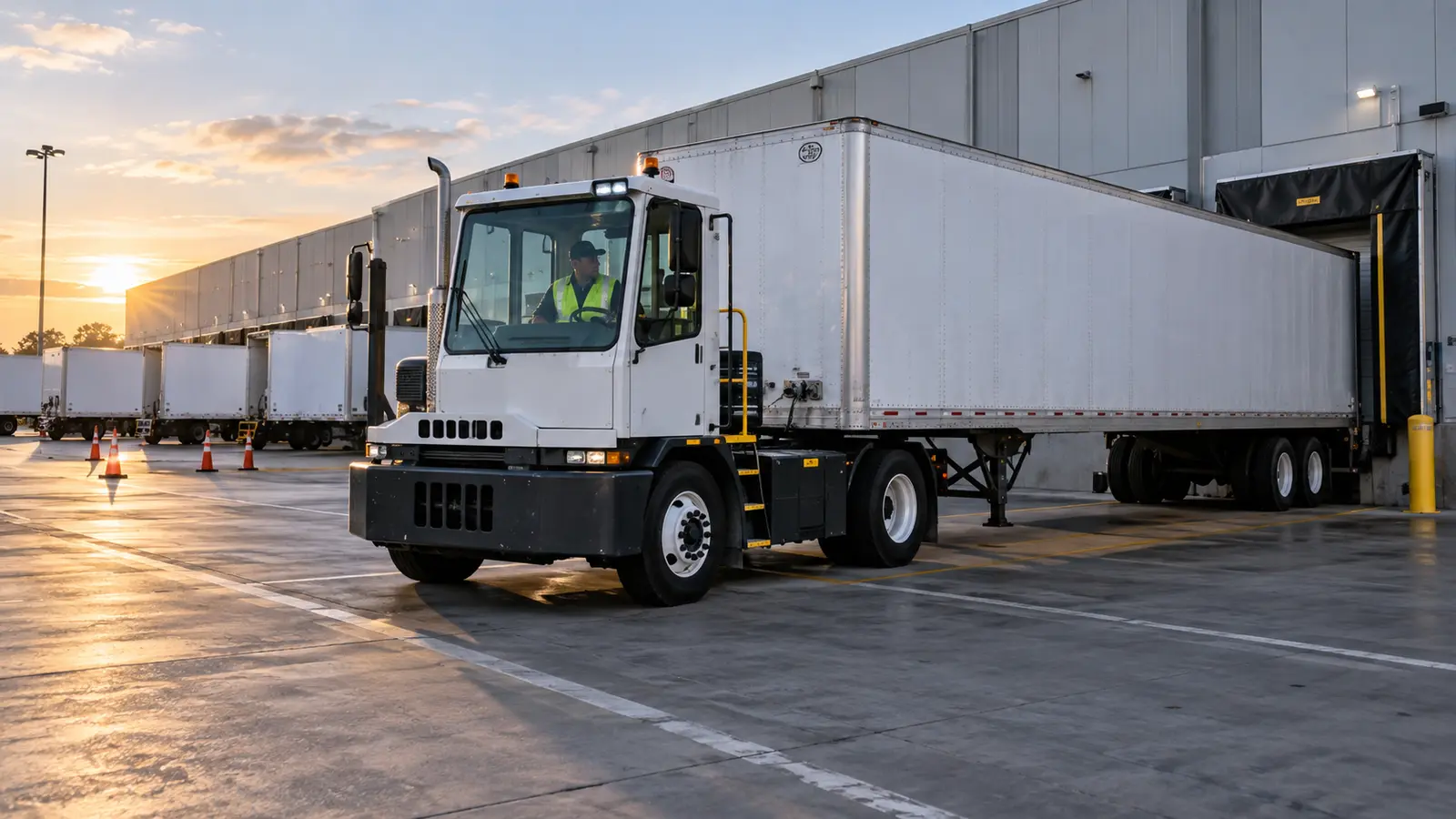
A yard jockey moves trailers between parking rows, loading docks, inspection points, and staging areas. Employers may call the position yard hostler, spotter, switcher, yard driver, or terminal tractor operator. The work is usually local and repetitive, but it demands accurate backing, coupling, communication, and constant awareness around pedestrians and moving equipment.
Whether the job legally requires a commercial driver's license is not answered by the job title. The route, property access, vehicle configuration, weight ratings, cargo, State rules, and employer policy all matter. A position that stays inside a restricted yard can be different from one that crosses a public street several times per shift.
Start with where the vehicle will actually operate
Federal CDL rules in 49 CFR Part 383 apply to people who operate a commercial motor vehicle in interstate, foreign, or intrastate commerce. Section 383.5 defines a motor vehicle as one propelled or drawn by mechanical power and used on highways, and the CDL definition of a CMV then applies vehicle-weight, passenger, and hazardous-material thresholds.
A hostler used exclusively inside a closed, restricted terminal may fall outside that federal highway-based scope. Do not turn that general principle into a blanket “private property means no CDL” rule. State licensing law can be broader, an employer may require a CDL, and part of a large industrial property can qualify as a highway if it is open to public travel.
Private ownership does not always mean a private road
The FMCSA definition in §390.5T says a highway can be a road, street, or way on public or private property when it is open to public travel. The definition looks at access: whether ordinary passenger cars can use it and whether it is open to the public without restrictive gates, prohibitive signs, or controls beyond limits based on size, weight, or registration class.
That means a road through a privately owned industrial park, port, shopping complex, or distribution campus can require closer analysis. A fenced yard with controlled gates and authorized-personnel-only access is different from a connector road customers and the general public may freely use. Ask the employer to identify every operating surface, not just who owns the land.
A short public-road movement can change the job
Some yards occupy both sides of a public street, use an overflow lot down the road, send hostlers to a nearby repair shop, or require fueling outside the gate. Even a brief highway movement should be identified before the first shift because it can place the driver and vehicle within CDL and other motor-carrier requirements.
Get a specific answer about crossings, shoulders, access roads, fuel locations, maintenance trips, snow detours, and emergency moves. Do not rely on “you will mostly stay in the yard.” A route map, written job description, and explanation from the safety department are more useful than an informal promise made during a quick interview.
The vehicle configuration determines the CDL class
Under §383.5, a Group A commercial motor vehicle generally has a gross combination weight rating or gross combination weight of at least 26,001 pounds and includes a towed unit with a GVWR or actual gross weight above 10,000 pounds. A typical terminal tractor moving full-size semitrailers on a highway can meet that Class A definition.
Group B generally covers a single vehicle with a GVWR or gross weight of at least 26,001 pounds. Group C covers certain vehicles below the A and B thresholds when they are designed for 16 or more occupants including the driver, or transport hazardous materials requiring the specified credential. Verify certification labels and ratings rather than assuming an empty trailer or low-speed tractor avoids the threshold.
The trailer being empty does not settle the question
CDL classification uses weight ratings or actual weights as specified in the regulation. A yard tractor and empty semitrailer can still form a Group A vehicle because the tractor's combination rating and the trailer's rated capacity do not disappear when cargo is removed.
Ask which tractors and trailers the position may handle, including refrigerated, intermodal, tanker, pup, and loaded units. Also ask whether the hostler ever pulls doubles, handles placarded loads, or works with equipment that has air brakes. The answer affects the license, endorsements, restrictions, training, and employer qualification process.
Employer policy may require a CDL even when a yard-only role does not
Warehouses and carriers often set qualification standards above the minimum legal requirement. They may require a Class A CDL because employees occasionally leave the property, because one credential standard simplifies scheduling, or because the company wants drivers ready for road work, recovery moves, and promotion.
A company can also require a driving record review, medical qualification, drug and alcohol testing, prior experience, a background check, or equipment certification according to the position and its regulated duties. Read the posting carefully and ask which requirements are legal conditions for the operation and which are company hiring standards.
First-time CDL applicants generally need ELDT
If the position requires you to obtain a Class A or Class B CDL for the first time, §380.609 requires entry-level driver training from a provider listed on the FMCSA Training Provider Registry. The same rule applies to a driver upgrading from one CDL class to another and to first-time P, S, or H endorsements.
Class A and Class B applicants complete theory and behind-the-wheel curricula before the applicable State skills test. Online theory can cover the required knowledge, but range and public-road instruction must be conducted by a registered provider in a representative commercial vehicle. Confirm that the training completion is submitted to the TPR before scheduling the skills test.
Yard work builds useful skills—but it is not automatically CDL training
Daily spotting can sharpen mirror use, trailer tracking, backing setup, coupling, dock alignment, and low-speed space management. It can also teach a driver how freight facilities communicate and where common pinch points develop. Those are valuable foundations for a Class A career.
However, an ordinary work shift is not automatically the behind-the-wheel ELDT required for a first CDL. The employer must be a registered training provider for the applicable curriculum, use qualified instructors, deliver the required range and public-road elements, assess proficiency, and submit the training record. Ask before assuming that paid yard experience will satisfy the federal training step.
The safety demands are real even at low speed
A yard contains pedestrians, forklifts, dock plates, trailers with open doors, blind corners, uneven pavement, landing gear, overhead obstacles, moving trucks, and drivers who may not expect another unit to enter their path. Low speed reduces some crash energy but does not remove crush, rollover, collision, or trailer-drop risk.
Use the site's traffic pattern, speed limits, radio language, personal protective equipment, and designated walkways. Complete the required inspection, confirm the fifth-wheel lock, connect lines correctly, raise or lower landing gear as instructed, and stop when visual contact with a spotter is lost. Never stand between equipment that can move.
Understand how the job is measured and paid
Yard positions may pay hourly, by shift, or through a staffing contractor. Some include overtime, shift differentials, bonuses tied to trailer moves, union benefits, or a path into local driving. Compare guaranteed hours and benefits rather than focusing only on the headline rate.
Ask how productivity is measured and whether safety events can be hidden by a move-count target. Clarify the schedule, weekends, mandatory overtime, weather expectations, break coverage, walking requirements, cab sharing, training period, and who is responsible for reporting damaged trailers or dock equipment. A good operation expects accurate moves, not rushed shortcuts.
Questions to ask before accepting a yard-driver offer
Request the exact license class, endorsements, medical certification, drug-testing status, experience minimum, and motor-vehicle-record standard. Ask whether the job ever enters a road open to public travel, who determines whether a route is public, and whether the employer provides written operating boundaries.
Confirm the equipment type, transmission, brake system, daily inspection process, coupling procedure, safety orientation, and accident-reporting rules. Ask whether the company pays for CDL training or testing, whether a training agreement requires repayment, and whether promotions into local, regional, or over-the-road roles are available after a stated period.
Use the role as a deliberate career step
A yard jockey position can be a strong entry point for someone who wants regular shifts, home-daily work, intensive backing practice, and exposure to freight operations. It may also suit experienced drivers who prefer terminal work. The best fit depends on the actual duties, safety culture, schedule, physical demands, and advancement path.
If the role requires a first Class A or Class B CDL, start with the matching CDL Compass ELDT theory course and coordinate behind-the-wheel training with a registered local provider. Bring the employer's route and equipment details to the licensing conversation so the credential matches the work you will perform—not merely the title printed on the job listing.