LTL Trucking Jobs in 2026: Linehaul vs. P&D, Pay, and Home Time
Compare LTL linehaul and pickup-and-delivery driving, including schedules, pay structures, physical demands, CDL qualifications, and questions to ask before accepting a job.
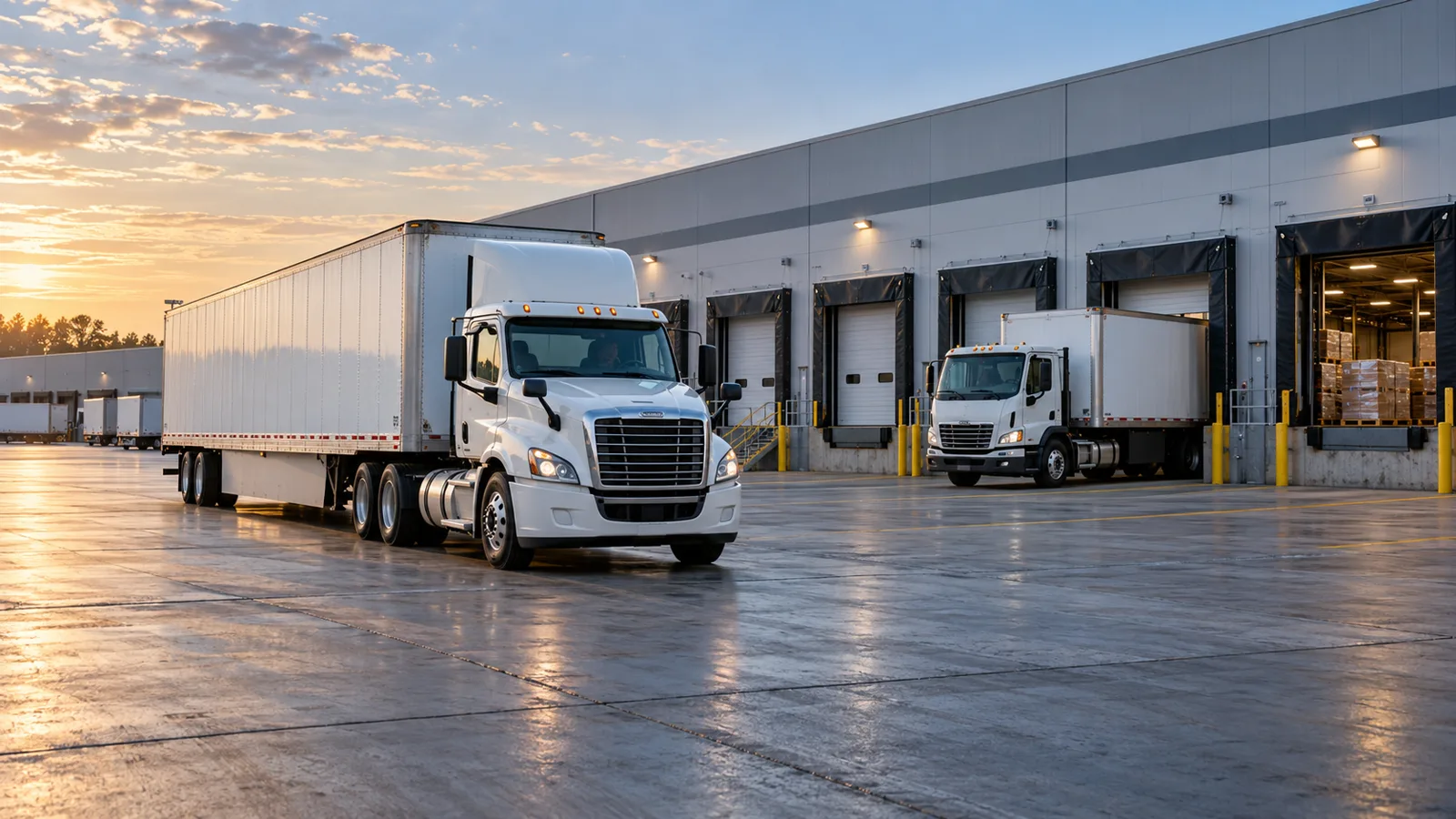
Less-than-truckload, or LTL, carriers combine freight from multiple shippers in one trailer and move it through terminal networks. That model creates two CDL career paths: linehaul drivers move trailers between terminals, while pickup-and-delivery drivers—usually called P&D drivers—serve customers within a terminal's local area.
Both jobs can offer an alternative to over-the-road trucking, but the workdays differ. Linehaul emphasizes highway miles, trailer swaps, and nighttime schedules. P&D emphasizes city driving, customer stops, dock work, and frequent backing. The better choice depends on how you want to spend the workday, not only the advertised pay rate.
How the LTL network creates two driving jobs
An LTL shipment may travel from a local terminal to intermediate hubs before reaching the destination terminal. Freight is sorted across the dock so each outbound trailer carries shipments moving in the same direction. Linehaul connects the terminals; P&D handles the first and final road movements.
Job titles are not standardized. A carrier may advertise linehaul as road driver, road run, shuttle, relay, or terminal-to-terminal. P&D may appear as city driver, local driver, route driver, or pickup-and-delivery driver. Read the duties and schedule instead of relying on the title, and confirm whether dock work is part of the position.
What a linehaul driver does
A linehaul shift often starts with a pre-trip inspection, paperwork review, and coupling to one or more assigned trailers. The driver travels a scheduled route to another terminal or meet point, drops and hooks trailers, verifies seals and documents, and returns or completes a layover. Some runs use doubles or triples where permitted, which requires the T endorsement and specialized coupling knowledge.
The work usually involves fewer customer stops and more continuous highway driving than P&D. However, it can include tight terminal yards, poor weather, mountain routes, night visibility, and repeated coupling. Some drivers bid on fixed runs by seniority; others begin on an extra board and cover open assignments. Ask whether the route is guaranteed, rotating, or called as freight demand changes.
What a P&D driver does
A P&D driver leaves the terminal with freight for businesses in a local service area, completes multiple deliveries, picks up outbound freight, and returns to the dock. The route can include industrial parks, construction sites, small warehouses, urban streets, and customers without a full-size dock. The driver must protect the freight while keeping appointments and managing changing instructions.
Expect frequent backing, turns, traffic interactions, and entry and exit from the cab. Depending on the carrier and shipment, the driver may use a pallet jack, liftgate, hand truck, straps, or other freight-handling equipment. The job also requires accurate bills of lading, delivery receipts, exception notes, freight counts, and damage reports. Customer communication is part of the safety process, not an optional soft skill.
Compare schedules and realistic home time
P&D routes commonly begin in the morning and return to the home terminal after the route, but the release time can change with freight volume, pickups, weather, and delays. Linehaul can also provide daily home time on a turn run, yet many assignments begin at night and some require a layover. A home-daily label does not tell you which hours you will actually be home.
Ask for the normal report time, typical release range, average days worked, weekend expectations, and how extra-board calls are assigned. Find out how much notice drivers receive and whether the schedule changes by seniority. If a layover is possible, ask how lodging and meal expenses work. Compare the entire weekly routine with your sleep needs and family responsibilities.
Understand every part of the pay offer
Linehaul may be paid by the mile, by the trip, by the hour, or through a combination of mileage and activity pay. P&D is often hourly, but no single structure applies to every carrier. Ask how the company pays for waiting, fueling, inspections, breakdowns, chaining, drops and hooks, dock work, missed routes, and training. A high base rate can hide substantial unpaid time.
The Bureau of Labor Statistics reports that the May 2025 median annual wage for heavy and tractor-trailer truck drivers was $58,640; that is a national occupation-wide benchmark, not an LTL wage promise. Federal overtime rules also require careful reading because the Motor Carrier Exemption can exclude some safety-affecting interstate motor-carrier employees from FLSA overtime, while State law, a union agreement, or company policy may provide different protection. Get the pay method in writing.
Check the CDL, endorsement, and experience requirements
Most tractor-trailer linehaul positions require a Class A CDL. P&D may require Class A or Class B depending on the vehicles assigned, though a Class A can expand the available routes. Doubles or triples require a T endorsement, and placarded hazardous-material freight may require an H endorsement; operating a cargo tank can add N, while a combined HazMat and tank qualification is shown as X.
A first-time Class A or Class B applicant must complete applicable Entry-Level Driver Training from a provider listed on the FMCSA Training Provider Registry before taking the State skills test. Employers can still set experience standards beyond the license. Ask whether the carrier hires new graduates, provides a supervised finishing program, requires a manual-transmission qualification, or accepts an E restriction.
Physical work and dock responsibilities matter
The occupation is more than steering. O*NET lists inspecting vehicles and loads, checking documents, coupling equipment, maneuvering at docks, maintaining records, and sometimes loading or unloading among common heavy-truck-driver tasks. P&D generally adds more walking, climbing, freight handling, and customer-site work. Linehaul can add repeated trailer handling and outdoor coupling during overnight weather.
Ask for the job's lifting requirement and whether freight is driver-assist, driver-unload, or no-touch. Confirm who handles damaged pallets, residential deliveries, inside delivery, liftgate stops, and hazardous materials. If dock work is required before or after driving, learn whether it is scheduled, how it is paid, and which equipment training the carrier provides. Never operate a forklift or material-handling device without authorization and training.
Hours-of-service rules still shape local work
A local route is not automatically exempt from federal hours-of-service limits. The standard property-carrier rules include the 11-hour driving limit after 10 consecutive hours off duty, the 14-consecutive-hour driving window, the 30-minute break requirement after eight cumulative hours of driving without a qualifying interruption, and the applicable 60/7- or 70/8-day limit.
Some drivers may operate under the short-haul exception when all conditions are met, including returning to the normal work-reporting location within the required time and remaining within the permitted air-mile radius. The exception affects record-of-duty-status requirements; it does not create unlimited hours. Ask which rule the operation uses, how time is recorded, and what happens when a route exceeds the exception.
Match the role to your strongest work habits
Linehaul can fit drivers who prefer long periods of focused highway driving, consistent terminal procedures, independent nighttime work, and repeated equipment checks. It demands alertness when the body naturally expects sleep. A predictable route may feel stable, but weather, traffic, freight volume, and an extra-board assignment can still change the plan.
P&D can fit drivers who enjoy varied stops, customer interaction, active work, and solving access problems without taking unsafe shortcuts. It rewards precise backing, route organization, paperwork accuracy, and calm communication. The pace can be demanding because every delay affects later appointments. If you dislike dense traffic or repeated dock maneuvers, a local label alone will not make the job comfortable.
Ask these questions before accepting an LTL job
Request the written pay schedule and a realistic example of a normal week. Ask whether the opening is linehaul, P&D, a combination role, or dock-to-driver; whether it is assigned or extra-board; and whether the position is permanent, seasonal, or contingent. Clarify probation, seniority, route bidding, minimum guarantees, overtime treatment, paid activities, benefits eligibility, and the date each benefit begins.
Then ask about the equipment and safety program: automatic or manual tractors, doubles requirements, driver-facing cameras, governed speed, freight-handling tools, inspection procedures, breakdown support, and training for winter or mountain routes. Confirm the terminal address, parking rules, commute, dispatch window, physical standards, and background-check process. A precise offer is easier to compare than a recruiter's annual-pay estimate.
Prepare for the job, not only the CDL test
Use Class A or Class B ELDT theory to build the regulatory foundation, then connect it to behind-the-wheel training in the vehicle group you plan to operate. Practice pre-trip inspections, coupling, backing, city turns, space management, railroad crossings, extreme conditions, and trip planning. Linehaul candidates should understand doubles when relevant; P&D candidates should seek extra dock and urban backing practice.
Before applying, organize your CDL, medical certification, endorsements, driving history, work history, and training records. Build examples that show dependability, safe decisions, clear communication, and accurate documentation—the same qualities O*NET highlights for heavy-truck drivers. LTL can offer a strong long-term path, but the right position is the one whose actual schedule, duties, and compensation match how you want to work.