How to Get Your First CDL Job in 2026: A No-Experience Driver’s Guide
Learn how to become hire-ready, find carriers that accept new CDL drivers, prepare for screening, compare offers, and land a first professional driving job.
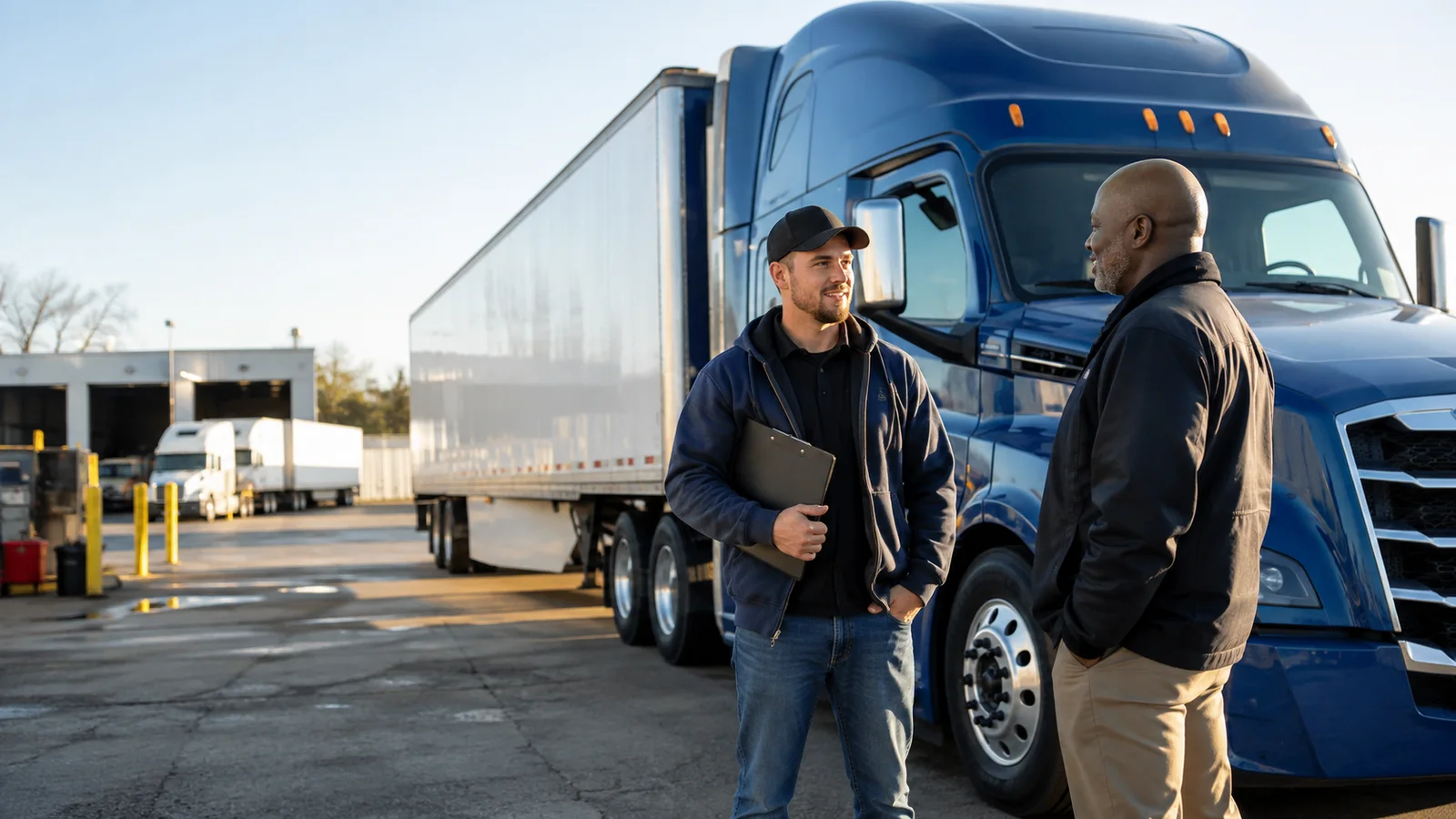
Getting a CDL creates eligibility for commercial driving work, but it does not automatically produce a first job. New drivers must match their license, training, record, location, and schedule to a carrier that hires entry-level applicants. Become ready for screening, apply to realistic operations, and compare the complete offer rather than chasing the largest advertised number.
The U.S. Bureau of Labor Statistics projects about 237,600 openings for heavy and tractor-trailer truck drivers each year, on average, from 2024 through 2034. Those openings include growth and replacement needs, but they do not mean every applicant qualifies for every fleet.
Finish the license before starting a broad job search
Verify that the physical CDL has arrived and that the name, class, endorsements, restrictions, and medical-certification status are correct. The credential must match the equipment and cargo before the driver operates it.
Keep ELDT completion records and school documents, but understand their role. A registered Class A or Class B theory course is part of the pathway; applicants also complete required behind-the-wheel training and the state skills test. CDL Compass offers online theory, not range or public-road instruction.
Interstate CMV drivers generally must be at least 21. Drivers ages 18 through 20 should target intrastate opportunities allowed by their state and verify vehicle, cargo, and route limits.
Look for employers that actually train new drivers
A job advertisement that says “CDL required” is not necessarily entry level. Search for recent graduate, trainee, student driver, paid orientation, finishing program, or zero to six months experience. Confirm the policy because location, insurance, equipment, and freight can change eligibility.
Truckload carriers commonly operate structured new-driver programs, but food distribution, building materials, sanitation, ready-mix, towing, utilities, moving, bus, and local delivery fleets may also hire beginners. Some require unloading, irregular start times, or extra endorsements.
List realistic carriers and private fleets inside a workable radius. Include local terminals, where recruiters may know which accounts accept graduates and which restrictions affect eligibility.
Build a clean application packet
Prepare the CDL, required medical and work-authorization documents, address history, employment history, school information, and references. Use consistent dates and names; gaps are easier to explain than conflicting applications.
Lead a one-page resume with CDL class, endorsements, restrictions, training, vehicle type, availability, and location. Translate previous work into evidence of attendance, safety, customer service, mechanical awareness, documentation, or shift reliability. Never invent miles or call training solo experience.
Use professional voicemail and email, return calls promptly, and track each carrier, terminal, job, recruiter, screening stage, and offer. Accurate communication demonstrates reliability before the first dispatch.
Review the records an employer may screen
Order a current motor-vehicle record from the licensing state and check it for accuracy. List every crash, citation, suspension, and conviction honestly when the application asks. A carrier evaluates the underlying record, recency, severity, pattern, and its insurer’s standards; “clean enough for the DMV” is not the same as eligible for a particular fleet.
FMCSA’s Pre-Employment Screening Program lets drivers request their own PSP record. A PSP report includes five years of FMCSA-reportable crash data and three years of roadside inspection data. Review it before applying, especially if you drove commercially before or had an inspection during training. FMCSA directs users to DataQs when information appears incorrect or incomplete.
For a safety-sensitive CDL position, the prospective employer must conduct a pre-employment Drug and Alcohol Clearinghouse query before hiring. A driver needs a Clearinghouse account to provide electronic consent for the full query. Resolve login or record issues early; ignoring a consent request can stop the hiring process even when the rest of the application is complete.
Apply for a specific job, not every job
Match each application to the license and lifestyle. Class A graduates may target dry van, refrigerated, intermodal, flatbed, or dedicated freight. Class B drivers may target straight trucks, dump trucks, ready-mix, sanitation, delivery, or passenger work when endorsed.
Apply in focused groups, then follow up. Ten correct, selected applications are more useful than fifty incomplete submissions. Ask whether the terminal hires independent-school graduates and whether delayed applicants need a refresher or evaluation.
Use carrier career pages, terminals, school placement, workforce offices, job boards, and referrals. Never pay an unknown recruiter for a guaranteed position; verify the employer and written terms before sharing sensitive documents.
Prepare for the recruiter call and road evaluation
Be ready to explain why you chose trucking, what schedule you can keep, which freight interests you, and what you learned from training. Give direct answers about the record and employment history. A credible beginner says what was practiced, acknowledges what still requires supervised development, and shows a safety-first approach.
Review pre-trip inspection, coupling, backing, turns, lane control, railroad crossings, speed and space management, and safe parking before any evaluation. Ask what vehicle and transmission will be used. Never operate equipment that conflicts with the CDL class, endorsements, or restrictions just to impress an employer.
Recruiters also assess practical fit. Know how far the terminal is from home, whether you can report at the required time, whether the job involves unloading, and whether home-time expectations are realistic. A truthful no can prevent an early resignation and preserve eligibility with that carrier.
Compare the complete offer before saying yes
Separate training pay, orientation pay, and regular driver pay. Ask whether compensation is per mile, hour, route, load, stop, percentage, or salary; whether miles are practical or hub miles; and which work is unpaid. Request typical weekly range for a beginner in that terminal rather than only the fleet’s top advertised earnings.
Confirm trainer time, solo-qualification standards, home time, operating area, freight, unloading, equipment, automatic or manual policy, slip seating, benefits date, detention and layover pay, reimbursement, bonuses, and deductions. If there is a contract or repayment obligation, obtain it before orientation and calculate the maximum amount owed if employment ends early.
BLS reports that the May 2024 median annual wage for heavy and tractor-trailer drivers was $57,440, but a national median is not a promised starting wage. Route, region, freight, experience, hours, pay method, and available work all matter. Compare offers using expected weekly gross, unpaid time, expenses, benefits, and schedule—not a headline number.
Use a 30-day first-job plan
During days one through three, verify the CDL and medical record, request the MVR and PSP report, prepare the resume, register for the Clearinghouse if needed, and gather ten years of address and employment details when applications request them. Make a list of at least 20 realistic employers and terminals.
During the next two weeks, submit tailored applications in small groups, call recruiters, attend hiring events, and record every response. Practice interview answers and inspection language daily. If several carriers reject the application, ask whether the barrier is age, location, record, restriction, training date, experience, or hiring volume; then adjust the target instead of resubmitting blindly.
In weeks three and four, widen the freight type or commute radius, consider Class B or intrastate work when appropriate, and ask qualified providers about refresher training if skills have faded. Evaluate written offers with the same checklist. The first job should build safe, verifiable experience without placing you in equipment, freight, or working conditions you are not ready to handle.
Turn training into a professional record
Employers do hire new CDL drivers, but they hire for reliability, safety, eligibility, and fit—not simply possession of the card. Present accurate records, target true entry-level fleets, respond quickly, and ask detailed questions before committing.
If you are still completing the licensing path, choose the CDL Compass Class A or Class B ELDT theory course that matches the vehicle you want to drive, then arrange registered behind-the-wheel training and the state skills test. A well-planned training path makes the first job search easier because the license, restrictions, and career target align from the beginning.