Flatbed Trucking Jobs in 2026: Securement, Tarping, Pay, and Questions to Ask
Learn what flatbed truck drivers do, how securement and tarping shape the job, how to compare pay packages, and what new CDL drivers should ask before accepting an offer.
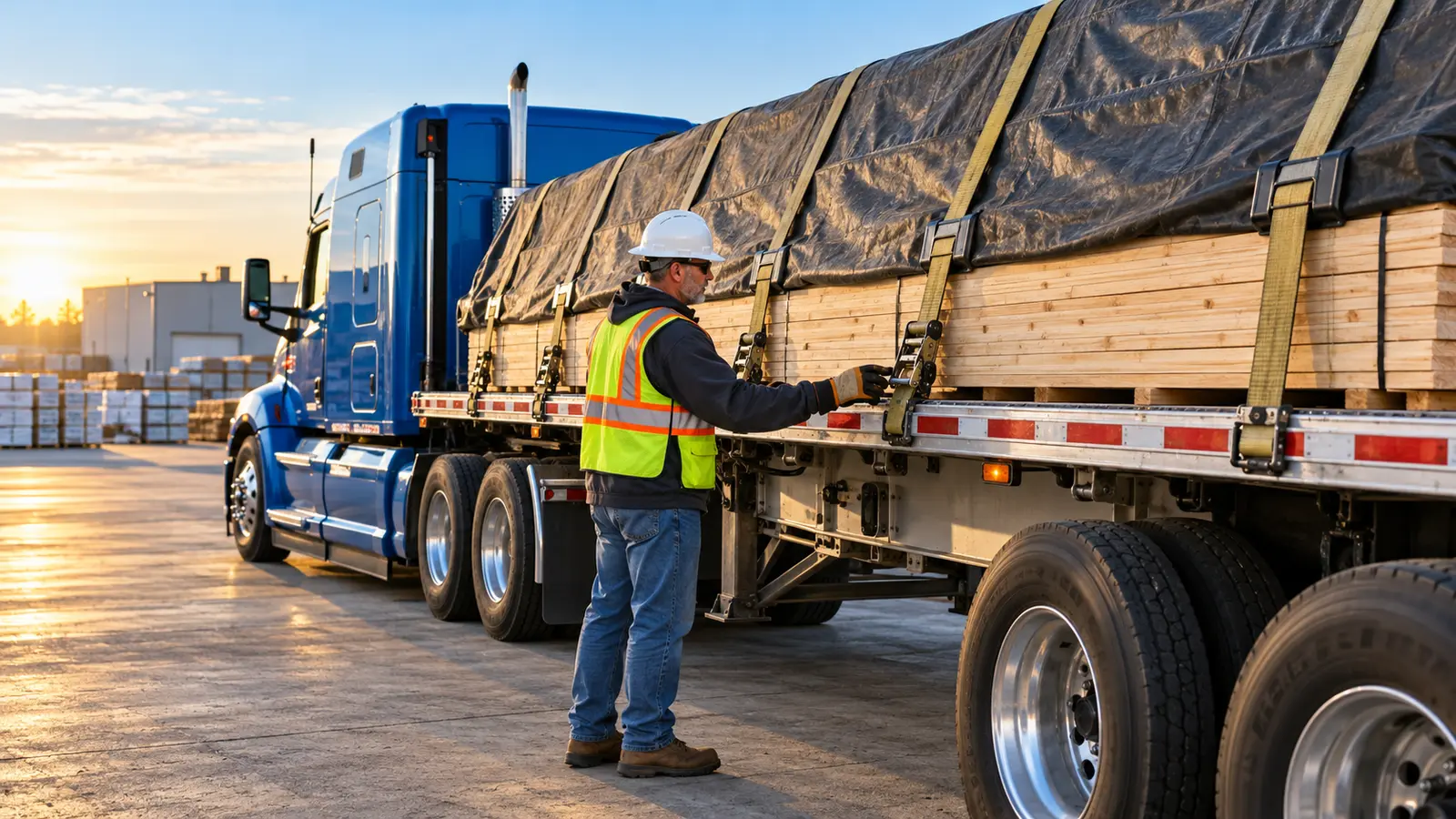
Flatbed trucking appeals to drivers who want varied freight, visible cargo, and more hands-on responsibility than a typical no-touch van position. The trailer may carry lumber, steel, machinery, building materials, pipe, vehicles, or specialized loads. That variety can make the work interesting, but it also means every trip begins with questions about weight distribution, restraint, dimensions, weather protection, and safe access.
A good flatbed job is not defined by a high advertised cents-per-mile number alone. New drivers should evaluate the complete work: loading delays, securement, tarping, inspections, weather exposure, home time, equipment, training, and the way non-driving labor is paid. The right offer matches both your career goals and your willingness to manage cargo directly.
What a flatbed driver actually does
Driving is only one part of the assignment. At a shipper, the driver confirms the commodity, weight, dimensions, loading plan, axle distribution, and special instructions. After loading, the driver selects appropriate chains, straps, binders, edge protection, blocking, bracing, or other equipment; applies the securement system; checks the finished load; and completes the required paperwork before departure.
At delivery, the driver may remove tarps and securement, coordinate with cranes or forklifts, maintain a safe exclusion area, and confirm that unloading will not release unstable cargo. Some customers expect drivers to carry and place dunnage or help direct equipment. Ask an employer which tasks belong to the driver because the physical workload and waiting time can differ sharply among accounts.
Cargo securement is a legal responsibility, not an optional skill
Federal rules prohibit operating a commercial motor vehicle unless its cargo is properly distributed and adequately secured. Tarpaulins, doors, spare tires, fastening equipment, and other operating equipment also must be secured. O*NET lists securing cargo and inspecting it for proper loading or securement among the detailed work activities for heavy and tractor-trailer drivers.
The regulations in 49 CFR Part 393, Subpart I establish performance and equipment standards. Tiedowns, anchor points, decks, blocking, bracing, and related components must be suitable and in proper working order; damaged or weakened equipment cannot be treated as usable simply because the load looks stable. Commodity-specific rules may apply to items such as logs, metal coils, concrete pipe, automobiles, heavy machinery, or dressed lumber. Carrier training must match the freight actually hauled.
Expect repeated load inspections during the trip
Under 49 CFR §392.9, the driver generally must verify compliance before driving, inspect the cargo and securement devices within the first 50 miles, and make necessary adjustments. During transportation, the driver must reexamine the load after a change of duty status, after three hours of driving, or after 150 miles—whichever occurs first. Limited exceptions apply to certain sealed or impracticably loaded vehicles.
On an open deck, the practical check includes strap or chain tension, edge protectors, binders, anchor points, tarps, dunnage, load movement, and anything that could fall or create a hazard. Cargo can settle after the first miles, and weather or vibration can change the system. A carrier should teach where to stop safely, how inspections are documented, and what to do when a device needs replacement.
Tarping changes the workday
A tarp protects freight from moisture, road spray, debris, or customer exposure requirements, but tarping is not identical on every load. The job may involve folding and handling heavy material, positioning padding, protecting sharp edges, securing loose fabric, and working around irregular cargo. Wind can turn a routine cover into a serious hazard.
Ask whether tarping is performed from the ground, from a protected platform, with a machine, or on top of the load. Learn the carrier's fall-prevention rules and never improvise a climb because a shipper is rushing. Confirm who supplies tarps, bungees, straps, chains, binders, corner protectors, mats, dunnage, personal protective equipment, and replacements for worn gear.
The job is physical and exposed to weather
Flatbed drivers repeatedly walk around the trailer, bend, pull, lift, inspect, and handle equipment outdoors. O*NET reports that 76 percent of surveyed heavy and tractor-trailer drivers are exposed to all weather conditions every day, and flatbed work places many duties directly outside the cab. Heat, cold, rain, ice, wind, mud, and poor lighting can affect both safety and pace.
Use gloves, high-visibility clothing, hard hats, eye protection, protective footwear, and other site-required equipment. Build technique before speed: inspect from stable ground, maintain three points of contact where authorized, protect hands from binder and strap recoil, and keep clear of suspended or unstable freight. If a task exceeds your training or a site lacks a safe method, stop and escalate it.
Flatbed pay needs a complete calculation
The Bureau of Labor Statistics reports a May 2025 median annual wage of $58,640 for heavy and tractor-trailer truck drivers overall. That figure is not a flatbed-specific salary and cannot predict an individual offer. BLS also notes that drivers are commonly paid by mileage plus bonuses, with rates varying by employer, cargo, and experience.
Compare guaranteed minimum pay, practical versus hub miles, percentage pay, loaded and empty miles, tarp pay, stop pay, securement pay, detention, layover, breakdown, training pay, safety bonuses, per diem, benefits, and retirement contributions. Ask for a sample settlement using a realistic week. A higher mileage rate may underperform when the driver spends many unpaid hours loading, waiting, tarping, inspecting, or returning equipment.
Freight mix and schedule shape home time
Flatbed fleets serve construction sites, mills, ports, farms, manufacturers, equipment dealers, and distribution yards. Some positions run regional building materials with frequent weekday deliveries; others move specialized freight across multiple states. Seasonal demand, customer hours, permit restrictions, crane appointments, and weather can influence dispatch more than they do on a simple drop-and-hook lane.
Ask where freight originates, how often drivers deadhead, whether backhauls are available, and how home-time promises are measured. Clarify weekend dispatch, holiday expectations, reset location, parking, and whether the truck may be taken home. Also ask how often loads require permits, escorts, oversized-load procedures, or unfamiliar securement methods—and whether the carrier provides specialist support.
Training should extend beyond earning the CDL
Most full-size tractor-trailer flatbed jobs require a Class A CDL. First-time Class A applicants subject to ELDT must complete training through an FMCSA-listed provider. Appendix A requires theory on cargo weight distribution, securement, covering, loading and unloading, and cargo security, but entry-level theory is a foundation rather than commodity-specific mastery.
A responsible employer pairs a new driver with qualified instruction on its trailers, freight, equipment, securement calculations, inspection routine, customer sites, and fall-prevention practices. Ask how long orientation lasts, whether there is supervised load securement, who signs off proficiency, and what happens when the first assignment is unfamiliar. Avoid employers that treat a short video or another driver's quick demonstration as complete preparation.
Questions to ask before accepting a flatbed offer
Request clear answers about average weekly miles, realistic gross pay, paid and unpaid work, freight lanes, home time, driver turnover, orientation, and benefits. Then ask flatbed-specific questions: What percentage of loads are tarped? What is the typical tarp weight? Does the company provide equipment and PPE? Are worn straps or chains replaced immediately? Is ground-level tarping available? Who decides when weather makes a task unsafe?
Ask how the company handles securement disagreements with shippers, load rework, overweight or poorly distributed freight, damaged cargo, and roadside violations. Confirm whether cameras monitor cargo, whether drivers receive photos or diagrams for specialized loads, and whom you can call after hours. Strong answers describe a process; vague promises that an experienced driver will figure it out transfer too much risk to the newcomer.
Is flatbed trucking a good fit for you?
Flatbed can suit drivers who enjoy problem-solving, equipment, physical work, and seeing the freight they are responsible for. It can build valuable experience with loading sites, weight distribution, route planning, and specialized cargo. It may be a poor fit for someone who strongly prefers no-touch freight, minimal outdoor work, or a highly predictable loading routine.
Start with the correct CDL path, learn the federal foundation, and choose an employer that pays transparently and treats securement training as a core safety function. CDL Compass offers online Class A ELDT theory for the knowledge portion of the process, followed by required behind-the-wheel training with an eligible provider. The best first flatbed job is one where questions are welcomed and safe work is never rushed.