Do You Need a CLP Before ELDT in 2026? Theory, BTW, and Skills-Test Timing
Learn when you can begin ELDT theory, when a CLP becomes necessary for hands-on training, how the 14-day rule works, and what must be reported before the CDL skills test.
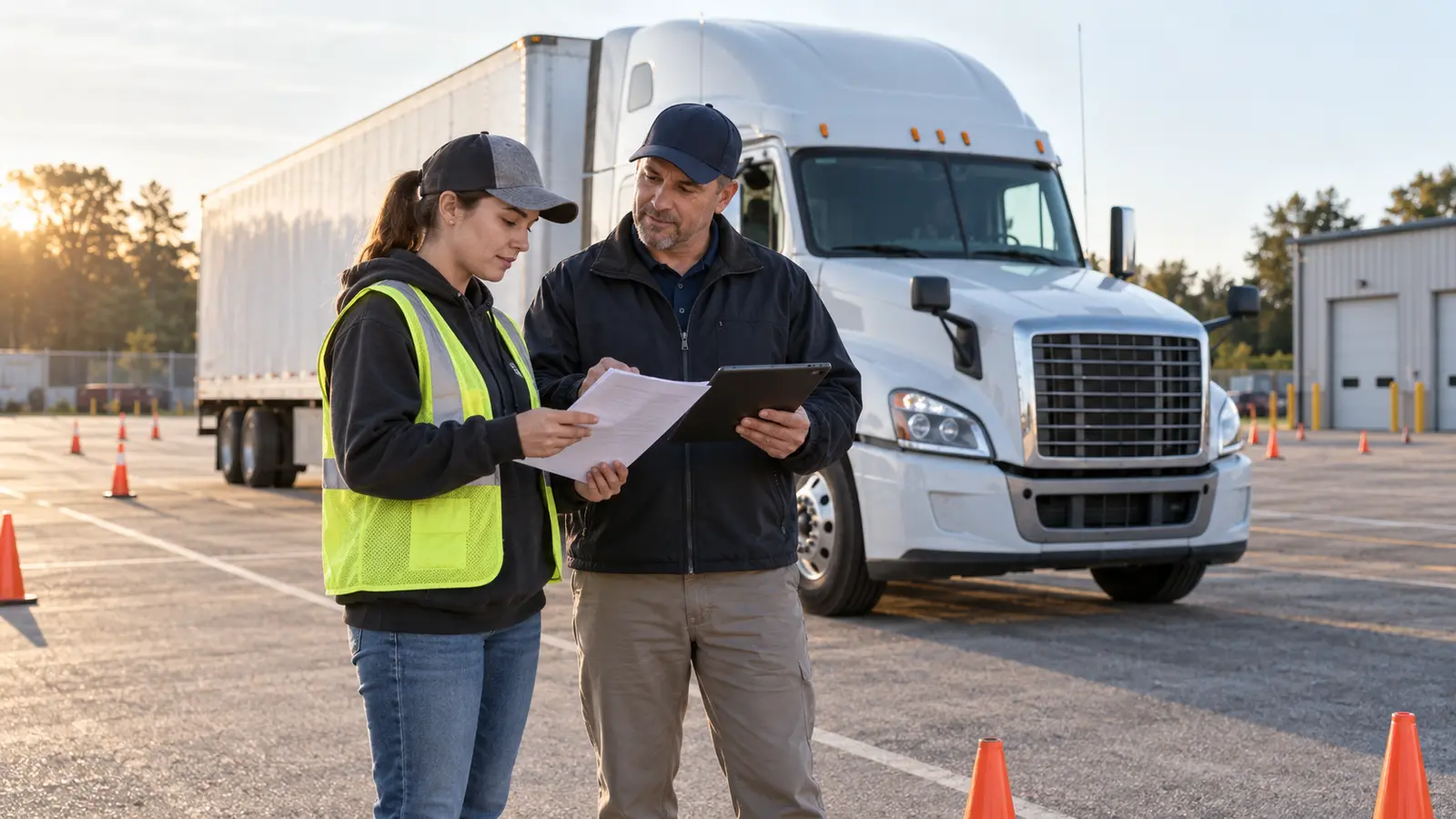
Do you need a commercial learner's permit before starting Entry-Level Driver Training? For most first-time Class A and Class B applicants, the federal answer depends on which part of training you mean. You can generally begin ELDT theory before receiving a CLP, but operating a commercial motor vehicle on a public road requires the proper permit and supervision.
The easiest way to avoid delays is to treat the CLP, ELDT theory, behind-the-wheel training, the 14-day permit period, and the State skills test as connected but separate milestones. Federal rules set the baseline, while your State and training provider may add scheduling, document, or eligibility requirements.
You can generally start ELDT theory before receiving a CLP
Federal ELDT rules require covered applicants to complete training through a provider listed on the FMCSA Training Provider Registry. They do not say that a driver must already hold a CLP before beginning the theory curriculum. That allows many students to start online or classroom theory while preparing for the State knowledge test and permit application.
Starting theory early can be useful because it builds knowledge of inspections, vehicle systems, safe operating procedures, hours of service, emergencies, cargo, and driver responsibilities. It does not authorize you to drive a commercial vehicle, replace the State knowledge test, or create a learner's permit. Those are separate licensing steps.
The CLP comes from your State licensing agency
To obtain a CLP, an applicant must meet the State's application and identity requirements and pass the applicable knowledge tests. Federal rules require the general knowledge test for the commercial vehicle group the person expects to operate. Passenger, school bus, and tank applicants also need the appropriate knowledge tests before those endorsements may appear on the permit.
Plan for medical certification, proof of domicile or lawful status, fees, appointments, and State-specific documents before visiting the licensing office. Your theory provider can prepare you for the federal curriculum, but only the State Driver Licensing Agency issues the CLP and decides whether your application is complete.
A CLP is essential for public-road practice
Under 49 CFR §383.25, a CLP is treated as a valid CDL for behind-the-wheel training on public roads only when its conditions are met. The trainee must carry the permit and a valid driver's license issued by the same jurisdiction, and must be accompanied by a properly licensed CDL holder who is authorized for the vehicle and trip.
The supervising CDL holder must be physically present in the required seat and directly supervise the permit holder. The CLP must match the vehicle group and permitted endorsements. Passenger, school bus, tank, and hazardous-material operations have additional restrictions, including limits on passengers, tank contents, and placarded hazardous materials.
Range practice may follow provider and State rules
Federal regulations do not prescribe one universal order for theory, range training, and public-road training. A registered provider may design a sequence that fits its curriculum and safety program. A State may also impose requirements beyond the federal ELDT minimum, and an insurer or school policy may require a CLP before any student enters the driver's seat.
Ask the hands-on provider exactly when the permit is required, which class and endorsements it must show, and whether theory completion is a prerequisite for range or road lessons. Do not assume that permission to practice on a closed range also authorizes a movement across a public street, shoulder, access road, or fuel stop.
The 14-day CLP rule is not an ELDT hour requirement
A first-time CLP holder cannot take the CDL skills test during the first 14 days after the permit is initially issued. That waiting period is a licensing rule. It is not a requirement to spend 14 days in theory, complete a fixed number of classroom hours, or accumulate 14 days of behind-the-wheel instruction.
Use the waiting period productively: complete theory, confirm your training record, practice inspections and basic controls, and schedule range and road instruction. Training can extend beyond day 14 whenever the student needs more practice or the provider has not yet documented proficiency. Reaching the fifteenth day creates eligibility to test; it does not prove readiness.
What must be finished before the skills test
For a first Class A or Class B CDL, and for a covered Class B-to-A upgrade, the required theory and behind-the-wheel components must be completed with registered providers before the State administers the skills test. The same pre-test rule applies to required passenger and school bus ELDT for first-time applicants.
The theory assessment requires an overall score of at least 80 percent. Behind-the-wheel training includes range and public-road instruction, with proficiency determined and documented by a qualified instructor. Federal rules do not establish a minimum number of BTW hours, although the provider or State may require a specific program length.
Your theory and BTW providers may be different
You may complete theory with one registered provider and hands-on training with another. Each provider reports the component it delivered to the Training Provider Registry. The State checks the electronic record before allowing the covered skills test, so an email receipt or printed course certificate alone may not resolve a missing TPR submission.
Use the same legal name, date of birth, permit or license number, and issuing State across the application and both training records. Ask when each provider submits completion and review the details early. A transposed number, nickname, or State mismatch can cause a delay even when the training itself is complete.
Class A, Class B, and upgrades follow the same core sequence
A first-time Class A or Class B applicant generally needs the correct CLP, applicable ELDT theory, applicable ELDT behind-the-wheel training, the 14-day permit period, and the State skills test. A driver upgrading from Class B to Class A also needs Class A ELDT and a Class A CLP before the upgrade skills test.
Training must use the appropriate vehicle. Class A BTW instruction occurs in a vehicle that requires a Class A CDL; Class B training uses a representative Class B vehicle. Testing in a vehicle without the equipment you intend to drive can produce restrictions, so discuss transmission, air-brake, and fifth-wheel configuration before booking training or the test.
HazMat follows a different testing sequence
The hazardous materials endorsement has a theory-only federal ELDT curriculum. A first-time H applicant must complete HazMat ELDT through a registered provider before the State administers the H knowledge test. There is no federal HazMat BTW ELDT component and no HazMat-specific skills test.
The endorsement process also involves the State application and the Transportation Security Administration security threat assessment. Timing, fingerprinting, fees, and renewal procedures vary. A CLP cannot authorize transportation of hazardous materials as defined in the CDL rules, so never use a learner's permit as authority to move a placarded load.
A practical no-delay timeline
First, confirm the CDL class and endorsements needed for the job. Second, review the official requirements of your State of domicile. Third, begin registered ELDT theory and prepare for the knowledge tests. Fourth, obtain the correct CLP and immediately verify its class, endorsements, restrictions, issue date, and expiration date.
Next, complete range and public-road training with a provider registered for the proper curriculum. Confirm that theory and BTW completions reach the TPR, finish the 14-day holding period, and schedule the skills test only when your documents and driving performance are ready. Leave time to correct record errors rather than planning every step for the same day.
Build the plan around the test you must take
The safest summary is simple: a CLP is not generally a federal prerequisite for starting ELDT theory, but it is a prerequisite for initial CDL issuance and for supervised public-road practice. Required ELDT must be complete and electronically available before the covered State skills test, while first-time HazMat ELDT must precede the State H knowledge test.
CDL Compass offers online Class A, Class B, and HazMat ELDT theory courses through a registered provider. Choose the course that matches your licensing transaction, then coordinate the correct permit, a registered BTW provider when required, and your State's testing process. A clear sequence protects both your training budget and your test date.