After a DOT Roadside Inspection in 2026: Repairs, Reports, and the 15-Day Rule
Learn what drivers and carriers must do after a roadside inspection, including out-of-service limits, report delivery, repairs, 15-day certification, record retention, and DataQs reviews.
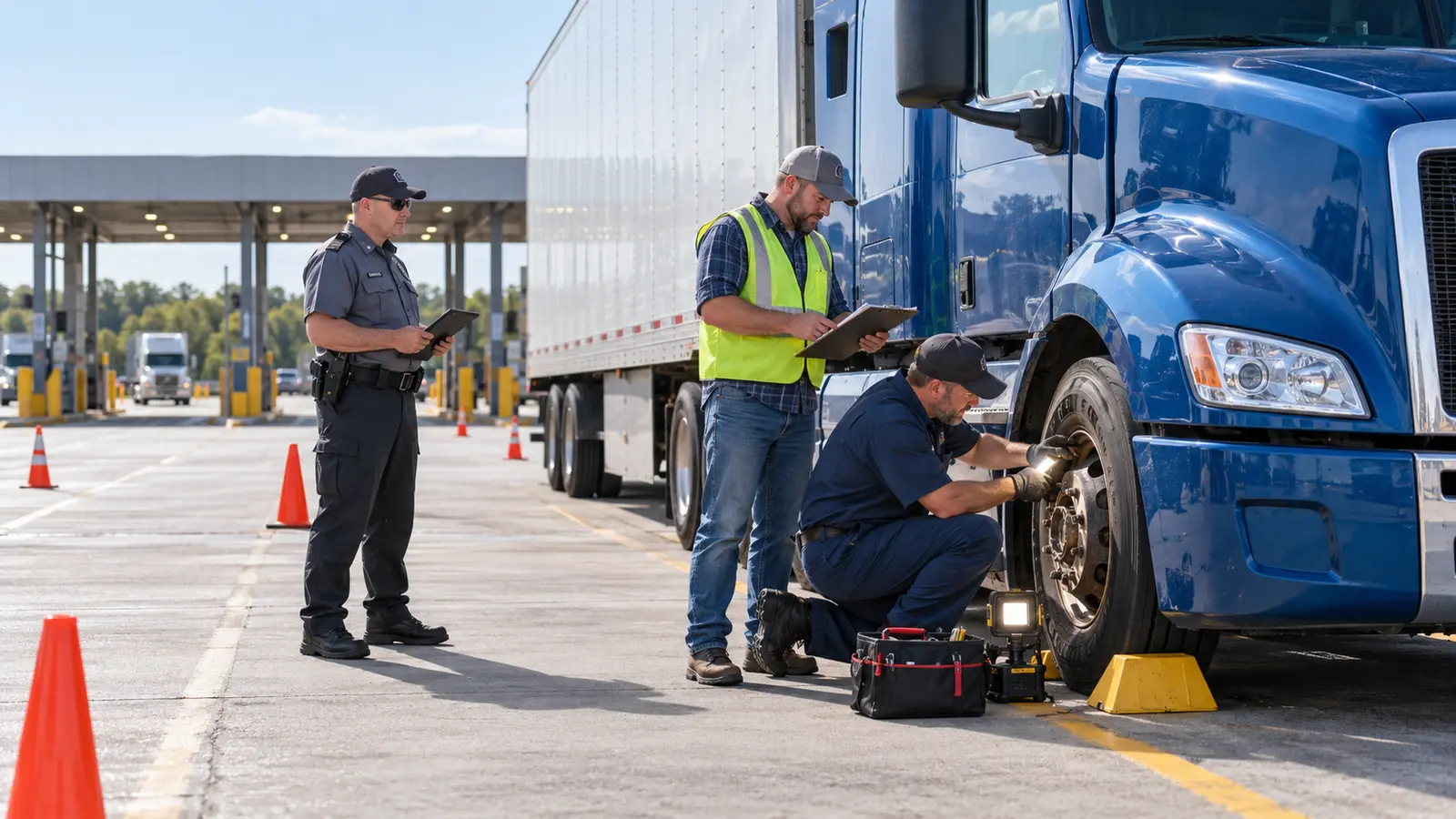
A roadside inspection does not end when the officer returns your documents. The Driver Vehicle Examination Report can trigger immediate operating limits, repair work, carrier certification, record retention, and a data-review process. Drivers who understand that sequence are less likely to move an out-of-service vehicle, lose the report, or assume that a citation and an inspection violation are the same thing.
This guide focuses on the post-inspection steps in the current federal rule. It complements our preparation guide about inspection levels, documents, ELD records, and vehicle readiness. Carrier procedures and state instructions still matter, so read the actual report and follow the issuing agency's directions.
Start by identifying the result of the inspection
Read the report before leaving the inspection location. Verify the driver, carrier, USDOT number, tractor and trailer identifiers, date, time, location, inspection level, and every listed violation. Ask for clarification if you cannot tell whether a driver, vehicle, or specific component was placed out of service. Do not argue the facts at roadside, alter the document, or sign a statement you do not understand.
A recorded violation is not automatically an out-of-service condition. A vehicle may be permitted to continue even though the report lists defects that require correction. An out-of-service order is a separate operating restriction. Treat the officer's instructions and the marked report as controlling until the carrier or an authorized official confirms the lawful next step.
An out-of-service vehicle cannot simply be driven to a shop
Under 49 CFR §396.9, authorized personnel may declare and mark a vehicle out of service when its mechanical condition or loading would likely cause an accident or breakdown. No carrier may require or permit operation, and no person may operate the vehicle, until all repairs required by the out-of-service notice are satisfactorily completed.
The rule defines operation broadly enough to include towing. A marked vehicle generally cannot be pulled away on its wheels merely because a repair facility is nearby. The rule provides a limited path for removal by a towing vehicle using a crane or hoist, subject to the applicable performance requirements. Do not remove an out-of-service sticker before the required repairs are complete.
The driver must transmit the inspection report promptly
The driver who receives the report must deliver a copy to the motor carrier and, when intermodal equipment is involved, to the intermodal equipment provider upon arriving at the next terminal or facility. If the driver is not scheduled to reach the appropriate facility within 24 hours, §396.9 requires the driver to immediately mail, fax, or otherwise transmit the report.
Use the carrier's approved method and confirm receipt. A clear scan or photograph may help, but preserve the complete original and every page. Include enough information for safety or maintenance staff to identify the vehicle and dispatch. Do not wait until the end of a multi-day trip or assume that an electronic inspection automatically reached the company.
Separate immediate repairs from the 15-day paperwork deadline
The 15-day provision is not permission to operate unsafe equipment for 15 days. An out-of-service defect must be repaired before the affected vehicle returns to operation. Other listed defects must be evaluated and corrected under the applicable repair rules and the carrier's safety process. The carrier must examine the report rather than merely file it.
Within 15 days after the inspection date, the motor carrier or intermodal equipment provider must certify that all noted violations have been corrected by completing the carrier official's signature, title, and date fields. Count from the inspection date shown on the report and build internal time for repair verification and management review.
Return the form when requested and retain it in every case
The current text of §396.9 requires the completed roadside inspection form to be returned to the issuing state agency when that agency requests it, using the address or method shown on the form. State forms or instructions may make the return requirement explicit. Follow the document rather than relying on a procedure remembered from another jurisdiction.
Whether or not a return is requested, the carrier or intermodal equipment provider must retain a certified copy for 12 months from the inspection date at its principal place of business or where the vehicle is housed. Store the report where compliance staff can retrieve it, together with the applicable repair evidence and internal approvals.
Document what was repaired and who verified it
A useful repair record identifies the vehicle, inspection date, violation, defect found, work performed, parts replaced or adjusted, completion time, and the person or facility responsible. Keep invoices, work orders, photographs, diagnostic results, and release documentation according to carrier policy. The certification should be based on completed corrective action, not a promise that maintenance will look later.
Federal maintenance rules require carriers to systematically inspect, repair, and maintain vehicles under their control and keep records showing the date and nature of inspections, repairs, and maintenance. A roadside repair should feed that system. Repeated defects may point to a larger issue with preventive maintenance, reporting, training, or dispatch decisions.
A citation and an inspection violation follow different paths
An officer may record an inspection violation without issuing a traffic citation, or may issue a citation connected to a violation. A citation is handled through the court or state process printed on the citation. The inspection record is handled through the agency that owns the safety data. Paying, dismissing, or amending a citation does not automatically guarantee that the inspection record changes.
Track both paths and keep their deadlines separate. Save the inspection report, citation, court disposition, repair records, photographs, ELD output, shipping documents, and any other contemporaneous evidence. Ask the carrier's safety department or qualified counsel for help when the consequences are unclear.
Use DataQs when the federal safety data is wrong
FMCSA's DataQs system allows drivers, carriers, and other users to submit a Request for Data Review or an Inspection Report Request. A useful request identifies the exact record and requested correction, explains why the entry is inaccurate, and attaches evidence. DataQs is for reviewing data; it is not a roadside appeal, a repair certification, or an automatic extension of the 15-day requirement.
FMCSA explains that inspection records may contain violations even when no citation was issued. To remove or change a violation, the requester generally needs evidence that it did not exist, was recorded in error, or was duplicated, or must provide the relevant adjudicated citation outcome through the appropriate request type. Monitor the account for questions and preserve the final response.
What the driver should do before the next dispatch
Confirm that the carrier received the complete report and that any restriction has been resolved through the authorized process. Inspect the repaired area and the rest of the vehicle as required before driving. Do not rely only on a removed sticker, a verbal assurance, or a cleared dashboard warning. Verify that the unit is safe, required documentation is available, and dispatch understands any remaining limitation.
If the report involved hours of service, licensing, medical status, cargo, or an endorsement rather than a mechanical defect, confirm the driver-side issue is also resolved. A repaired truck does not cure an out-of-service driver condition. When a substitute tractor or trailer is assigned, complete the normal inspection and update the ELD and trip documents before moving.
Build a simple post-inspection checklist
Before leaving the inspection site: read every page, identify any out-of-service order, follow movement instructions, and contact the carrier. Within the required timeframe: transmit the report, preserve evidence, and arrange authorized repairs. Before operation resumes: verify that every out-of-service item is satisfactorily repaired and the vehicle and driver are legally qualified.
Within 15 days: have the responsible carrier official certify all violations as corrected, return the form if the issuing state requests it, and place the retained copy in the compliance record. If data is inaccurate, prepare a separate evidence-based DataQs request without delaying repairs or certification. Review the event afterward so the same defect or paperwork failure does not repeat.
Connect inspection compliance to CDL training
Class A and Class B ELDT theory covers vehicle inspections, maintenance responsibilities, hours of service, cargo, and communication with enforcement. Those lessons are the foundation for recognizing defects and responding professionally, but carrier-specific reporting and repair procedures still require job training.
CDL Compass provides online Class A and Class B ELDT theory for eligible first-time applicants. Complete the course that matches your vehicle goal, then practice inspection and defect-reporting routines with a qualified behind-the-wheel provider and employer. The safest post-inspection response is methodical: stop when ordered, transmit the report, repair the condition, certify on time, retain the record, and challenge inaccurate data through the proper channel.