DOT Roadside Inspections: A New CDL Driver’s Preparation Guide
Learn what inspectors check, which documents and ELD records to have ready, how to prepare your truck, and what to do after a roadside inspection.
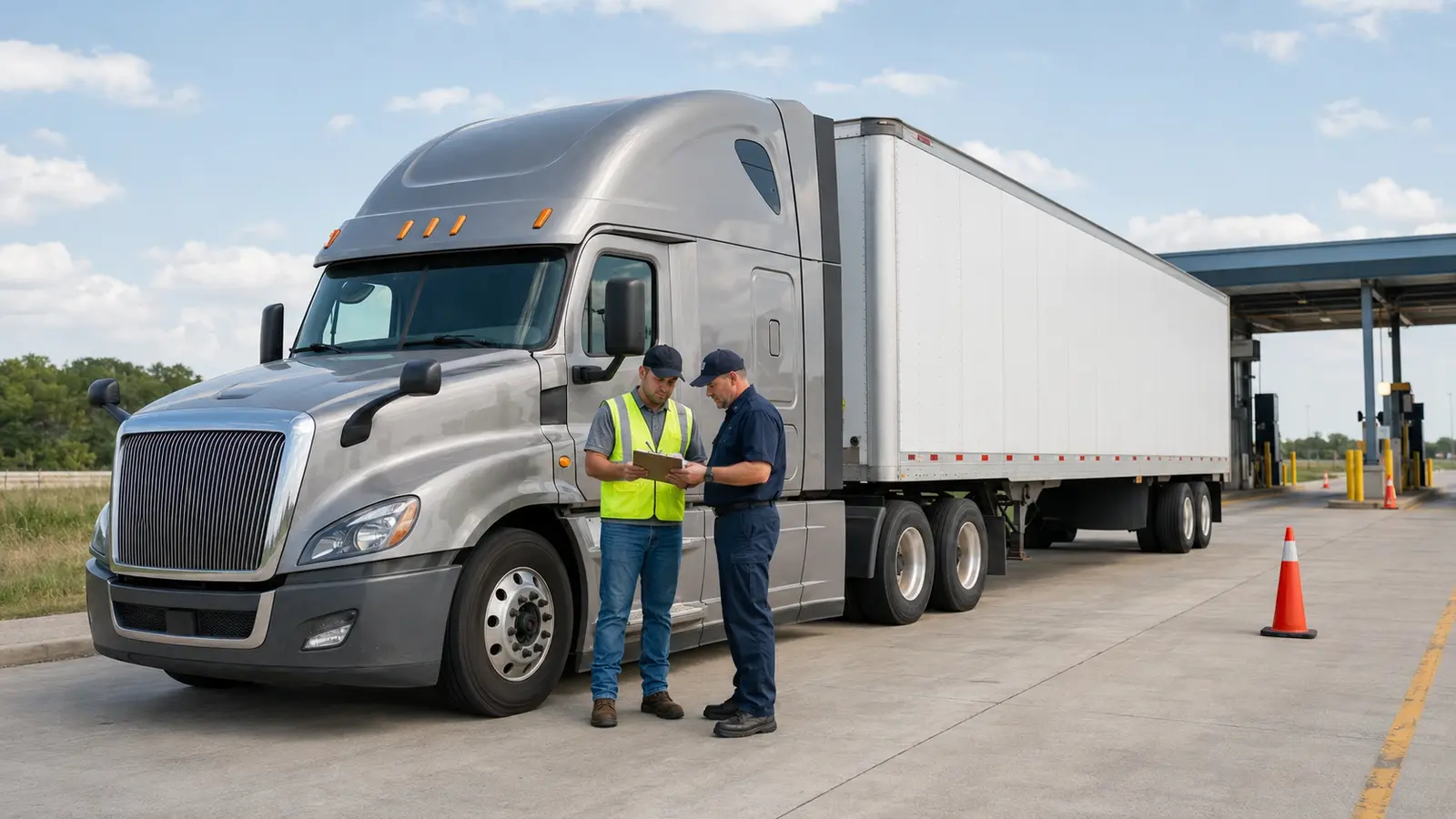
A roadside inspection is not a surprise exam that can be passed with a last-minute trick. It is a structured check of the driver, commercial vehicle, credentials, records, and sometimes cargo. For a new CDL driver, the best preparation is a routine that keeps the truck roadworthy and the required information accurate before an inspector signals you into an inspection site.
In the United States, state and local officers conduct inspections using Commercial Vehicle Safety Alliance procedures and applicable federal and state rules. The scope can range from a driver-and-records review to a detailed examination of the entire vehicle. Knowing the common inspection levels—and having a calm process for each one—turns an unfamiliar stop into a manageable safety task.
Know the four inspection levels drivers see most often
A North American Standard Level I Inspection is the most comprehensive common inspection. CVSA describes it as a 37-step procedure covering the driver's operating requirements and the vehicle's mechanical fitness. The inspector may check credentials and hours-of-service records, then examine brakes, tires, lights, steering, suspension, coupling devices, fuel and exhaust systems, cargo securement, and other safety components.
A Level II Inspection is a walk-around driver-and-vehicle inspection limited to items that can be checked without the inspector physically getting under the vehicle. A Level III Inspection focuses on the driver, credentials, and administrative requirements such as the CDL, hours of service, seat belt, carrier identification, and applicable inspection reports. A Level V Inspection is a vehicle-only examination that may be conducted without the driver present. CVSA defines additional specialized levels, but these four are the ones most new freight drivers will hear about.
The inspector chooses the level. A driver cannot insist on a shorter inspection, and a valid CVSA decal does not guarantee that a vehicle will never be inspected again. Follow the officer's directions, set the parking brakes when instructed, secure the vehicle, and ask for clarification if a request is unclear.
Build a document routine before the first mile
Keep your CDL and required endorsements valid, and know how your medical-certification status is maintained by your state. The truck should have the registration or cab card, proof of insurance, applicable permits, and carrier information. Depending on the operation, the inspector may also review shipping papers, fuel-tax credentials, oversize permits, or hazardous-material documents.
Keep paper and electronic records organized, without expired permits mixed among current ones. At dispatch, compare the vehicle number, trailer number, carrier name, and load information across the paperwork. Hazardous-material loads require additional attention to shipping descriptions, emergency information, placards, endorsement status, and document accessibility. Follow current requirements for the specific shipment.
Be ready to display and transfer ELD records
Know your electronic logging device before an inspector asks to see it. A compliant ELD can display and transfer hours-of-service data to an authorized safety official. Be able to open its roadside inspection view, enter an output-file comment when requested, and use its supported transfer method. The ELD must make the current 24-hour period and previous seven consecutive days available for roadside review.
Before driving, log in under your own profile, verify the carrier and vehicle, review unidentified driving events, certify complete records, and add appropriate annotations. Carry the required user instructions and malfunction guidance. If the device fails, follow the written procedure and notify the carrier immediately.
Never use another driver's account, accept an incorrect edit, or change a record during the inspection to conceal a violation. Accurate daily habits—not hurried screen taps at the inspection station—produce a clean log.
Inspect the vehicle as if an officer will see it next
A consistent pre-trip inspection is your strongest preparation. Review any open maintenance item, then walk around the tractor and trailer with enough light to see defects. Look for leaks, missing components, insecure cargo, tire damage, inadequate tread, loose wheels, inoperative lamps, broken reflectors, and anything hanging or rubbing.
Check brakes and air systems according to your training and vehicle type. Inspect accessible hoses, chambers, warning devices, air pressure, steering, suspension, fifth-wheel or other coupling connections, air and electrical lines, landing gear, doors, and rear underride protection.
Do not pencil-whip an inspection or assume a recently serviced truck is defect-free. Report any condition that may affect safe operation and obtain a proper repair decision before moving.
What to do when the inspection begins
Signal promptly, enter at the posted speed, and stop where directed. Turn off distractions, keep your hands visible, and answer without guessing. If asked to exit, use three points of contact and wear required high-visibility gear. Never crawl under the vehicle or release brakes unless instructed and it is safe.
Provide documents in an organized sequence. Tell the inspector before reaching into a compartment, and explain whether a record is electronic. Use the ELD's official inspection function and the transfer method identified by the inspector.
Stay patient and avoid arguing at the roadside. Respectfully ask which requirement is being reviewed and take notes when permitted. The goal is safety, clear communication, and an accurate report.
A violation is not always an out-of-service condition
An inspector may record a violation without placing the driver or vehicle out of service. An out-of-service condition is more serious: under the applicable CVSA criteria, the affected driver or vehicle is restricted from operating until the condition is addressed as required. Do not move equipment that has been placed out of service until an authorized release or proper repair permits it.
Read every line of the inspection report before leaving, and ask where the report explains any restriction. Notify the carrier promptly and follow its repair and reporting process. Preserve photographs, repair invoices, ELD records, shipping documents, and other evidence connected to the event. Never alter an original record.
FMCSA notes that violations recorded on a roadside inspection report can be used in the Safety Measurement System even when no separate state citation is issued. This makes accuracy important. It does not mean every inspection result is permanent or that a roadside argument is the right remedy.
Review the report and use DataQs when the data is wrong
After the trip, confirm that the driver's name, CDL, carrier, vehicle, date, location, inspection level, and violations were entered correctly. Send the carrier the required copy and repair certification under its compliance process.
If an item appears incorrect, FMCSA's DataQs system lets users submit a Request for Data Review to the agency responsible for the data. Identify the record, explain the requested correction, and attach evidence such as the report, citation disposition, photographs, or records that existed at the time. DataQs is not a substitute for contesting a citation through the proper court or state procedure.
In April 2026, FMCSA announced updated deadlines and a three-step independent review process for safety-record corrections. Use the current DataQs instructions, keep copies of the submission, and monitor the account for questions or a decision.
A five-minute readiness check for every driving day
Before departure, confirm five things: your CDL and required endorsements are valid; the ELD shows the correct driver, carrier, truck, and trailer; current permits and load documents are accessible; the pre-trip inspection is complete and defects are resolved; and emergency and safety equipment is present and serviceable. Before re-entering the highway after a stop, walk around again when conditions justify it and check the load at the intervals required for the operation.
Entry-Level Driver Training gives new drivers a foundation in vehicle systems, inspections, hours of service, hazard recognition, and safe operating practices. Roadside readiness is where that knowledge becomes a professional habit. If you are preparing for a Class A or Class B CDL, complete the required theory through a registered provider, train behind the wheel in representative equipment, and practice the same deliberate inspection sequence you intend to use on the job. The calmest roadside inspections usually begin long before the flashing sign at the scale house.