How to Upgrade from a Class B to a Class A CDL in 2026: ELDT, CLP, and Skills Test
A step-by-step guide to upgrading a Class B CDL to Class A, including ELDT, the Class A learner's permit, the 14-day wait, hands-on training, testing, and restrictions.
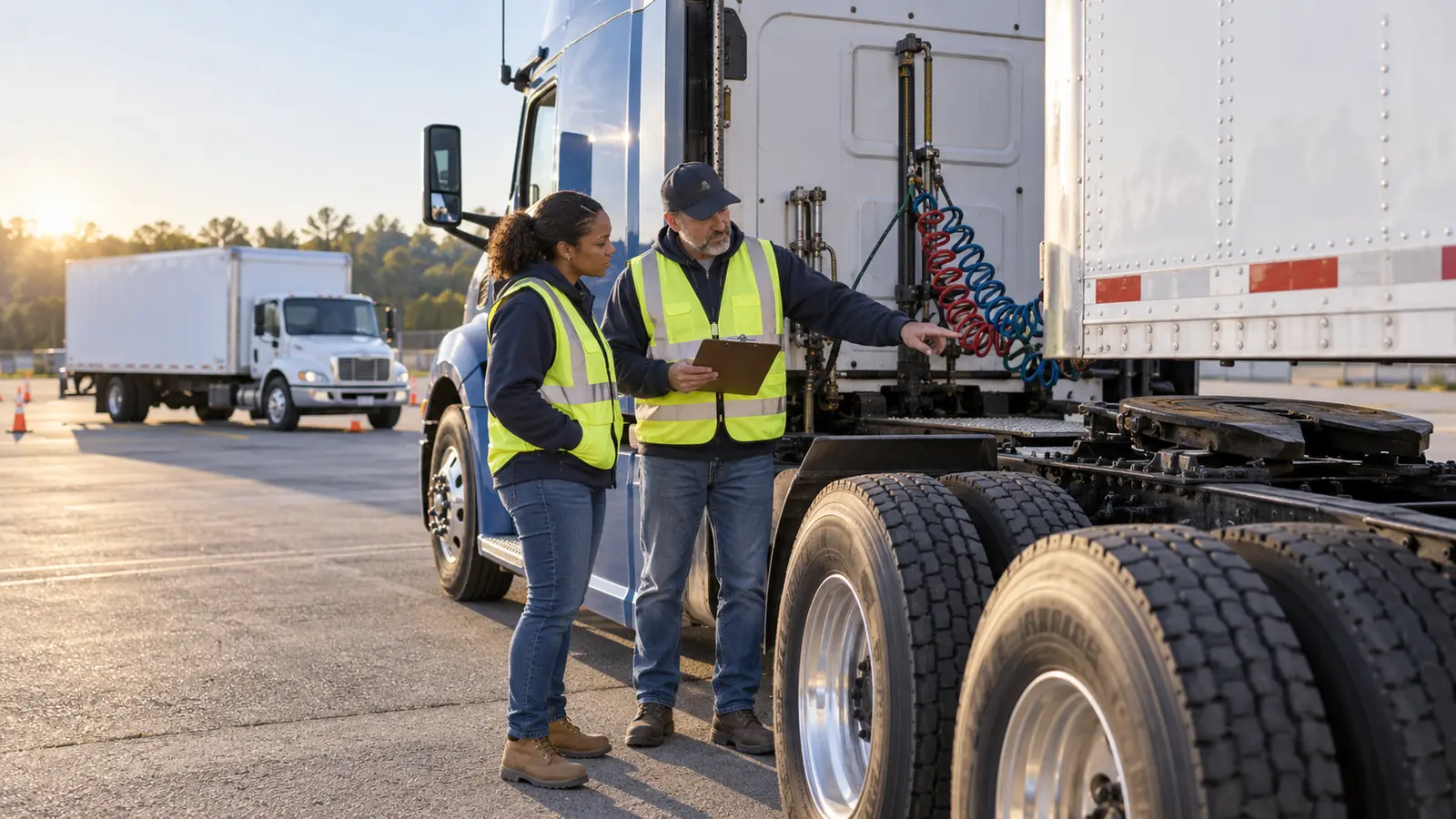
Upgrading from a Class B CDL to Class A can expand a driver's options from heavy straight vehicles to qualifying combination vehicles such as tractor-trailers. It is not simply a replacement card or an extra knowledge-test endorsement. Federal rules treat the move as a CDL upgrade that requires a Class A commercial learner's permit, applicable Entry-Level Driver Training, and a Class A skills test.
A current Class B license gives the driver useful experience, but it does not substitute for learning combination-vehicle systems, coupling, trailer tracking, off-tracking, backing, and other Class A subjects. Confirm State requirements, obtain the correct permit, complete registered training, observe the federal waiting period, and test in equipment matching the intended work.
Class B and Class A authorize different vehicle groups
Class B generally covers a single vehicle with a gross vehicle weight rating or actual gross vehicle weight of at least 26,001 pounds, plus a towed unit at 10,000 pounds or less. Class A covers a combination with a gross combination weight rating or actual gross combination weight of at least 26,001 pounds when the towed unit has a GVWR or actual GVW over 10,000 pounds. Federal definitions use the greater applicable rating or actual weight.
That distinction is about the vehicle configuration, not whether the job is local or over the road. A dump truck or large box truck may be Class B; a tractor and semitrailer is normally Class A. Before upgrading, identify the specific equipment and freight you expect to handle so the permit, training vehicle, endorsements, and restrictions align with the intended work.
ELDT is required for the Class B-to-A upgrade
Under 49 CFR §380.609, a driver upgrading to a Class A CDL must complete training from providers listed on FMCSA's Training Provider Registry. The requirement applies even if the driver previously completed Class B ELDT or has years of Class B work experience. The earlier record proves qualification for the existing class; it does not complete the separate Class A upgrade curriculum.
The Class A upgrade requires theory instruction and behind-the-wheel training on a range and public road. Federal Appendix A to part 380 includes a specific upgrade curriculum for drivers who already hold Class B. It concentrates on the combination-vehicle knowledge and skills needed for Class A while still requiring proficiency in the applicable hands-on tasks.
Step 1: Check the licensing State's upgrade process
The State Driver Licensing Agency issues the permit and CDL. Read its current CDL manual and upgrade checklist before paying for training or reserving equipment. Confirm medical self-certification, documents, fees, knowledge tests, permit validity, testing procedures, and any requirements beyond the federal minimum.
A valid Class B CDL does not guarantee that every record is ready for an upgrade. Check the license status, medical certification, restrictions, and outstanding State notices. Resolving a name mismatch, expired medical status, disqualification, or other hold early can prevent an expensive test-day cancellation.
Step 2: Obtain the Class A commercial learner's permit
A CLP is a precondition to a CDL upgrade when the upgrade requires a skills test. The State will specify the knowledge tests needed for the Class A permit. These commonly include combination-vehicle knowledge and, when applicable to the intended equipment, air-brake knowledge. Use the official manual for the issuing State because test administration, fees, and retest rules are not identical nationwide.
The permit authorizes supervised practice; it does not authorize independent operation of a Class A combination. Under 49 CFR §383.25, the accompanying driver must hold the proper CDL and endorsements and supervise as the rule requires. The CLP holder also must follow permit restrictions, including the federal prohibition on transporting hazardous materials while operating under the permit.
Step 3: Plan around the federal 14-day waiting period
A CLP holder cannot take the CDL skills test during the first 14 days after the permit's initial issuance. Treat that as a minimum waiting period, not a promise that the driver will be ready or that a test appointment will be available on day 15. State calendars, school schedules, weather, equipment maintenance, and individual progress can extend the timeline.
Use the waiting period for structured training rather than merely counting days. Verify the exact issuance date shown in the State record, keep the permit valid through the test, and schedule with enough time to complete every ELDT component and allow the providers' records to reach the Training Provider Registry before the State administers the test.
Step 4: Complete Class A theory training
Theory for the upgrade covers the required combination-vehicle subjects in the federal curriculum. Topics include vehicle systems, inspections, basic operation, safe operating practices, coupling and uncoupling, backing, cargo considerations, hours of service, emergencies, railroad crossings, trip planning, and other responsibilities relevant to Class A operation.
There is no federal minimum number of theory hours. The provider must cover the required curriculum and the trainee must achieve an overall score of at least 80 percent on the written or electronic theory assessment. Online theory is permitted when delivered by a provider registered for the correct Class A training type. CDL Compass offers online Class A ELDT theory designed for this stage of the upgrade.
Step 5: Complete range and public-road training
Behind-the-wheel ELDT cannot be completed through videos or a driving simulator. The driver must train in a representative Class A vehicle with a registered provider, both on a range and on public roads. The range portion develops inspections, straight-line and offset backing, alley docking, sight-side and blind-side parallel parking, and coupling and uncoupling as applicable. Public-road training develops vehicle control, shifting, signaling, visual search, speed and space management, and hazard response.
Federal rules do not prescribe a minimum number of behind-the-wheel hours. Completion depends on the instructor determining that the trainee is proficient in the required elements. A State or training program may require minimum hours beyond the federal standard. A driver with extensive straight-truck experience should still budget enough time to master trailer movement and combination braking rather than rushing to the skills test.
Theory and behind-the-wheel providers may be different
A driver may complete online theory with one registered provider and hands-on training with another. Each provider must be listed in the Training Provider Registry for the component it delivers, and each submits the appropriate completion record. A provider listed only for Class B or only for Class A theory cannot report a Class A behind-the-wheel completion it is not registered to provide.
Before enrolling, search the provider in the TPR and confirm the exact training type. Use the same legal name and license information across the State, theory provider, and driving school. After completion, allow for reporting time and verify that both theory and behind-the-wheel records are available before the skills-test appointment. A printed certificate alone does not replace the State's required electronic verification.
Step 6: Take the Class A skills test in the right vehicle
The Class A skills test evaluates vehicle inspection, basic vehicle-control skills, and on-road driving in a representative combination. Arrive with the documents and safe, legally equipped vehicle required by the State. Confirm registration, insurance, inspection status, GVWR and GCWR information, trailer rating, and any appointment or third-party testing rules in advance.
The test vehicle can shape the new license. Testing in an automatic-transmission vehicle produces an E restriction against operating a manual-transmission CMV. Testing without air brakes produces an L restriction; using air-over-hydraulic brakes can produce a Z restriction. A Class A applicant tested in a combination without a fifth wheel may receive an O restriction. Select equipment around realistic career plans, not just the first vehicle available.
Review the upgraded CDL before driving
After passing, follow the State's issuance process and inspect the new credential carefully. Verify Class A, expiration date, endorsements, and every restriction. Do not operate a combination outside the authority shown on the license while waiting for a correction. Give the updated credential to the employer through its driver-qualification process before accepting a Class A assignment.
A practical sequence is: confirm State eligibility, obtain the Class A CLP, begin registered theory and hands-on training, observe the 14-day minimum, verify TPR records, pass all skills-test segments, and inspect the issued CDL. Drivers ready to begin can take the CDL Compass Class A ELDT theory course online, then complete required range and public-road training with a registered behind-the-wheel provider.