Can You Switch ELDT Training Providers in 2026? Theory, BTW, and TPR Rules
Learn when you can use different ELDT providers, why range and public-road training must stay together, how TPR records work, and what to verify before changing schools.
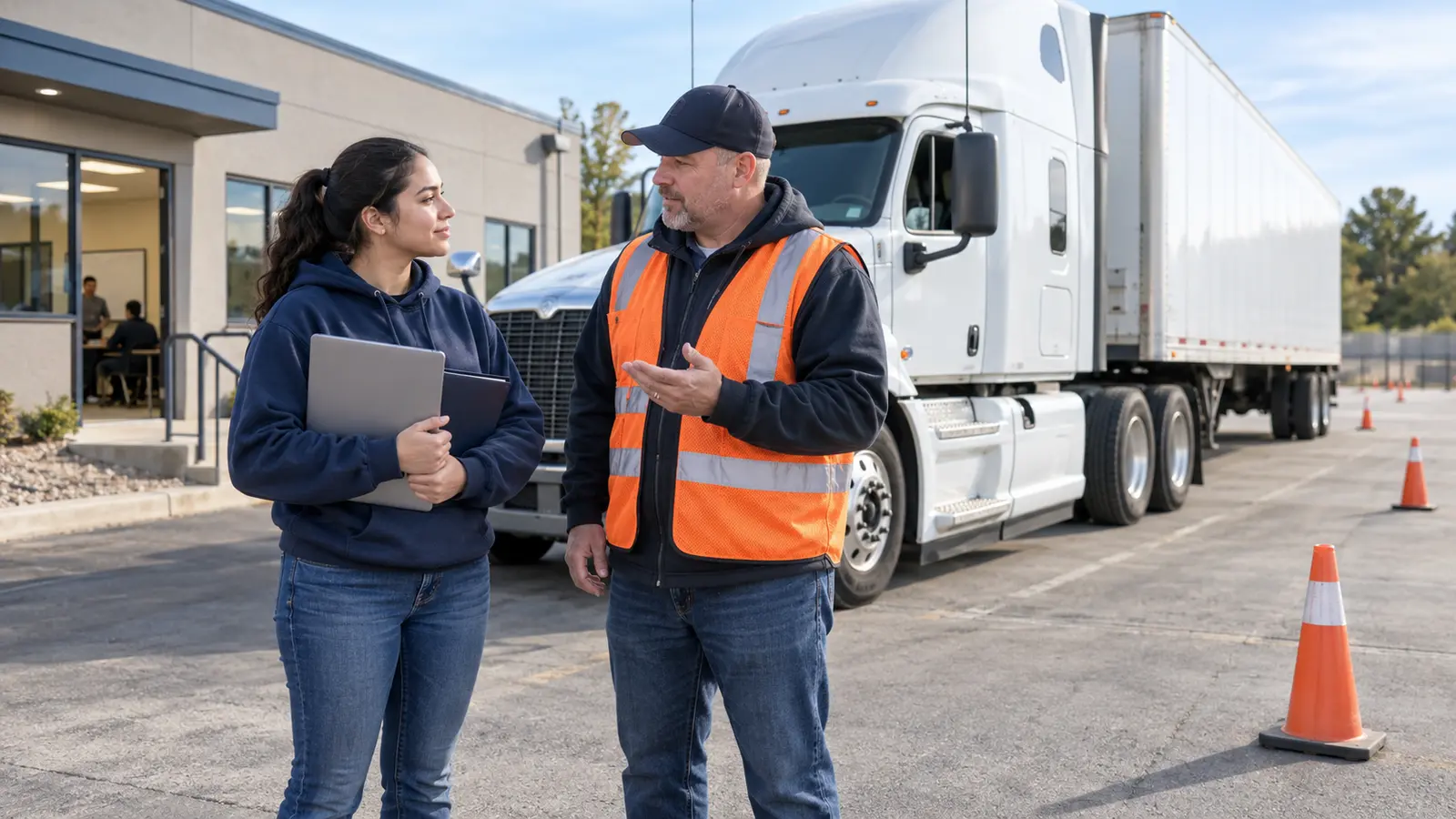
Yes, a CDL applicant can use one registered provider for ELDT theory and another for behind-the-wheel training. This split is expressly allowed by the federal Entry-Level Driver Training rules, and it can be practical for a student who wants to finish theory online before choosing a local driving school.
Changing providers is not completely flexible, however. Both providers must be listed on FMCSA's Training Provider Registry for the exact training they deliver, and the range and public-road portions of behind-the-wheel training must be completed through the same provider. Contracts, State requirements, scheduling, and incomplete training can also make a switch more complicated than simply carrying a certificate to a new school.
Theory and behind-the-wheel training may be separate
Under 49 CFR §380.707(c), separate providers may deliver theory and behind-the-wheel instruction. For a first Class A or Class B CDL, the federal path includes the applicable theory curriculum plus BTW training on a range and public road. The State must verify the required completion records before administering the covered skills test.
This means a student may complete CDL Compass online Class A or Class B ELDT theory, then enroll with a different TPR-listed school for hands-on training. Each provider is responsible only for the component it actually delivers and certifies. A theory provider does not report BTW completion, and a driving school cannot treat an unrelated theory certificate as its own training record.
Range and public-road BTW must stay with one provider
The most important limit is also in §380.707(c): both portions of BTW training—range and public road—must be delivered by the same training provider. A student cannot complete range training with School A and then use School B only for the federal public-road portion while combining those two partial records as one completed BTW certification.
If you want to change schools during hands-on training, ask the new provider what must be repeated. Because that provider must evaluate proficiency and certify the complete BTW component it delivers, it may require the student to complete its range curriculum before moving to public-road instruction. Prior practice can help the student progress, but partial hours do not automatically transfer as a federal completion.
You can switch after completing theory
The cleanest time to change providers is after successfully finishing a complete component. Theory providers must cover every required topic in the applicable federal curriculum and use written or electronic assessments. Under §380.715, the trainee must earn an overall score of at least 80 percent. Once that component is successfully completed and reported, a different registered provider may deliver the full BTW component.
Before paying for online theory, confirm that a local provider actually accepts BTW-only students. FMCSA warns applicants that some schools require enrollment in a combined theory-and-BTW package even though federal rules allow separate providers. Ask about availability, pricing, waitlists, vehicle type, test scheduling, and whether completing outside theory changes the school's refund or placement policies.
Switching during theory may mean starting over
Federal rules certify successful completion of the applicable theory training; they do not create a national credit-transfer system for partly completed modules. A new provider remains responsible for covering its required curriculum and documenting the trainee's assessment. It may review previous work, but it is not required by the ELDT rule to accept another provider's unfinished course progress.
Before leaving, ask the original provider whether any completed component has already been certified, whether access or tuition is refundable, and how long course records remain available. Ask the new provider in writing what it will accept and what the full cost will be. Do not assume screenshots, quiz scores, attendance sheets, or an unfinished-course letter will appear as an ELDT completion in the TPR.
A valid CLP is required before BTW acceptance
Theory can be taken before obtaining a commercial learner's permit, and federal rules do not mandate one fixed sequence for theory, range, and public-road instruction. Behind-the-wheel acceptance is different. Section 380.707 requires providers to verify that accepted BTW applicants hold a valid CLP or CDL, as applicable, and to collect the required trainee certification concerning driver qualifications.
A provider switch does not extend an expiring permit or remove State restrictions. Check the CLP issue and expiration dates, medical certification, license status, and any State waiting period before booking a new BTW start date. If the permit expires during a long school transition, the licensing State may require renewal, retesting, or other steps before hands-on training can continue.
Each provider submits its own TPR record
After successful completion, the provider must electronically transmit the training certification by midnight of the second business day. The record includes the trainee's name, license or permit number and State, CDL class or endorsement, training type, provider and TPR number, completion date, and—for BTW training—the total clock hours.
When theory and BTW come from different providers, expect separate records. Use the same legal name, permit or license number, and issuing State with both organizations. A transposed number, nickname, changed license, or wrong State can delay matching. Check the TPR driver record before the skills-test appointment; a paper certificate may help resolve an error, but the State verifies the electronic completion information.
Check the exact provider listing before changing
A school appearing in the Registry is not automatically approved for every ELDT type or location. Search the provider and confirm the specific listing for Class A theory, Class A BTW, Class B theory, Class B BTW, or the relevant endorsement. For multi-campus organizations, each training location must have its own TPR registration, and in-person providers must meet applicable State authorization requirements.
Save the provider name, address, training type, and TPR listing you verified. Ask who will submit the completion, how quickly the school normally corrects data errors, and whether the price includes vehicle use for the State skills test. If the provider promises that only public-road training is needed after range training somewhere else, compare that promise with the same-provider BTW rule before enrolling.
State rules and contracts can be stricter
Federal ELDT standards are a minimum. A State may require additional curriculum, instructor qualifications, school licensing, minimum hours, or other conditions beyond the federal baseline. A student who changes training States or providers should check the rules where each component will be delivered and the requirements of the State that will issue the CDL.
The enrollment agreement is separate from federal eligibility. Review cancellation deadlines, nonrefundable deposits, financing, tuition balances, equipment-rental charges, release of records, and any employer sponsorship obligation. Leaving a school may be allowed under ELDT rules while still creating a contractual payment issue. Get an itemized account statement and keep copies of all signed documents before making the change.
A practical provider-switch checklist
First, identify what is fully completed: theory, range plus public road, or neither. Verify any submitted record through the TPR. Second, confirm that the new provider is registered for the exact remaining component and, for BTW, can deliver both range and public-road instruction. Third, confirm CLP validity, State requirements, start dates, total price, refund terms, test vehicle, transmission, brake system, and possible license restrictions.
Then provide matching identity and permit information, complete the new provider's required enrollment documents, and verify each TPR record before testing. Students who want a flexible knowledge component can begin with CDL Compass Class A or Class B online ELDT theory, then choose a qualified local provider for the complete hands-on range and public-road portion. Planning the handoff before enrolling prevents duplicated training, missed test dates, and surprise costs.