HazMat Segregation Rules in 2026: X, O, Foodstuffs, and Subsidiary Hazards
Learn how highway HazMat segregation works, what X, O, blank, and asterisk entries mean, how subsidiary hazards affect the load, and what drivers should verify before departure.
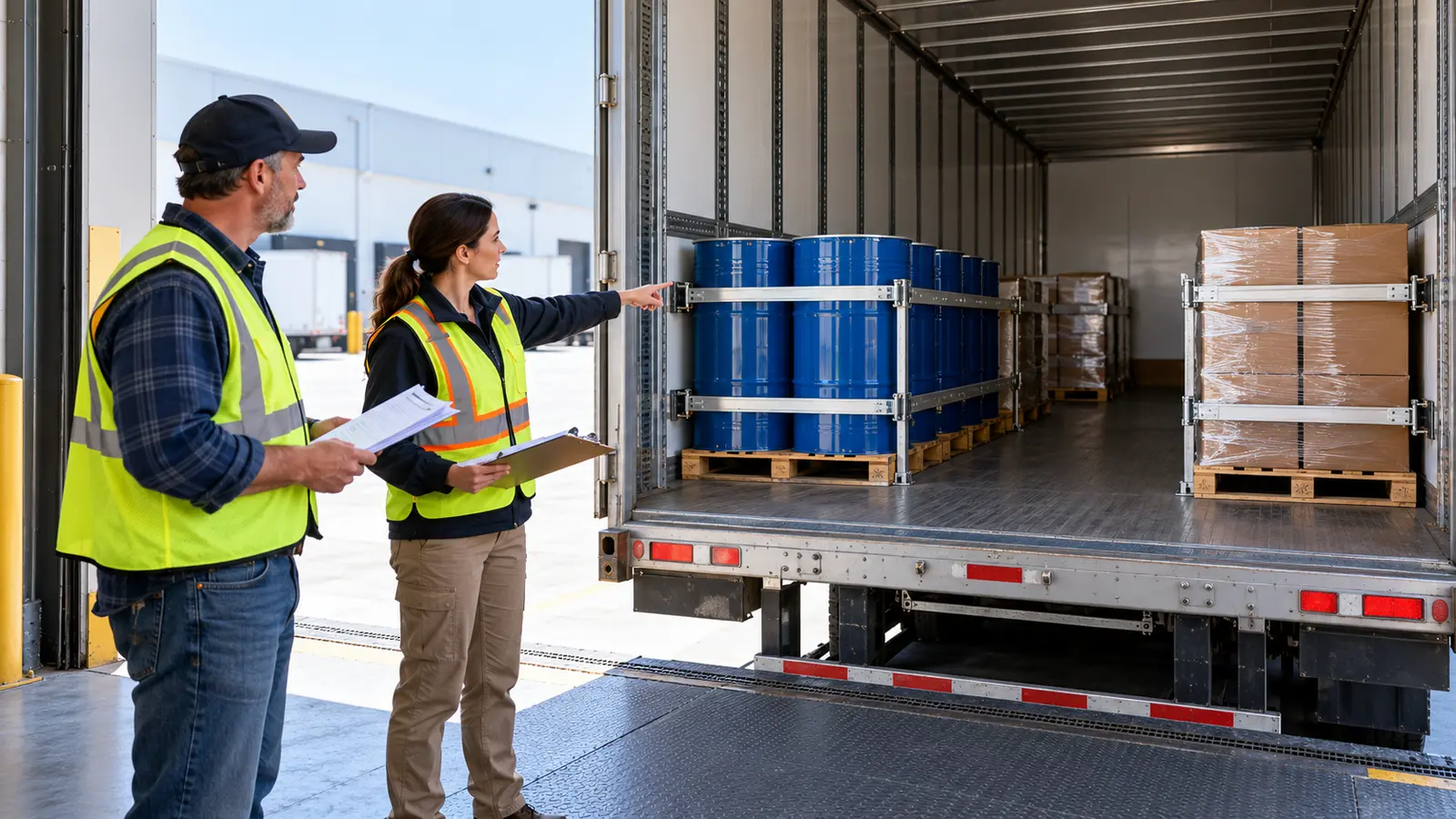
Hazardous-materials segregation answers a critical question before a truck moves: can these products travel together in the same vehicle, and if they can, what separation prevents a leak from creating a worse reaction? Placards alone do not provide the complete answer. The decision depends on the material's primary and subsidiary hazards, packaging, compatibility, loading method, and any specific exception or prohibition.
For highway transportation, 49 CFR §177.848 contains the central segregation table. Drivers do not need to invent a chemistry decision at the dock, but they do need enough knowledge to recognize a questionable load, compare the freight with the paperwork and approved plan, and keep the vehicle stopped until a qualified HazMat employee resolves a conflict.
Start with accurate classification, not package color
A segregation check begins with the proper shipping description, hazard class or division, identification number, packing group when required, subsidiary hazard labels, packaging type, and quantity. Obtain that information from compliant shipping papers, package markings and labels, and the carrier's load documentation—not from the product's trade name, drum color, or an assumption based on a familiar customer.
Section 177.848 applies to covered hazardous materials in packages that must be labeled or placarded, certain compartments of multi-compartment cargo tanks, and portable tanks loaded in a transport vehicle or freight container. Other rules can still control a material outside a particular table entry. When the classification or document set is incomplete, the safe action is to stop the loading decision and contact the designated HazMat specialist.
How to read the X, O, blank, and asterisk entries
Locate one material's class or division on the table's left side and the other across the top, then read the intersection and every applicable note. An X means the materials may not be loaded, transported, or stored together in the same transport vehicle or storage facility during transportation. Moving pallets farther apart inside the same trailer does not cure an X.
An O means the materials may not travel together unless they are separated so that leakage under conditions normally incident to transportation would not allow them to commingle. The separation method must address the real packages, trailer, securement, drainage path, and potential movement—not merely leave an arbitrary gap.
A blank means the table itself imposes no segregation restriction for that pair. It does not certify that the products are chemically compatible or erase another requirement. An asterisk sends Class 1 explosives to the separate compatibility table in §177.848(f), where compatibility groups and numbered notes control.
Subsidiary hazards can produce the stricter answer
A package may have one primary hazard and one or more subsidiary hazards. Section 177.848 requires segregation for the subsidiary hazard when it is more restrictive than the result for the primary hazard. Checking only the main label can therefore approve a combination that the full hazard profile prohibits or conditions.
Compare all required labels and shipping-paper information against the load plan. If the primary-hazard intersection is blank but a subsidiary-hazard intersection shows X or O, use the more restrictive requirement. The rule includes a limited same-class provision when materials cannot react dangerously, but that is a documented technical determination—not permission for a driver to disregard secondary labels.
Some combinations have direct prohibitions beyond the grid
Paragraph 177.848(c) adds specific incompatibilities. Cyanides, cyanide mixtures, or solutions cannot be stored, loaded, or transported with acids when mixing would generate hydrogen cyanide. Division 4.2 spontaneously combustible material cannot travel with Class 8 liquids. Division 6.1 Packing Group I, Hazard Zone A material cannot travel with several named classes and divisions under the general rule.
These provisions show why a blank square is not the end of the review. The qualified person preparing the load must consider the table, the instructions below it, direct prohibitions, material-specific sections, special provisions, and documented exceptions. Drivers should receive a clear approved plan rather than being asked to solve an unfamiliar combination from memory.
Treat corrosive liquids and reactive cargo with extra care
The O instruction includes an additional rule for Class 8 corrosive liquids: they may not be loaded above or adjacent to Class 4 flammable materials or Class 5 oxidizing materials. A limited truckload provision exists when it is known that mixing would not cause fire or dangerous heat or gas, but that conclusion must come from qualified technical knowledge and the applicable procedure.
Vertical position matters because a leak can flow onto cargo below. Horizontal placement matters because packages can shift, be struck during unloading, or drain toward each other. Use the loading diagram, required barriers or unit-load devices, and securement plan supplied for the shipment. Never relocate a corrosive pallet simply to improve axle weight or unloading convenience without rechecking segregation.
Poisons and foodstuffs have separate protection rules
Section 177.841 generally prohibits a package bearing or required to bear a POISON or POISON INHALATION HAZARD label or placard from sharing a vehicle with foodstuffs, feed, or edible material for humans or animals unless a specified protection method applies. Examples include an approved metal-drum overpack or separate closed unit-load devices under the rule's conditions.
Packing Group III poison packages have a specific separation option: the arrangement must prevent leakage from commingling with food or feed under normal transportation conditions. Packages bearing or required to bear POISON, POISON GAS, or POISON INHALATION HAZARD labels are not allowed in the driver's compartment, including the sleeper berth. A sealed retail carton or short trip does not replace these requirements.
Segregation and securement solve different problems
Segregation controls dangerous contact between materials. Securement prevents cargo from shifting, falling, or being damaged. A load can satisfy the segregation table yet remain unsafe because pallets can move, drums are not restrained, closures are exposed to impact, or the weight distribution overloads an axle. Conversely, tightly secured incompatible materials are still incompatible.
Verify both systems before departure. Check that packages are upright when required, closures are protected, barriers and load locks are correctly placed, pallets are sound, and restraint does not damage the packaging. Confirm the planned separation will remain effective during braking, turns, vibration, and normal loading or unloading. Do not use unsecured empty space as the only strategy when movement could close it.
Use a practical pre-departure segregation check
First, compare the shipping papers, package count, markings, primary labels, subsidiary labels, placards, and load diagram. Second, confirm that every pair of regulated hazards was evaluated under the current table and applicable notes. Third, verify any X combination is not in the vehicle and every O combination has the approved separation that prevents commingling after a foreseeable leak.
Then check poison-and-food restrictions, corrosive placement, Class 1 compatibility instructions, package condition, blocking and bracing, weight distribution, door security, and unloading order. Photograph or document the load only as carrier policy allows. If the trailer was preloaded and sealed, follow the carrier's verification procedure; do not break a seal without authorization, but do not sign that you personally inspected cargo you could not see.
Know what to do when the load does not match
Do not move the vehicle when labels, papers, placards, package condition, or placement conflict with the approved plan. Keep people away from a suspected leak, avoid touching or smelling the substance, eliminate ignition sources only when it can be done safely, and notify the shipper, carrier, or emergency contact under the operating procedure. Emergency response should be based on the actual material and hazards.
Do not rearrange leaking, bulging, hot, damaged, or unknown packages. If a discrepancy is discovered en route, stop at the safest lawful location available and contact dispatch. A driver should be able to explain what appears wrong without claiming to make the final chemical-compatibility determination.
HazMat ELDT includes segregation for a reason
Appendix E to Part 380 requires first-time H-endorsement applicants to learn proper hazardous-material loading and unloading, segregation and securement, and the prohibitions on carrying certain poisons with foodstuffs. The curriculum builds the recognition skills needed to question a bad load, but shipment-specific training and the employer's qualified HazMat procedures remain essential.
CDL Compass offers online HazMat ELDT theory for drivers preparing for the State H knowledge test. Complete the course before the test, then study the current State CDL manual and carrier procedures. On the job, use the federal table as part of a documented process: classify correctly, apply the most restrictive hazard, separate as required, secure the freight, and refuse to guess when the evidence does not match.