HazMat Parking Rules in 2026: Attendance, Safe Havens, and Prohibited Stops
Learn when a HazMat vehicle must remain attended, what qualifies as a safe haven, where parking is restricted, and how drivers should plan compliant stops.
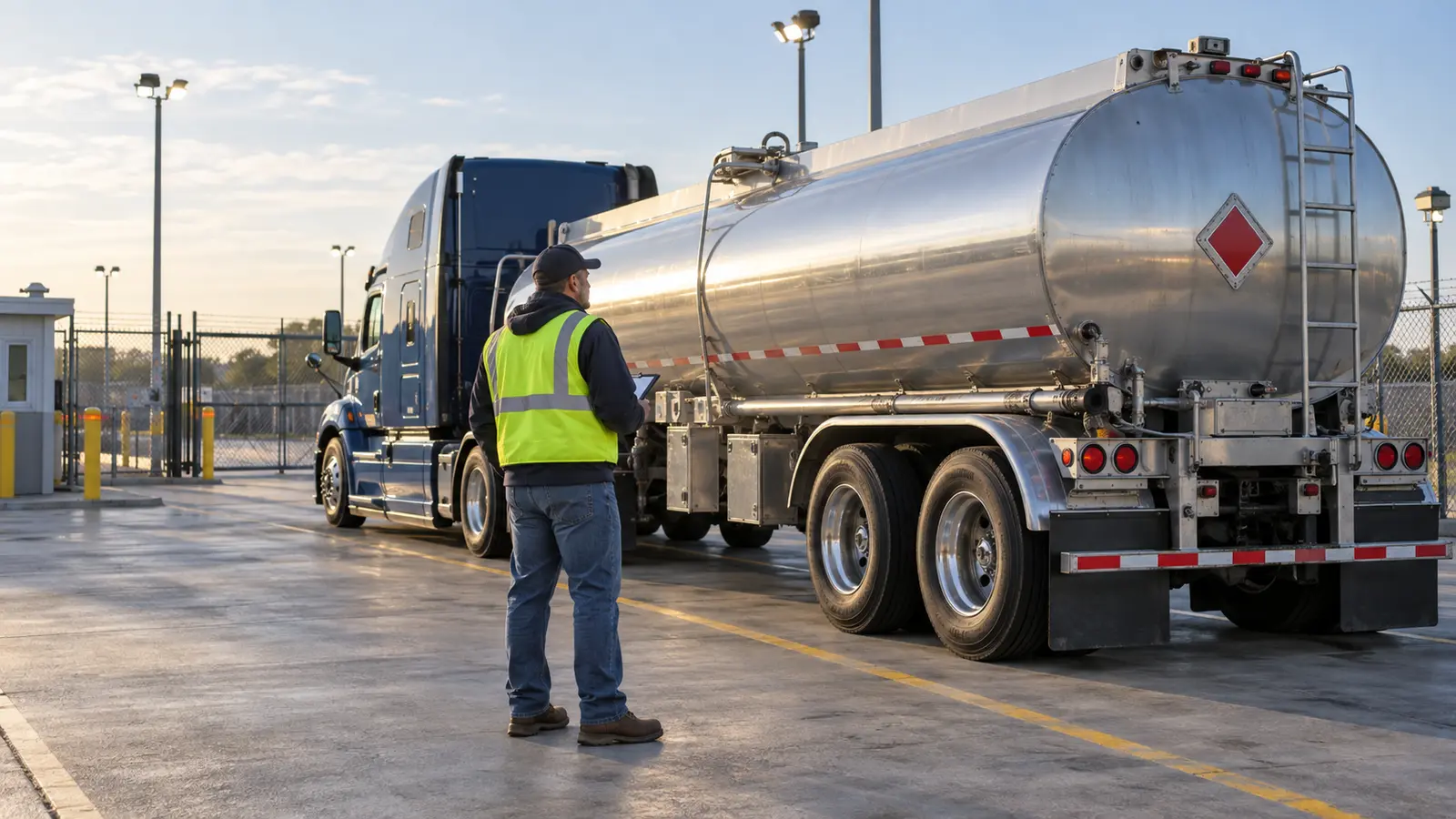
Parking a HazMat vehicle is a compliance decision, not merely a search for an open truck space. Material, location, roadway distance, nearby buildings, fire, and attendance can determine whether a stop is lawful.
The strictest federal rules apply to vehicles transporting Division 1.1, 1.2, or 1.3 explosives. Other marked or placarded HazMat vehicles also face attendance and roadway-parking restrictions. Drivers should plan each fuel, meal, inspection, delivery, and rest stop before arriving, then follow any stricter State, local, facility, or carrier rule.
Start by confirming whether Part 397 applies
Under 49 CFR §397.1, Part 397 generally applies to motor carriers transporting hazardous materials in a vehicle that must be marked or placarded under the highway regulations. It also applies to supervisors involved in that transportation and to each person who operates or is in charge of the vehicle. Those people must know and obey the rules.
An H endorsement and a Part 397 parking duty are related but not identical questions. The endorsement is a driver credential; the parking rules turn on the material and vehicle operation. Review the shipping paper, placards or markings, quantity, hazard division, special permits, route instructions, and company dispatch information before deciding which stopping rules apply.
Division 1.1, 1.2, and 1.3 explosives require continuous attendance
Section 397.5 states that a vehicle containing Division 1.1, 1.2, or 1.3 explosive material must be attended at all times by its driver or a qualified motor-carrier representative, unless every condition in the regulation's limited exception is satisfied. A routine truck stop, customer lot, or locked cab does not automatically meet that exception.
The exception can apply on motor-carrier property, the property of the explosives shipper or consignee, an approved safe haven, or—in the case of 50 pounds or less—at a construction or survey site. The lawful bailee must know the nature of the explosives and emergency procedures, and the vehicle must remain in the bailee's unobstructed view unless it is in a safe haven.
Other HazMat vehicles need attendance on public roads
A vehicle containing regulated hazardous materials other than those three explosive divisions must be attended by its driver when it is on a public street or highway or on the shoulder of a public highway. The rule allows the driver to be away while performing duties that are incident and necessary to operating the vehicle.
That exception should be read narrowly and applied through the carrier's procedures. It may cover a genuinely necessary operating task, but it is not a blanket permission for shopping, an extended restaurant visit, or sleeping. Move to a lawful off-road facility whenever possible rather than treating a highway shoulder as ordinary parking.
What “attended” means under the federal rule
A vehicle is attended when the person in charge is on the vehicle, awake, and not in a sleeper berth, or is within 100 feet and keeps the vehicle within an unobstructed field of view. Being inside a nearby building where walls, parked trailers, darkness, or terrain block the view does not satisfy that definition.
The 100-foot standard is a maximum attendance boundary, not permission to park anywhere within sight. The location must still comply with §397.7, traffic law, warning-device rules, property restrictions, and carrier policy. Sleeping in the cab's sleeper berth does not count as attendance even though the driver remains physically inside the vehicle.
A qualified representative needs more than proximity
For attendance purposes, a qualified motor-carrier representative must be designated by the carrier, understand the nature of the hazardous materials, know the required emergency procedures, and be authorized and able to move the vehicle. A security guard or dock worker is not automatically qualified merely because that person can see the truck.
When transferring responsibility, use the carrier's documented handoff. Identify the load, hazards, emergency contacts, shipping-paper location, keys, vehicle condition, and authority to move it. Confirm that the representative accepts the duty before the driver leaves; an unanswered message or assumption is not an effective transfer of control.
A safe haven is a specific written approval
Part 397 defines a safe haven as an area specifically approved in writing by local, State, or Federal governmental authorities for parking unattended vehicles containing Division 1.1, 1.2, or 1.3 material. Fencing, cameras, gates, lighting, or a sign that says “secure parking” does not by itself create a federal safe haven.
Ask the carrier for the written approval and verify that it covers the location and the explosive divisions involved. Do not rely solely on a parking app, dispatcher shorthand, an old driver note, or a facility employee's verbal assurance. If the approval cannot be confirmed, follow the attendance rule and contact the carrier for a compliant alternative.
Explosives have three major parking restrictions
A vehicle containing Division 1.1, 1.2, or 1.3 material may not be parked on or within five feet of the traveled portion of a public street or highway. It also may not be left on private property—including a fuel or eating facility—without the knowledge and consent of the person in charge, who must know the nature of the hazardous material.
The same vehicle generally may not be parked within 300 feet of a bridge, tunnel, dwelling, or place where people work, congregate, or assemble. The regulation permits only brief periods when operational necessity requires the stop and no other place is practical. Convenience or a preferred parking space is not the same as necessity.
Other regulated HazMat must stay away from the traveled portion
For hazardous materials other than Division 1.1, 1.2, or 1.3, §397.7 prohibits parking on or within five feet of the traveled portion of a public street or highway. A brief exception exists when operational necessities require parking and make every other location impracticable.
Measure the risk from the edge of the traveled portion, not simply from a shoulder line, curb, or parking sign. A wide shoulder can still be a poor choice because attendance, warning-device, traffic, and local restrictions continue to apply. Plan breakdown and emergency contacts so an unsafe roadside position can be resolved quickly.
Open fire and smoking rules affect stop selection
A motor vehicle containing hazardous materials may not be parked within 300 feet of an open fire. Before driving near an open fire, the driver must take precautions to determine that the vehicle can pass safely without stopping. Wildfires, brush fires, burning debris, and facility hot work can therefore change a planned route or parking location.
Federal rules also prohibit smoking or carrying a lighted cigarette, cigar, or pipe on or within 25 feet of vehicles containing specified Class 1, Class 5, and flammable materials. The prohibition can also cover an empty tank vehicle that previously carried certain placarded flammable liquids or gases. Follow any broader facility no-smoking zone.
Inspect every tire whenever the vehicle is parked
Section 397.17 requires the driver to examine each tire at the beginning of every trip and every time the HazMat vehicle is parked. A flat, leaking, or improperly inflated tire must be repaired, replaced, or properly inflated before travel, although the vehicle may be moved to the nearest safe place for the work.
An overheated tire must be removed and placed a safe distance from the vehicle, and the cause must be corrected before the vehicle moves. A tire inspection does not suspend the attendance or parking rules. Choose a repair location that can safely handle the material, vehicle, traffic exposure, and emergency-access needs.
State, local, facility, and carrier rules still matter
Section 397.3 requires hazardous-materials vehicles to comply with the laws and ordinances of the jurisdiction where they are operated unless a specific applicable DOT rule imposes a more stringent obligation. Local route restrictions, tunnel rules, parking bans, permit conditions, and emergency orders can therefore add limits beyond the federal baseline.
Facilities may also impose appointment, escort, staging, ignition-control, chocking, security, or designated-space requirements. A carrier can be stricter still. Build the route around approved HazMat stops and confirm them before dispatch, especially when hours-of-service limits, weather, congestion, or a delayed consignee could force an unplanned break.
Use a disciplined stop checklist
Before stopping, identify the material and applicable placards, confirm the location is permitted, check distance from the traveled roadway and protected places, scan for fire or smoking activity, and determine whether attendance is required. Verify property consent, safe-haven documentation when relevant, shipping papers, emergency information, communication coverage, and the carrier's escalation contact.
After parking, secure the vehicle, maintain the required view and distance, inspect every tire, and document any handoff or facility instruction. Before departure, repeat the walk-around and confirm the route. Drivers obtaining the H endorsement for the first time can complete CDL Compass HazMat ELDT theory before the State knowledge test, then apply carrier-specific procedures to every real load.