Class B CDL Training in 2026: ELDT, Skills, Vehicles, and Career Paths
A practical guide to Class B CDL requirements, ELDT theory and behind-the-wheel training, test preparation, vehicle choices, endorsements, and local career options.
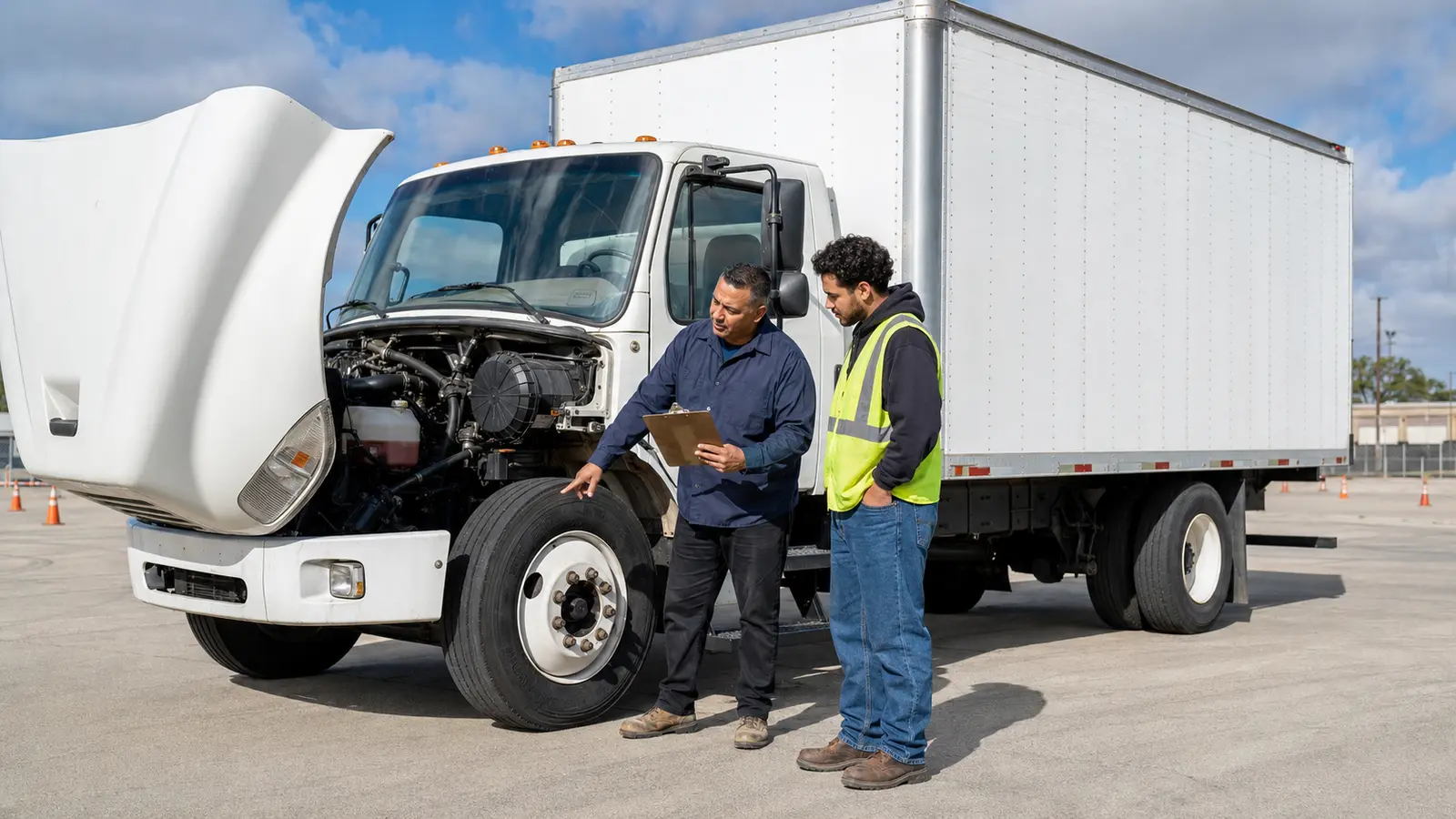
A Class B commercial driver's license is the standard credential for many heavy straight vehicles used in construction, delivery, utility, waste, towing, and passenger operations. It often supports local or regional work centered on one specialized vehicle. First-time applicants generally must earn a commercial learner's permit, complete applicable Entry-Level Driver Training, and pass a three-part CDL skills test.
The best training plan begins with the exact vehicle and job you want. A dump truck, box truck, refuse vehicle, concrete mixer, motorcoach, and school bus may all fall within Class B, yet their controls, visibility, braking, backing, and endorsement requirements differ. Choosing the target before enrolling helps you train in representative equipment and avoid unnecessary restrictions.
What a Class B CDL allows you to drive
FMCSA defines Class B as any single vehicle with a gross vehicle weight rating or gross vehicle weight of at least 26,001 pounds, or such a vehicle towing another vehicle that does not exceed 10,000 pounds. The key idea is a heavy single power unit. If the towed unit exceeds the applicable 10,000-pound threshold and the combination is at least 26,001 pounds, the operation may require Class A instead.
Common Class B vehicles include heavy straight trucks, large box trucks, dump trucks, concrete mixers, refuse trucks, some tow trucks, and certain buses. A Class B license alone does not authorize every vehicle in that group. Passenger, school bus, tank vehicle, or hazardous materials work may require endorsements, and the vehicle used for testing can create restrictions. Always compare the job's vehicle specifications with the license class, endorsements, and restrictions the employer requires.
Who must complete Class B ELDT
A driver applying for a Class B CDL for the first time is generally subject to the federal ELDT requirements when the commercial learner's permit was issued on or after February 7, 2022. Covered applicants must complete both Class B theory and behind-the-wheel training through providers listed on FMCSA's Training Provider Registry before the state administers the CDL skills test. ELDT is not retroactive, and federal or state exceptions can apply to particular applicants.
Theory and BTW training may come from separate registered providers. This makes it possible to complete Class B theory online and then train with a local school that has an appropriate straight truck. Both providers report completion to FMCSA. Before separating the two portions, confirm that the hands-on school accepts outside theory completion and that its vehicle, schedule, and program meet your state's requirements.
What Class B ELDT theory teaches
Class B theory builds the safety knowledge used before and during every trip. The curriculum includes vehicle systems, inspections, basic operation, backing and docking, communication, distracted driving, speed and space management, extreme conditions, hazard perception, railroad crossings, maintenance, cargo responsibilities, Hours of Service, fatigue, drugs and alcohol, medical requirements, and post-crash procedures.
A registered provider must cover the curriculum and require an overall score of at least 80 percent on the written or electronic assessment. Federal rules do not prescribe one universal number of theory hours, although a state or school may require more. Learn why each inspection point and operating rule matters rather than merely memorizing answers.
What happens during behind-the-wheel training
Class B BTW training has range and public-road components. Federal rules do not set a minimum number of BTW hours; completion is proficiency-based. A qualified instructor must evaluate the required skills in a vehicle representative of Class B. States and schools may impose additional hours, so verify the program rules before comparing prices only by total training time.
On the range, students develop a repeatable vehicle-inspection routine and practice basic controls such as straight-line backing, offset or alley-type backing when used by the program, precise stops, turns, clearance judgment, mirror use, and safe positioning. Class B training is built around a single heavy vehicle, so tractor-trailer coupling and uncoupling is not part of the standard Class B curriculum.
Public-road instruction connects those skills to traffic. Students practice visual search, signaling, lane changes, right and left turns, speed selection, following distance, railroad crossings, grade operation, hazard response, and communication with other road users. The goal is not merely to complete a route. It is to demonstrate consistent control while scanning far enough ahead to make unhurried decisions.
Prepare for all three parts of the CDL skills test
The CDL skills test has three required parts: the Vehicle Inspection Test, Basic Controls Test, and Road Test. They evaluate safety-related components, low-speed handling, and safe operation in traffic. States administer the tests, so your state CDL manual remains the primary preparation source.
Practice in the same type of vehicle you expect to use for testing. Learn its dimensions, brake system, steering response, sight lines, mirrors, turning path, transmission, warning indicators, and inspection points. Build a logical inspection sequence and explain what you check, how you check it, and what would make it unsafe.
Confirm the test vehicle's registration, insurance, inspection status, safety equipment, and mechanical condition. Verify that it represents the desired license and endorsements. Testing in an automatic-transmission vehicle or a vehicle without a full air-brake system may result in restrictions that limit future work.
Choose endorsements around the job
Some Class B careers require more than the base license. Passenger and school-bus operations commonly require P or S endorsements, additional ELDT, and applicable skills tests. A tank vehicle may require the N endorsement. Transporting placarded hazardous materials can require the H endorsement, HazMat ELDT theory, the state knowledge test, and a Transportation Security Administration security threat assessment. A vehicle involving both tank and hazardous materials may require the X endorsement.
Do not add endorsements simply because they appear valuable on a list. Read current job postings in your area and ask employers which credentials, medical qualifications, age requirements, background checks, and driving experience they actually require. A focused plan can prevent you from paying for training that does not support the work you want.
Class B career paths and working conditions
Class B drivers work in local delivery, beverage distribution, construction hauling, ready-mix concrete, sanitation, utilities, towing, transit, motorcoach, and school transportation. Schedules vary: school-bus routes may be split, construction may begin before sunrise, and delivery can combine driving with loading or customer service.
Evaluate more than the advertised pay. Ask about overtime, seasonal schedules, benefits, loading duties, route size, vehicle condition, training pay, weekends, and how delays are handled. Confirm whether the position is interstate or intrastate and which medical, Hours of Service, drug-testing, and recordkeeping rules apply.
A practical Class B training checklist
Start by identifying the target vehicle and endorsements. Download your state's current CDL manual, confirm identification and residency documents, determine the appropriate medical self-certification category, and prepare for the required knowledge tests. After receiving the CLP, follow the supervision rules for public-road practice and account for the federal holding period and any longer state requirement.
Select registered theory and BTW providers, verify the exact Class B curriculum, and obtain a written explanation of tuition and extra fees. Ask which truck is used, whether it has air brakes and an automatic or manual transmission, how proficiency is evaluated, how much additional practice costs, who schedules the skills test, and what happens after an unsuccessful attempt. Make sure your legal name, date of birth, license number, and issuing state are entered correctly so the training records can be matched.
Complete online Class B theory with the CDL Compass course, then use hands-on training to turn the concepts into consistent inspection, backing, road-driving, and decision-making habits. Before testing, confirm that both training completions appear in the Training Provider Registry and that the vehicle will support the license you intend to earn. A deliberate Class B path can lead to a practical, skilled career without treating training as a box to check.