Class A CDL Training in 2026: ELDT, Skills Test, and Restrictions
A practical guide to Class A CDL requirements, ELDT theory and behind-the-wheel training, the three-part skills test, and avoidable license restrictions.
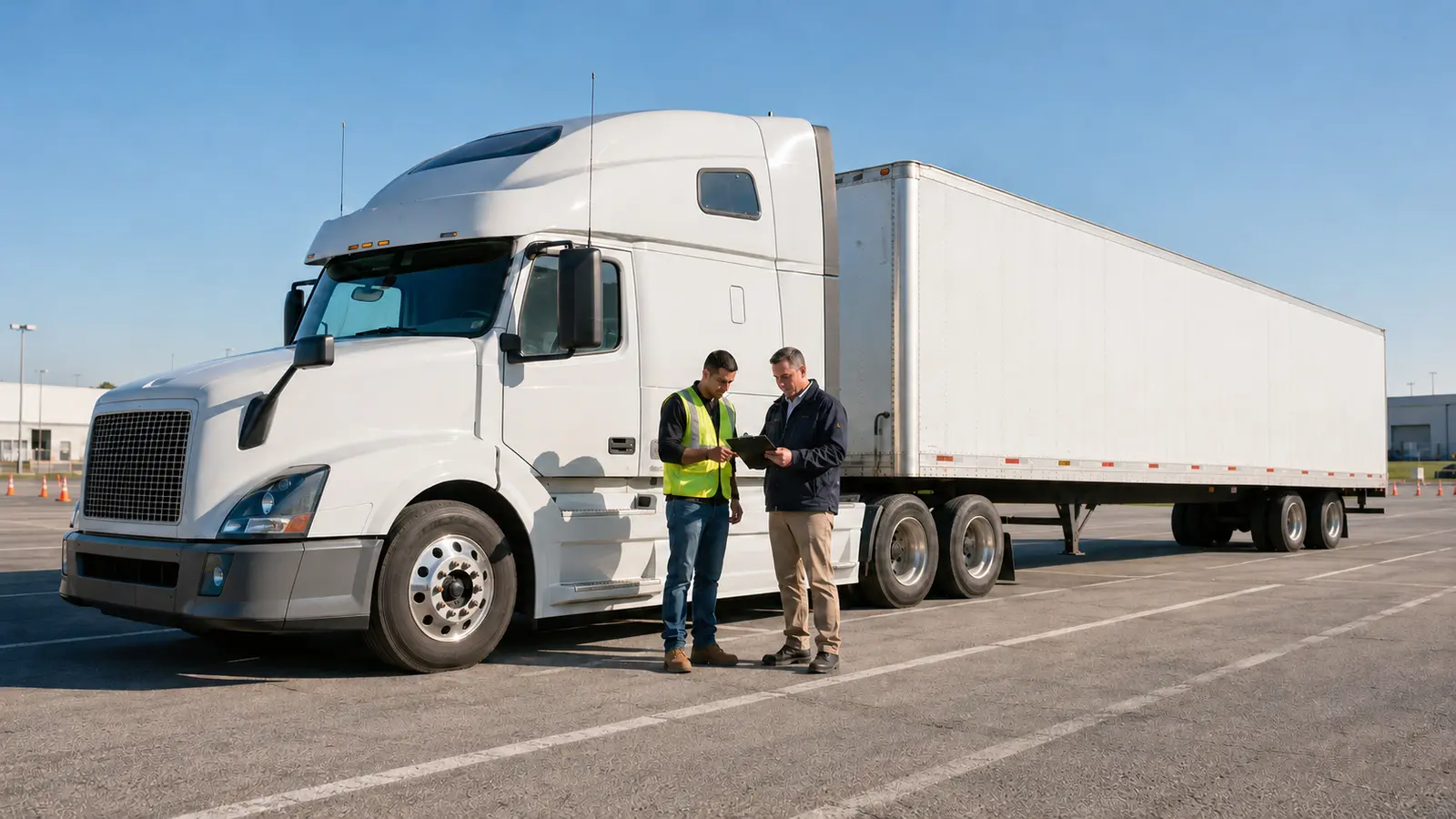
A Class A commercial driver's license opens the broadest group of commercial vehicle opportunities, but earning it requires more than memorizing a permit manual. New applicants must obtain the correct commercial learner's permit, complete applicable Entry-Level Driver Training, and pass a three-part state skills test in representative equipment.
The truck used for testing, its transmission and brake system, the type of coupling, and the endorsements pursued can affect which vehicles a new driver may operate. Planning those details before training helps prevent an expensive retest or a restriction that limits the first job search.
What a Class A CDL covers
FMCSA defines Class A around combination vehicles. The combination must have a gross combination weight rating or gross combination weight of at least 26,001 pounds, and the towed unit or units must have a gross vehicle weight rating or gross vehicle weight of more than 10,000 pounds. A typical tractor with a semitrailer fits this definition, but the actual ratings and configuration—not the appearance of the vehicle—control the license class.
Class A can support work with dry vans, refrigerated trailers, flatbeds, tankers, car carriers, intermodal containers, and other combinations. It does not automatically authorize every one of them. Tank, hazardous-materials, doubles/triples, or passenger operations may require endorsements. Employer requirements, state rules, and equipment-specific training can also apply.
Who must complete Class A ELDT
Federal ELDT rules generally apply to a first-time Class A applicant and to a Class B CDL holder upgrading to Class A. The training must come from providers listed on FMCSA's Training Provider Registry. Covered drivers must complete Class A theory and behind-the-wheel training before the state skills test.
A driver who previously held the applicable CDL, qualified for a skills-test exemption, or held a qualifying permit before the federal compliance date may be treated differently. Use FMCSA's ELDT applicability tool and confirm the record with the state rather than assuming another driver's exception applies.
Federal standards are a baseline. States may impose additional training requirements, and a school may operate a longer proficiency-based program. Check the rules where the training will occur and where the CDL will be issued.
What Class A theory training teaches
Class A theory covers basic operation, safe operating procedures, advanced practices, vehicle systems, and non-driving responsibilities. Topics include controls and dashboards, inspections, shifting, backing and docking, coupling and uncoupling, visual search, communication, distracted driving, speed and space management, night and extreme-condition operation, hazard perception, railroad crossings, maintenance, cargo documentation, hours of service, fatigue, trip planning, drugs and alcohol, and medical requirements.
FMCSA does not prescribe one minimum number of theory hours. The registered provider must cover the full curriculum and assess the student in writing or electronically. The trainee must earn an overall score of at least 80 percent. That is a completion threshold, not a reason to rush: the same knowledge supports the permit tests, vehicle inspection, road test, and daily work.
Theory may be delivered online by a registered provider. This lets a student complete the knowledge portion around work or family responsibilities, then use a separate registered provider for hands-on instruction. Verify both providers in the Registry and make sure the personal information submitted for training exactly matches the driver's license or permit.
What happens during behind-the-wheel training
Class A behind-the-wheel training has range and public-road components. Both must be delivered by the same registered BTW provider. Federal rules do not set a universal minimum number of BTW hours; the instructor must cover the required elements, document training time, and determine that the trainee is proficient. A state or school may require more hours.
On the range, students learn vehicle inspection, basic controls, straight-line and offset backing, parking or docking maneuvers, and coupling and uncoupling. Good training develops a repeatable process: scan, set up, use both mirrors, control speed, stop when the picture is unclear, and correct before a small error becomes a dangerous one.
Public-road instruction builds safe behavior in traffic. It includes turns, lane changes, visual search, signaling, speed selection, following distance, railroad crossings, grade operation, hazard response, and interaction with other road users. Training should take place in a Group A vehicle and address the equipment the student will encounter during the test and early employment.
Plan the commercial learner's permit correctly
The home state issues the CLP and CDL, so begin with its current manual. A Class A permit commonly requires general knowledge, combination vehicles, and air-brake knowledge tests for a full-air-brake combination. Endorsements require additional tests.
FMCSA states that an applicant must hold the CLP for at least 14 days and complete applicable ELDT before the CDL skills test. Confirm medical self-certification, identity and residency documents, fees, appointments, and the expected vehicle group.
The CLP allows supervised practice; it is not authority to operate independently. Keep it valid throughout training and testing.
Prepare for all three parts of the skills test
The state-administered CDL skills test has three parts: the Vehicle Inspection Test, Basic Controls Test, and Road Test. All required parts must be passed. The sequence and testing aid used for the inspection may vary by state, so use the current state manual rather than a generic checklist copied from social media.
For the vehicle inspection, learn what each component does, how to check it, and which condition would make it unsafe. For basic controls, practice precise setup and low-speed control instead of memorizing only painted reference points. For the road test, demonstrate steady observation, appropriate speed and space, correct lane position, safe turns, and early communication.
Before test day, confirm the appointment, test vehicle, registration, insurance, inspection status, safety equipment, and required documents. Conduct a complete pre-trip. A mechanical defect or unsuitable vehicle can end the appointment before the examiner evaluates your driving.
Avoid restrictions that narrow your Class A license
The test vehicle matters. FMCSA identifies an E restriction when the skills test is taken in a vehicle with an automatic transmission; it prevents operation of a manual-transmission CMV. An L restriction applies when the applicant does not test in an air-brake-equipped vehicle, while a Z restriction applies when the vehicle has air-over-hydraulic rather than full air brakes.
A Class A test using a pintle hook or another non-fifth-wheel connection can produce an O restriction, which prevents operation of a Class A vehicle with a fifth-wheel connection. These restrictions may be acceptable when they match a specific job, but they can exclude common tractor-trailer positions. Ask the training and testing provider to identify the transmission, brake system, and coupling before enrollment.
Removing an E, L, or Z restriction later is not itself subject to federal ELDT, according to FMCSA guidance, but state testing, vehicle, and fee requirements still apply. Choosing representative equipment at the start is usually simpler.
Choose endorsements around real job requirements
A Class A license is the foundation; endorsements determine certain specialized privileges. The N endorsement covers tank vehicles, T covers doubles/triples, H covers placarded hazardous materials, and X combines tank and HazMat authority. Each has its own testing requirements. First-time HazMat applicants must also complete HazMat ELDT theory and the TSA security threat assessment.
Read local and regional job postings before adding credentials. Compare the required transmission, endorsements, schedule, freight type, experience, physical duties, and home-time pattern. Ask whether the employer provides finishing training for new graduates. The best first job is one that matches your license and gives you safe, structured experience—not simply the highest advertised number.
A practical Class A training checklist
Define your target job and equipment. Confirm Class A ELDT applicability and state requirements. Obtain the correct CLP and keep it valid. Complete theory with a registered provider, then finish range and public-road instruction with a registered BTW provider. Practice the inspection, controls, and road skills as one connected routine.
Before the skills test, verify that the truck represents the privileges you want and will not create an unexpected restriction. After passing, review the CDL class, endorsements, and restrictions before leaving the licensing agency. CDL Compass offers online Class A ELDT theory designed to fit this process, with a direct path into the safety knowledge you will use during hands-on training and throughout your driving career.