CDL Work Zone Driving in 2026: Speed, Lane Shifts, Flaggers, and Safe Stops
Learn how CDL drivers can approach work zones safely, manage speed and space, follow flaggers, handle narrow lane shifts, and avoid dangerous end-of-queue crashes.
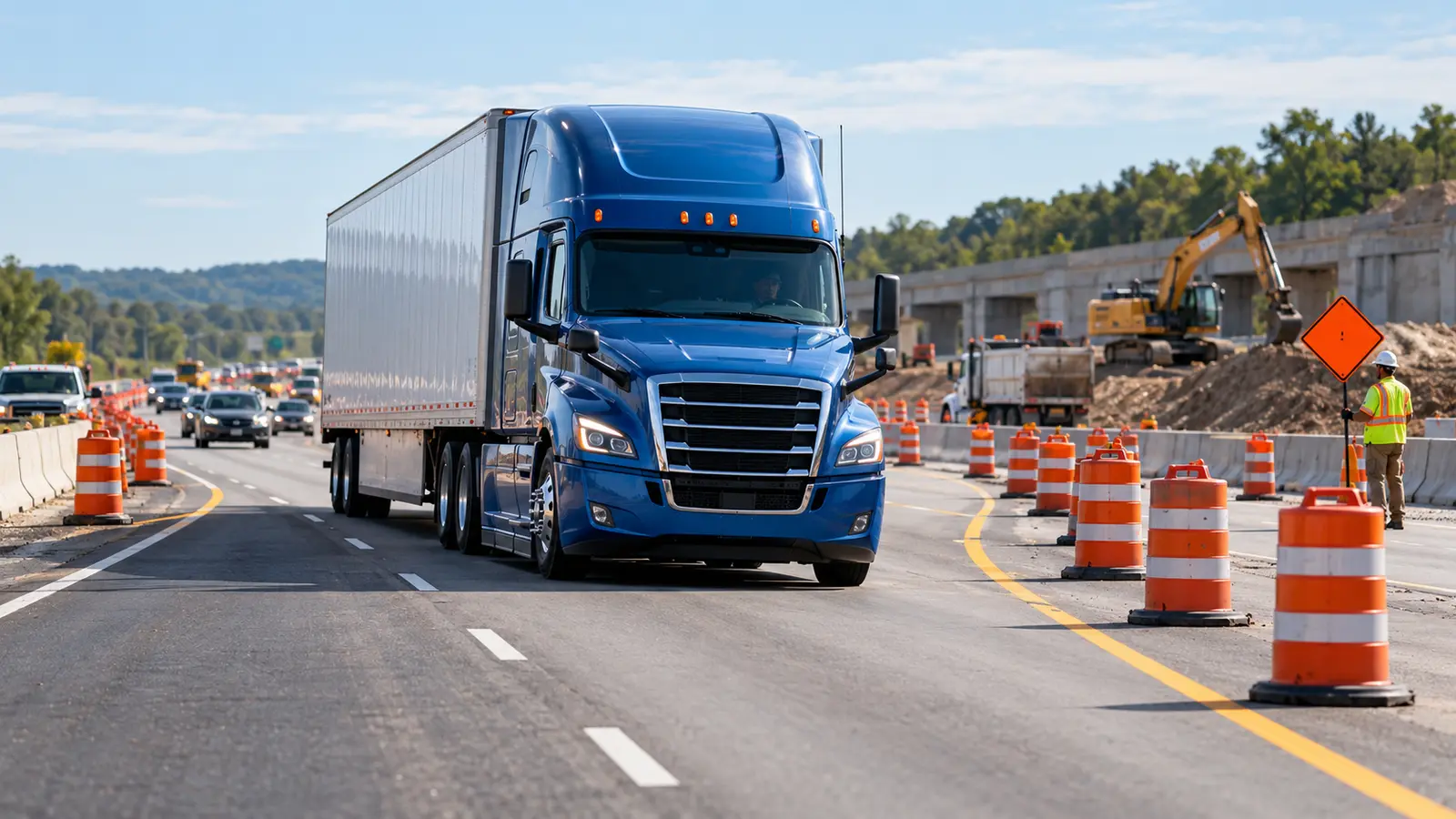
A work zone can turn a familiar highway into a temporary route with shorter sight distance, narrower lanes, uneven pavement, workers near traffic, and a queue where traffic flowed freely yesterday. A commercial vehicle adds longer stopping distance, large blind areas, and less room for sudden corrections. The safe approach begins well before the first barrel.
FMCSA's work-zone guidance, updated April 20, 2026, says nearly 900 people are killed in work-zone crashes in an average year and more than one-third of those crashes involve a commercial motor vehicle. Build a repeatable routine: scan early, reduce speed before the lane changes, create more space, obey temporary traffic controls, and be ready to stop.
Know the legal baseline
Under 49 CFR §392.2, a commercial motor vehicle must be operated according to the laws, ordinances, and regulations of the jurisdiction where it is traveling. If an FMCSA regulation sets a higher standard of care, the federal requirement controls. In a work zone, posted speed limits, lane-use signs, pavement markings, signals, and lawful directions from police or flaggers are not suggestions. State laws may also add enhanced fines or specific move-over requirements.
Section 392.14 separately requires extreme caution and reduced speed when conditions such as rain, fog, dust, or smoke adversely affect visibility or traction. If those conditions become sufficiently dangerous, CMV operation must stop until it can resume safely. A work zone does not automatically trigger §392.14, but dust, spray, poor visibility, or a slick temporary surface inside one can. The posted limit is still a maximum—not a promise that the speed is safe for every truck and condition.
Plan before the taper begins
Check current 511 or state DOT information, dispatch notices, permit restrictions, and approved navigation before departure. A construction project may close an exit, restrict vehicle width or height, shift an oversize load to a detour, or change HazMat routing. Recheck the route at a lawful stop because work-zone phases can change quickly.
Finish calls and route changes before entering the advance-warning area. Turn off unnecessary alerts and keep both hands available for controlled steering. Watch several signs ahead instead of waiting for the last merge arrow. Early information prevents a rushed move beside another vehicle.
Slow early and protect stopping distance
Release the accelerator and reduce speed progressively before the queue, lane taper, or worker area. Hard braking after entering a narrow lane can destabilize cargo, surprise following traffic, or start a rear-end chain. Check mirrors as you slow and use warning flashers only when lawful and appropriate under company and state procedures; flashers do not replace speed control or attentive braking.
Open a larger gap than you would on an unobstructed dry highway. FMCSA advises extra following space and readiness to stop because work zones bring lane shifts, sudden queues, workers, equipment, and uneven surfaces. Keep enough distance to see temporary signs and pavement markings around the vehicle ahead. If another driver fills the space, rebuild it calmly rather than competing for position.
Treat the end of the queue as the first major hazard
The back of stopped traffic may sit around a curve, over a crest, or well before the visible construction. Look for brake lights, message boards, queue-warning vehicles, and traffic flowing unusually slowly in adjacent lanes. Scan beyond the vehicle immediately ahead so a developing stop does not remain hidden behind a trailer or bus.
Approach every blind crest or curve at a speed that preserves stopping room within the distance you can see. Do not use the shoulder to pass a queue, and never assume traffic will keep moving because a lane appears open. A worker, incident responder, construction entrance, or merging vehicle may occupy that space without warning.
Handle merges without creating a contest
Follow the posted merge pattern. Some projects direct an early merge; others use both lanes to a designated merge point. Do not improvise a rolling roadblock or force another vehicle onto the shoulder. Signal early, check the mirrors and blind area, and move only when the full combination has room.
Once established, maintain a steady pace and avoid changing lanes unless traffic control or a hazard requires it. Before any lateral movement, confirm that the lane is clear along the truck's entire length and leave room for off-tracking through bends.
Drive the temporary lane, not the old road
Fresh temporary markings, drums, barriers, and signs control the current path even when old stripes remain visible. Look where the temporary lane goes, not where the original lane used to continue. Reduce speed before an S-curve or lane shift, hold a stable line, and avoid braking or steering abruptly while the combination is already turning.
Narrow lanes reduce the margin between mirrors, barriers, workers, and adjacent traffic. Center the vehicle without crowding either edge. Account for trailer off-tracking, rear swing, and the movement of flexible barriers in wind. If the truck cannot safely fit a posted width or clearance, stop in a lawful place before the restriction and contact dispatch or the road authority—do not test the available inches at traffic speed.
Obey flaggers and construction signals
A flagger may stop traffic, release one direction at a time, or send vehicles through a single-lane section behind a pilot car. Begin slowing as soon as the flagger or STOP paddle is visible. Stop where directed, leave space from workers and equipment, set the parking brake if company procedure and the expected delay call for it, and remain ready for the signal to change.
Make eye contact when possible, but rely on the official signal rather than a casual hand movement from another worker. Do not proceed because a nearby car moves, and do not pass the pilot vehicle. A flagger stop is a necessary traffic stop, so it is still driving time for federal hand-held-phone and texting rules. Keep the phone untouched until the truck is safely parked off the highway.
Expect equipment, workers, and rough pavement
Construction trucks may enter slowly from the right, cross the lane, or stop partly in a blind area. Watch wheels, spotters, backup alarms, and access points. Give workers the widest practical buffer without crossing a barrier or entering another lane. Never follow construction equipment through a closed lane unless an authorized person explicitly directs traffic there.
Uneven pavement, steel plates, drop-offs, loose gravel, and standing water can affect steering and braking. Hold the wheel firmly, reduce speed before the surface change, and keep steering and brake inputs smooth. After a severe bump or contact with debris, find a safe location to inspect tires, wheels, suspension, securement, and any warning indications before continuing.
Adjust again for darkness and bad weather
At night, glare and reflective devices can make the lane appear clearer than it is. Dim interior lighting, keep the windshield and mirrors clean, and use a speed that lets you stop within the distance illuminated and visible. Look for temporary signals, workers in reflective clothing, and inactive equipment protruding near the travel path.
Rain can hide old and new markings under glare, while wind can move channelizing devices and dust can erase sight distance. Increase the gap, avoid cruise control when it reduces precise response, and apply §392.14 when visibility or traction is adversely affected. If you cannot identify the lane or stop safely within the visible path, continuing slowly may still be unsafe; move to a lawful refuge or follow official closure directions.
Use a simple work-zone routine
Before the zone: verify the route, eliminate distractions, scan the warnings, choose the correct lane, and begin slowing. At the taper: rebuild following distance, check mirrors, signal, and merge according to the posted plan. Inside the zone: hold a steady lane position, obey the flagger, watch for the queue, and expect the surface to change.
After the END ROAD WORK sign, do not accelerate until the full combination is clear, normal lane width and pavement return, and traffic ahead is moving. Recheck mirrors and cargo behavior. Report damaged traffic-control devices, a near miss, or unsafe conditions through the carrier's procedure from a safe parked location.
Make work-zone judgment part of CDL preparation
Class A and Class B ELDT theory includes safe operating practices such as speed and space management, visual search, communication, extreme driving conditions, and recognizing hazards. CDL Compass provides the online theory portion for eligible entry-level drivers. Required behind-the-wheel training must still be completed with a qualified provider listed on FMCSA's Training Provider Registry.
Use training to practice the habits that protect real people: looking far enough ahead, slowing before the hazard, maintaining space, controlling the vehicle through narrow paths, and refusing a maneuver that exceeds the vehicle's clearance. A professional work-zone pass is uneventful by design. The truck arrives a little later if necessary, and every worker and road user goes home safely.