CDL Cell Phone Rules in 2026: Handheld Device Ban, Penalties, and Safe Driving
Learn the federal texting and handheld-phone rules for CMV drivers, when hands-free use is allowed, and how repeated violations can affect a CDL.
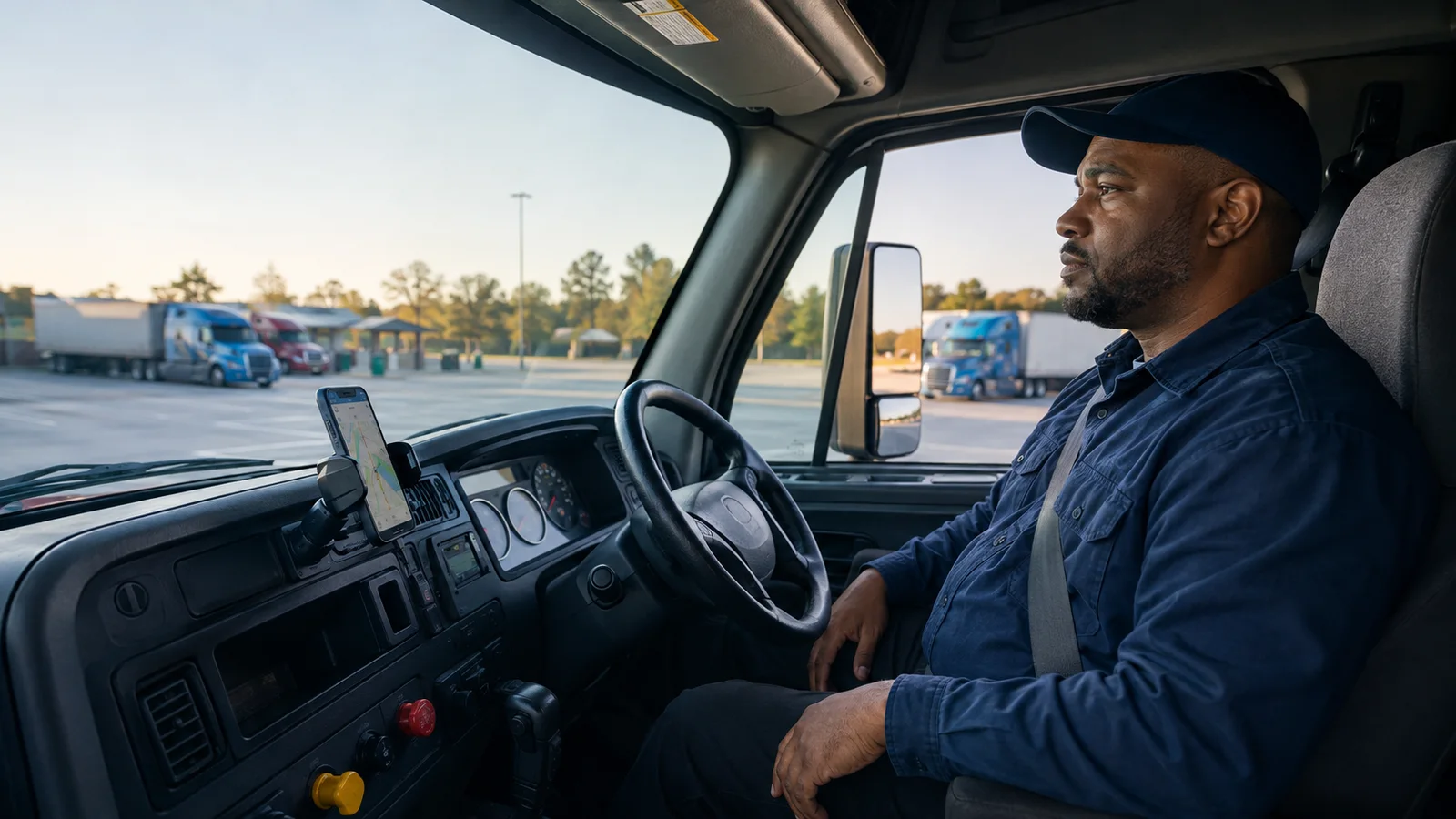
A phone can be a navigation tool, dispatch terminal, document scanner, emergency connection, and family lifeline for a commercial driver. It can also become a serious safety and compliance problem when the driver holds it, reaches unsafely, types, or reads messages while operating a commercial motor vehicle. The federal rules focus on specific actions, not whether a driver believes the interaction was brief.
As of August 7, 2026, federal regulations continue to prohibit texting while driving and the use of a hand-held mobile telephone while driving a CMV. State laws and employer policies may impose additional restrictions. New CDL drivers should learn the federal baseline, then adopt a routine that removes decisions and device handling from the moving cab.
Know the two federal prohibitions
The texting rule in 49 CFR §392.80 says that a driver must not engage in texting while driving, and a motor carrier must not allow or require it. The hand-held phone rule in 49 CFR §392.82 says that a driver must not use a hand-held mobile telephone while driving a CMV. It also prohibits a carrier from allowing or requiring that conduct.
These are related but distinct rules. Texting generally involves manually entering alphanumeric text into or reading text from an electronic device. It includes activities such as SMS, email, instant messaging, requesting a webpage, and other electronic text entry or retrieval. Hand-held phone use includes holding a phone for a voice call, pressing more than one button to dial or answer, or reaching in a way that takes the driver out of the normal seated and belted position.
The device label does not decide compliance. A smartphone can be used as a phone, navigation system, camera, music player, dispatch device, or messaging terminal. The action the driver performs—and whether another federal, state, or company rule prohibits it—matters.
A red light or traffic jam is still driving
A common mistake is assuming that a temporarily stopped truck is the same as a legally parked truck. Under the federal hand-held phone rule, driving includes operating a CMV on a highway while temporarily stationary because of traffic, a traffic-control device, or another momentary delay. The texting rule similarly includes operation with the motor running during traffic and other momentary delays.
That means a red light, railroad queue, construction flagger stop, toll line, or traffic backup is not the time to pick up the phone. For purposes of these rules, driving ends when the vehicle has been moved to the side of or off the highway and halted where it can safely remain stationary. A narrow shoulder, active ramp, or other unsafe location is not made safe merely because the parking brake is set.
If a message, route problem, or call requires attention, continue to a lawful parking location. Secure the vehicle, then handle the task. Building that extra time into trip planning is safer than treating a traffic signal as office time.
What compliant hands-free calling looks like
FMCSA guidance allows a hands-free phone when it is close enough to operate while the driver remains seated and properly restrained. The driver may use an earpiece, speaker function, voice activation, or a one-button feature to initiate, answer, or end a call. Mount the phone before movement and place it where it does not block the windshield, mirrors, gauges, or vehicle controls.
Hands-free does not mean attention-free. A complicated conversation can create mental distraction even when both hands remain available. Use short operational calls, tell the other person that you are driving, and end the conversation when traffic, weather, a work zone, a maneuver, or an equipment issue demands full attention. Carrier policy may prohibit calls that federal rules would otherwise permit.
Do not reach to the floor, passenger seat, bunk, or another location for a ringing phone. FMCSA’s definition specifically includes reaching that moves the driver out of the seated, belted position. Let the call go unanswered and respond after parking.
Navigation and dispatch devices still require judgment
The federal definition of texting excludes inputting, selecting, or reading information on a GPS or navigation system. It also excludes a one-button voice-call action and use of a multifunction device for a purpose not otherwise prohibited. Those exclusions are not a general permission to manipulate any app whenever the truck is moving.
Program the route, customer, fuel stop, and audio before releasing the parking brake. Review bridge heights, weight limits, hazardous-material restrictions, truck routes, weather, and parking as part of trip planning rather than trying to solve them on the screen at speed. If navigation becomes confusing, keep control of the truck and stop safely before changing the route.
Use the carrier’s installed equipment as trained. Keep alerts limited to what is necessary, silence personal notifications, and avoid reading a dispatch message until parked unless an approved system communicates essential information without prohibited manual interaction. Follow the strictest applicable state law and carrier policy.
Understand tickets, serious violations, and disqualification
A citation is not the only consequence. FMCSA states that texting and hand-held phone violations can affect a driver’s and carrier’s Safety Measurement System results and can lead to civil penalties. State or local violations can also affect the motor vehicle record, employment, insurance, and a carrier’s internal safety review.
Under 49 CFR §383.51, a state or local conviction for texting while driving a CMV or violating a hand-held mobile-phone restriction while driving a CMV is listed as a serious traffic violation. The federal disqualification table covers combinations of serious violations from separate incidents within a three-year period; the incidents do not all have to be phone violations.
A second qualifying conviction from a separate incident within three years while operating a CMV calls for a 60-day CMV disqualification. A third or subsequent qualifying conviction in that period calls for 120 days. The same table includes excessive speeding of 15 mph or more, reckless driving, improper or erratic lane changes, following too closely, and certain other offenses. One phone conviction combined with another listed serious violation can therefore matter. Exact case consequences depend on the conviction record and the administering state, so a driver facing a citation should use official state procedures and obtain qualified legal advice when appropriate.
Carriers and dispatchers share responsibility
Federal rules do not permit a motor carrier to allow or require prohibited texting or hand-held phone use. A dispatcher should not create an expectation that drivers immediately read or answer messages while moving. Good policies explain which system to use, what requires an urgent call, when acknowledgment is expected, and how a driver reports that it is unsafe to respond.
Drivers should learn the policy during orientation and ask how to handle route changes, arrival calls, document uploads, trailer assignments, and emergencies. If a workflow seems to require unsafe interaction, park and notify a supervisor through the approved channel. Save necessary records, but do not try to document the problem while the truck is moving.
Build a phone-safe routine before every trip
Use a repeatable setup: mount and charge the phone, connect hands-free audio, enter the route, review the first stops, set essential audio, and activate a driving or do-not-disturb mode. Put loose devices and cables where they cannot fall near pedals or tempt you to reach. Confirm that the mount stays secure over rough roads and that the screen does not interfere with visibility.
Tell family and friends that you will return messages when parked. Give dispatch realistic check-in windows. At a stop, choose a safe legal parking space, secure the vehicle, complete communication and paperwork, then put the device away before moving. In an actual emergency, the federal rules contain an exception for communication with law enforcement or emergency services, but ordinary scheduling pressure is not an emergency.
ELDT theory for Class A and Class B applicants covers distracted driving, communication, hazard recognition, speed and space management, and other safe-operating responsibilities. Treat those topics as an operating system for the cab, not merely material for an assessment. A simple policy—mounted, one-touch, brief, or safely parked—protects attention, the CDL, and everyone sharing the road.