CDL Air Brake Restrictions in 2026: L vs. Z and How to Remove Them
Learn what the L and Z CDL restrictions mean, why test vehicles create them, how removal testing works, and when ELDT is—or is not—required.
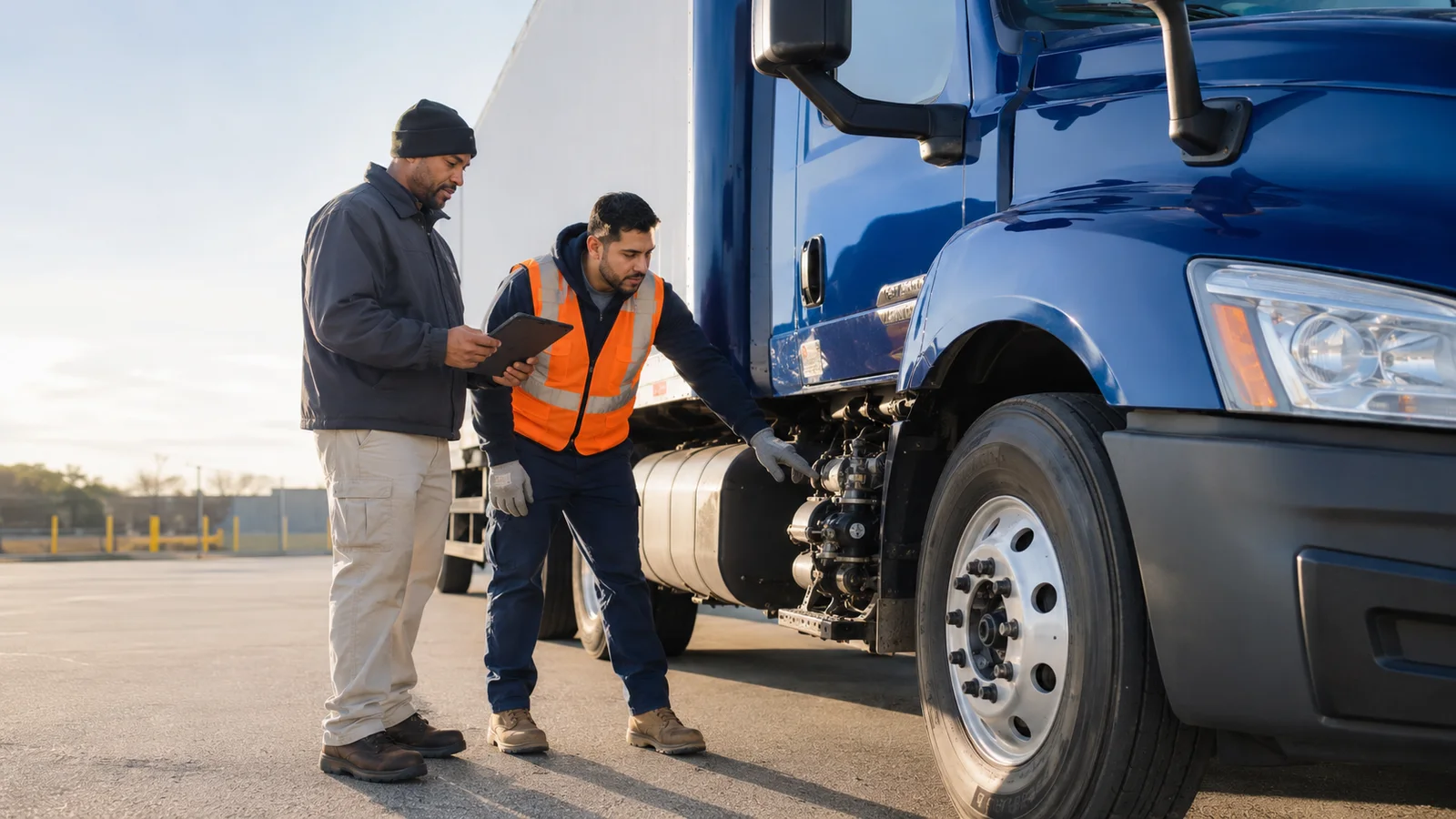
Air brakes are common on tractor-trailers, buses, dump trucks, refuse trucks, and many other commercial vehicles. If your CDL carries an L or Z restriction, the restriction controls which braking systems you may legally operate—even when the vehicle otherwise matches your CDL class.
The two codes are not interchangeable. L generally blocks operation of a CMV equipped with any type of air brakes. Z applies when the driver tested in a vehicle with air-over-hydraulic brakes and blocks operation of a CMV with a full-air system. Understanding that difference is the first step toward choosing the right training and test vehicle.
Air brakes are not a CDL endorsement
Drivers often ask how to add an air-brake endorsement. Under the federal CDL structure, air brakes are handled through knowledge and skills testing plus restrictions, not through a separate endorsement code. A driver demonstrates air-brake knowledge and performs the required inspection and control procedures in an appropriately equipped vehicle.
A CDL without L or Z may authorize full-air operation when the license class, endorsements, and all other qualifications also match the vehicle and work. Removing L or Z does not change a Class B license into Class A, add passenger or school-bus authority, remove an automatic-transmission restriction, or qualify a driver for hazardous materials.
What the L restriction means
Under 49 CFR §383.95, a state must indicate an air-brake restriction when an applicant fails the air-brake portion of the knowledge test or performs the skills test in a vehicle not equipped with air brakes. For testing and restriction purposes, the regulation treats systems operating fully or partially on the air-brake principle as air brakes.
In practical terms, L is the broader restriction. A driver with L cannot operate a CMV whose principal braking system uses air, including a full-air system or an air-over-hydraulic system. The precise wording printed on a license can vary by state, so compare the code with the state CDL manual rather than relying only on an abbreviated description.
What the Z restriction means
A Z restriction results when the applicant completes the skills test in a vehicle equipped with air-over-hydraulic brakes. That system uses air pressure to activate a hydraulic braking system. Because the test vehicle does not use a full-air service-brake system, the final CDL is restricted against vehicles whose braking system operates fully on the air-brake principle.
Z is narrower than L. It generally allows operation of an air-over-hydraulic CMV that fits the driver’s license but not a full-air CMV. Do not identify the system by the presence of an air tank or hose alone. Check manufacturer information, the vehicle documentation, and a qualified mechanic or instructor when the configuration is uncertain.
FMCSA guidance also distinguishes a hydraulic service-brake system with an air-assisted parking-brake release. The air-brake restriction concerns the principal system used to stop the vehicle; an air-assisted parking release alone does not turn a hydraulic service-brake system into an air-brake vehicle for this rule.
Why the restriction can limit job options
Many fleets standardize on full-air equipment. An L or Z restriction can therefore block otherwise suitable Class A or Class B positions in trucking, transit, construction, waste collection, utility work, concrete delivery, and school transportation. Employers and insurers may verify the restriction before a road evaluation or assignment.
Never operate a full-air CMV simply because an employer says the route is short or the vehicle is easy to drive. The restriction applies to vehicle operation, not trip distance. Ask recruiters for the actual brake configuration and provide an accurate copy of the CDL before accepting an assignment.
ELDT is not required just to remove L or Z
FMCSA’s Training Provider Registry FAQs state that drivers removing L, Z, or E under 49 CFR §383.135(b)(7) are not subject to the federal Entry-Level Driver Training rule for that restriction-removal action. This is an important exception: restriction removal may require preparation and retesting, but it does not by itself require a new TPR ELDT completion.
The exception does not erase other training requirements. A state, employer, or school may require instruction before providing a vehicle or scheduling a test. More importantly, a driver who is also obtaining a Class A or Class B CDL for the first time or upgrading from Class B to Class A may still be subject to the applicable ELDT theory and behind-the-wheel requirements for that new license or upgrade.
Removing an air-brake restriction expands CMV operating authority. FMCSA Clearinghouse guidance explains that states treat restriction removal as an upgrade for required Clearinghouse checks. If the state receives notice that the applicant is prohibited from operating a CMV, it cannot complete the upgrade.
How to remove an L or Z restriction
Begin with the driver licensing agency in the state of domicile. Ask for the current restriction-removal procedure, required application, knowledge testing, permit or test authorization, fees, waiting period, medical-status requirements, and acceptable test vehicle. State steps and appointment systems differ.
For L, expect to pass the air-brake knowledge requirement and demonstrate the required skills in a properly equipped air-brake vehicle. To remove Z and gain full-air authority, use a vehicle with a full-air system—not another air-over-hydraulic vehicle. The state determines which test components must be repeated, so do not assume that only a short brake check will be required.
Arrange lawful practice with the correct permit authority and a qualified accompanying driver. The restriction remains in force until the state removes it and issues updated driving privileges. Training or scheduling a test does not authorize solo operation of prohibited equipment.
Prepare for the air-brake inspection and skills test
Use the current CDL manual for the testing state and practice its sequence aloud. Typical topics include system components, air compressor operation, governor behavior, pressure buildup, warning devices, parking or spring brakes, leakage checks, service-brake response, and safe low-pressure procedures. Learn what each check proves instead of memorizing disconnected words.
Practice in the exact vehicle you will test in. Locate the gauges and controls, understand whether the vehicle has dual systems, and verify how the parking brakes and warning devices operate. Test standards use defined pressure and time limits; use the current state manual for those values because an incorrect memorized number can fail an otherwise careful inspection.
Complete full vehicle-inspection, basic-control, and road-test practice if the state requires those portions again. On test day, bring every required credential and vehicle document, confirm that the vehicle is safe and properly registered, and arrive early enough to perform a normal pre-trip without rushing.
Verify the new CDL before driving full-air equipment
After passing, inspect the temporary and permanent credentials. Confirm that L or Z is gone, the CDL class and endorsements remain correct, and no unexpected E, O, M, N, or other restriction was added because of the test vehicle. Keep the test receipt or state confirmation until the permanent card arrives.
Give the updated credential to the employer before accepting full-air work. Then complete the fleet’s vehicle-specific orientation. Removing a legal restriction confirms tested eligibility; it does not replace training on a particular tractor, bus, dump truck, braking configuration, or company procedure.
If you are earning your first unrestricted CDL rather than only removing L or Z, select the vehicle you actually want to operate before beginning training. CDL Compass offers online Class A and Class B ELDT theory courses; applicants must also arrange registered behind-the-wheel training and state testing in equipment that avoids unwanted brake, transmission, and vehicle-configuration restrictions.